
.jpeg)
The effectiveness of ixazomib/enleri in the treatment of multiple myeloma
Ixazomib/Ixazomib, an innovative drug approved by the U.S. Food and Drug Administration (FDA) in combination with lenalidomide and dexamethasone, brings new hope to patients with multiple myeloma who have experienced at least one treatment. Its advent marks the birth of the first orally available proteasome inhibitor, providing patients with a more convenient and efficient triple therapy.
Multiple myeloma (MM), a blood malignancy that originates in plasma cells, causes the rapid proliferation of cancerous plasma cells that impairs normal blood cells and immune responses. Patients often suffer from anemia, renal insufficiency and bone fractures. In the treatment process of MM, proteasome inhibitors play a key role by blocking the degradation of ubiquitin-labeled paraproteins by plasma cell proteasomes, thereby inducing apoptosis in myeloma cells. Given that malignant cells have higher proteasome activity than healthy cells, this makes the proteasome an important target for the development of anti-MM drugs.
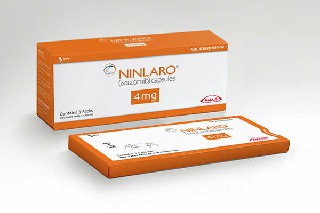
The efficacy of ixazomib was strongly confirmed in a pivotal study involving722 patients. The results of the study showed that compared with the treatment regimen of placebo + lenalidomide + dexamethasone, the addition of ixazomib significantly prolonged the progression-free survival (PFS) of patients. Specifically, the median PFS of patients in the ixazomib group was extended from 14.7 months to 20.6 months, and this difference was statistically significant (p=0.012). Even more exciting is that in the ixazomib group, 11.7% of patients had a complete response to the treatment, compared with only 6.6% of the placebo group. In addition, the overall response rate (including complete response and partial response) of the ixazomib group was also as high as 78.3%, which was better than the 71.5% of the placebo group.
Further phase III clinical studies focus on the efficacy of the ixazomib-lenalidomide-dexamethasone (IRd) regimen in patients with different cytogenetic risks. The results of the study showed that the IRd regimen significantly improved the PFS of patients compared with the placebo group in both high-risk and standard-risk cytogenetic subgroups. Especially among high-risk patients, the extension of median PFS was more significant, reaching 21.4 months, compared with only 9.7 months in the placebo group. For standard-risk patients, the IRd regimen also showed superior efficacy, with the median PFS extended to 20.6 months, which was better than the 15.6 months in the placebo group.
This kindImprovements in PFS were consistent among subgroups of patients with individual high-risk cytogenetic abnormalities, including del(17p) patients. At the same time, for patients with 1q21 amplification and patients in the "extended high-risk" group, the IRd regimen also showed a significant PFS prolongation effect. These findings strongly demonstrate that IRd regimen has substantial therapeutic benefit compared with placebo in patients with relapsed/refractory multiple myeloma and can effectively improve adverse PFS associated with high-risk cytogenetic abnormalities. Therefore, ixazomib/enleri shows excellent efficacy and broad application prospects in the treatment of multiple myeloma.
[ 免责声明 ] 本页面内容来自公开渠道(如FDA官网、Drugs官网、原研药厂官网等),仅供持有医疗专业资质的人员用于医学药学研究参考,不构成任何治疗建议或药品推荐。所涉药品可能未在中国大陆获批上市,不适用于中国境内销售和使用。如需治疗,请咨询正规医疗机构。本站不提供药品销售或代购服务。


