
.jpeg)
Detailed explanation of the functions and efficacy of canafenib/encofenib
Encorafenib b is a kinase inhibitor against BRAF V600E, as well as wild-type BRAF and CRAF in in vitro cell-free assays with IC50 values of 0.35, 0.47 and 0.3nM, respectively. Mutations in the BRAF gene, such as BRAF V600E, can lead to constitutively activated BRAF kinase, thereby stimulating tumor cell growth. Canafenib is also able to bind to other kinases in vitro, including JNK1, JNK2, JNK3, LIMK1, LIMK2, MEK4, and STK36, and reduce ligand binding to these kinases at clinically achievable concentrations (≤0.9 μM). Canafenib's pharmacological properties are different from other clinically active BRAF inhibitors and has shown better efficacy in the treatment of metastatic melanoma.
The pharmacokinetics of canafenib were studied in healthy subjects and in patients with solid tumors, including advanced and unresectable or metastatic cutaneous melanoma, harboring the BRAF V600E or V600K mutation, and BRAF V600E mutation-positive metastatic colorectal cancer. Following single-dose administration, systemic exposure to canafenib is dose-proportional over the dose range of 50 mg to 700 mg (0.1 to 1.6 times the maximum recommended dose of 450 mg).
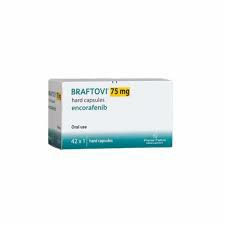
Single-agent canafenib once-daily dosing was uniquely tolerated and demonstrated differential antitumor activity in BRAFi-pretreated and BRAFi-naïve patients with advanced/metastatic melanoma. Canafenib inhibits the in vitro growth of tumor cell lines expressing BRAF V600 E, D, and K mutations. In mice implanted with BRAF V600E-expressing tumor cells, canafenib induced tumor regression associated with inhibition of the RAF/MEK/ERK pathway. Canafenibandbinimetinibtarget two different kinases in the RAS/RAF/MEK/ERK pathway.
The coadministration of canafenib and binimetinib produced greater in vitro antiproliferative activity in BRAF mutation-positive cell lines and greater antitumor activity in BRAF V600E mutant human melanoma xenograft studies in mice than either agent alone. Furthermore, the combination of canafenib and binimetinib delayed the emergence of drug resistance in mouse BRAF V600E mutant human melanoma xenografts compared with either drug alone.
atIn a mouse xenograft model derived from patients with BRAF V600E mutant non-small cell lung cancer, the combination of canafenib and binimetinib resulted in stronger anti-tumor activity in terms of tumor growth inhibition compared with binimetinib alone. Increased tumor growth delay after cessation of administration was also observed with combination administration compared with either agent administered alone.
In BRAF mutant colorectal cancer, induction of EGFR-mediated MAPK pathway activation is considered to be a mechanism of resistance to BRAF inhibitors. In nonclinical models, combinations of BRAF inhibitors and drugs targeting EGFR have been shown to overcome this resistance mechanism. In a mouse model of colorectal cancer with mutated BRAF V600E, coadministration of canafenib and cetuximab had a stronger antitumor effect than either drug alone.
[ 免责声明 ] 本页面内容来自公开渠道(如FDA官网、Drugs官网、原研药厂官网等),仅供持有医疗专业资质的人员用于医学药学研究参考,不构成任何治疗建议或药品推荐。所涉药品可能未在中国大陆获批上市,不适用于中国境内销售和使用。如需治疗,请咨询正规医疗机构。本站不提供药品销售或代购服务。


