
.jpeg)
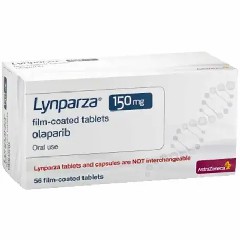
Detailed explanation of the efficacy and functions of Lynparza/Olaparib tablets
Olaparib/Olaparib (Olaparib) is a cytotoxic and antineoplastic drug. Lynparza inhibits the growth of selected tumor cell lines in vitro and reduces tumor growth in mouse xenograft models of human cancer, both as monotherapy and following platinum-based chemotherapy. The drug exerts antitumor effects in cell lines and mouse tumor models with deletions of BRCA1/2, ATM, or other genes involved in homologous recombination repair (HRR) of DNA damage and associated with platinum response.
In preclinical cancer models, olaparib has shown antitumor activity when used alone, in combination with chemotherapy drugs or radiation therapy. Olaparib can act as a chemical sensitizer to enhance the cytotoxicity of DNA-damaging chemotherapy drugs such as alkylating agents and platinum-based drugs. It also acts as a radiosensitizer by blocking PARP-mediated DNA repair.
Poly(ADP-ribose) polymerases (PARPs) are multifunctional enzymes containing 17 members. They are involved in basic cellular functions such as DNA transcription and DNA repair. PARPs recognize and repair cellular DNA damage, such as single-strand breaks (SSB) and double-strand breaks (DSB). Different DNA repair pathways exist to repair these DNA lesions, including the base excision repair (BER) pathway for SSBs and BRCA-dependent homologous recombination for DSBs.
Olaparib is aPARP inhibitor: Although it acts on PARP1, PARP2 and PARP3, olaparib is a more selective competitive inhibitor of NAD+ at the catalytic site of PARP1 and PARP2. Inhibition of the BER pathway by olaparib leads to the accumulation of unrepaired SSBs, which leads to the formation of DSBs, the most toxic form of DNA damage. Although BRCA-dependent homologous recombination can repair DSBs in normal cells, this repair pathway is defective in cells with BRCA1/2 mutations, such as certain tumor cells.
Inhibition of PARP in cancer cells withBRCA mutations leads to genomic instability and apoptotic cell death. This end result is also known as synthetic lethality, a phenomenon in which the combination of two defects (inhibition of PARP activity and loss of HR DSB repair) leads to deleterious consequences.
In vitro studies suggest that olaparib-induced cytotoxicity may involve inhibitionPARP enzyme activity and increased formation of PARP-DNA complexes, leading to DNA damage and cancer cell death. In prostate cancer models, PARP1 has been shown to contribute to the regulation of androgen receptor (AR) activity; the combination of olaparib and AR inhibition resulted in in vitro cytotoxicity and antitumor activity in mouse xenograft models.
[ 免责声明 ] 本页面内容来自公开渠道(如FDA官网、Drugs官网、原研药厂官网等),仅供持有医疗专业资质的人员用于医学药学研究参考,不构成任何治疗建议或药品推荐。所涉药品可能未在中国大陆获批上市,不适用于中国境内销售和使用。如需治疗,请咨询正规医疗机构。本站不提供药品销售或代购服务。


