
.jpeg)
How to deal with possible diminished efficacy of upadatinib during long-term treatment?
Upadacitinib, as a selective inhibitor targeting JAK1, has shown significant efficacy in the treatment of various immune diseases such as rheumatoid arthritis, atopic dermatitis and ulcerative colitis. However, with the long-term use of the drug, an important question that patients and doctors are paying attention to is: Will upatinib develop resistance? That is, whether the patient will gradually develop a diminished response to the drug, resulting in the need to increase the dose or change the drug to maintain the original therapeutic effect. The following is a detailed discussion of the weakening efficacy of upadatinib that may be encountered during long-term use and its countermeasures.
1. Weakened efficacy: mechanism and reasons
Drug target changes: A common mechanism of drug resistance is changes or mutations in drug targets. During the use of upadatinib, if a genetic mutation occurs in the JAK1 pathway or related signaling pathways, the inhibitory effect of the drug on it may be reduced, resulting in a decrease in efficacy. However, current studies have not found clear evidence of widespread resistance to upadatinib due to target mutations during long-term use.
Adaptability of the immune system: Upadatinib regulates the immune response by inhibiting JAK1, but the immune system has certain adaptability and adjustment capabilities. Long-term use of upadatinib may cause the immune system to gradually adjust its response pattern, thereby weakening the drug's therapeutic effect. This adaptive response is more common in immunomodulatory drugs, but it is not completely equivalent to drug resistance in the traditional sense.
2. Clinical observation: changes in efficacy and individual differences
In clinical practice, it has indeed been observed that some patients who have used upadatinib for a long time have gradually declined in drug efficacy. For example, in the treatment of rheumatoid arthritis or atopic dermatitis, initial results may be significant, but symptom control may diminish over time. At this time, the doctor may consider adjusting the treatment plan, such as increasing the dose, combining it with other drugs, or changing the treatment strategy.
It is important to note that there are significant individual differences in patient tolerance and responsiveness to JAK inhibitors. Some patients may need to adjust their treatment plan after months or years of use. However, this decline in efficacy is not entirely equivalent to resistance like bacterial resistance, but is more a reflection of changes in treatment response and individual differences.
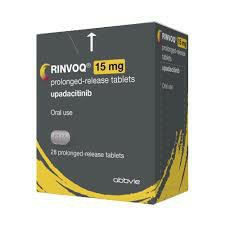
3. Coping strategy: multi-pronged approach to maintain efficacy
Combination therapy: Combination therapy is an effective strategy for patients who may experience diminished efficacy. For example, combining upadatinib with traditional disease-modifying antirheumatic drugs (DMARDs) such as methotrexate can enhance the overall treatment effect and help mitigate the decrease in efficacy that occurs with monotherapy.
Dose adjustment: During the treatment of upatinib, if the efficacy gradually weakens, the doctor can adjust the dose according to the patient's specific conditions to maintain the therapeutic effect of the drug. However, increasing the dose may carry a higher risk of side effects and needs to be done cautiously and under the guidance of a doctor.
Changing medications: If a patient's response to upadacitin gradually declines and dose adjustments are ineffective, doctors may consider another type of immunosuppressant or biologic. Re-adjust the immune system's response through different mechanisms of action to achieve the purpose of sustained treatment.
4. Influencing factors: individual differences and disease types
Individual differences: The patient’s genetic background, disease type, disease duration, etc. may affect the efficacy and resistance of the drug. For example, certain gene mutations may render patients less sensitive to JAK inhibitors, making them more likely to experience reduced efficacy during treatment.
Disease type and severity: Different disease types have different efficacy and risk of resistance to upadatinib. For chronic diseases such as rheumatoid arthritis, fluctuations in efficacy may be more likely to occur during long-term medication. In diseases such as atopic dermatitis, diminished efficacy may manifest itself differently.
5. Long-term management: close monitoring and timely adjustments
The efficacy of upadatinib may gradually weaken during long-term use, but its resistance problem is not as clear and common as bacterial resistance to antibiotics. The decrease in efficacy may be related to various factors such as the adaptive adjustment of the immune system, individual differences, and disease types.
In order to deal with this weakening of efficacy, doctors need to adopt comprehensive management strategies, including combination therapy, dose adjustment, or drug replacement. At the same time, patients should work closely with their doctors to regularly evaluate the effects of treatment and make treatment adjustments when necessary. Through long-term close monitoring and timely adjustment of the treatment plan, the effective treatment time of upadatinib can be maximized and the patient's quality of life can be improved.
In order to deal with this weakening of efficacy, doctors need to adopt comprehensive management strategies, including combination therapy, dose adjustment, or drug replacement. At the same time, patients should work closely with their doctors to regularly evaluate the effects of treatment and make treatment adjustments when necessary. Future research is expected to provide more solutions to the problem of drug resistance, thereby further improving the clinical application effect of upadatinib and bringing patients a better treatment experience and quality of life.
[ 免责声明 ] 本页面内容来自公开渠道(如FDA官网、Drugs官网、原研药厂官网等),仅供持有医疗专业资质的人员用于医学药学研究参考,不构成任何治疗建议或药品推荐。所涉药品可能未在中国大陆获批上市,不适用于中国境内销售和使用。如需治疗,请咨询正规医疗机构。本站不提供药品销售或代购服务。


