
.jpeg)
Is Giant Cell Tumor of Bone a Bone Cancer?
Giant cell tumor of bone is not a bone cancer, but a tumor originating from bone marrow stromal cells. It is usually classified as a borderline or tumor of uncertain behavior, that is, its nature is between benign and malignant.
Giant cell tumor of bone is not a malignant bone tumor (ie, bone cancer) in the traditional sense. Bone cancer refers to malignant tumors that occur in the skeletal system and have the ability to grow and spread uncontrollably. Although giant cell tumor of bone may have strong local invasiveness and certain metastatic ability, its growth rate is relatively slow and it usually does not metastasize to long distances.
Giant cell tumor of bone is composed of sheets of oval mononuclear cells and multinucleated giant cells, which are evenly distributed in the tumor tissue. Based on the degree of differentiation and number of cells, giant cell tumors of bone can be divided into different pathological grades. Grade I and grade II are generally considered to be benign, while grade III has malignant characteristics.
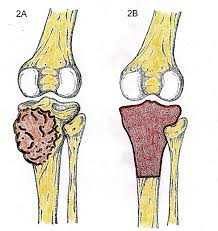
Giant cell tumor of bone occurs most commonly in adults aged 20 to 40 , and is slightly more common in women than men. It usually occurs at the ends of long bones and vertebral bodies, such as the lower end of the femur and the upper end of the tibia. Patients may experience symptoms such as pain and swelling, which are closely related to the progression of the condition.
In terms of treatment, giant cell tumor of bone mainly adopts surgical resection, supplemented by auxiliary methods such as radiotherapy and chemotherapy. Although tumors may recur after removal, in most cases the disease can still be effectively controlled with surgery. In contrast, bone cancer is relatively more difficult to treat and has a poor prognosis due to its high malignancy.
There is currently no specific method for the prevention of giant cell tumor of bone, but early detection and standardized treatment are crucial to improving the cure rate and quality of life. Patients should maintain good living habits and mentality during recovery, and follow medical advice for regular examinations and follow-up treatments to reduce the risk of recurrence and promote physical recovery.
(Common therapeutic drugs for bone giant cell cancer include: pembrolizumab, cetuximab, nivolumab, etc. For specific drug details, please see the homepage of the website or click for consultation)
[ 免责声明 ] 本页面内容来自公开渠道(如FDA官网、Drugs官网、原研药厂官网等),仅供持有医疗专业资质的人员用于医学药学研究参考,不构成任何治疗建议或药品推荐。所涉药品可能未在中国大陆获批上市,不适用于中国境内销售和使用。如需治疗,请咨询正规医疗机构。本站不提供药品销售或代购服务。


