
.jpeg)
Detailed explanation of the efficacy and role of ritexitinib
Ritlecitinib (Ritlecitinib) is indicated for the treatment of severe alopecia areata in adults and adolescents 12 years and older. Ritexitinib is a kinase inhibitor that promotes the reduction of absolute lymphocyte levels, T lymphocytes (CD3) and T lymphocyte subsets (CD4 and CD8) in a dose-dependent manner. It is not recommended to be used in combination with other JAK inhibitors, biological immunomodulators, cyclosporine or other potent immunosuppressants.
Alopecia areata is an autoimmune disease that causes hair loss primarily on the scalp, but can also cause hair loss on the face and other areas. Under normal circumstances, hair follicles are immune-privileged sites characterized by the presence of well-suppressed natural killer cells. However, disruption of this system may lead to loss of immune privilege and result in alopecia areata. Genome-wide association studies have shown that overexpression of UL16-binding protein 3 (ULBP3, a protein that binds to natural killer cell receptors) is associated with the pathogenesis of alopecia areata. Overexpression of ULBP3 promotes cytotoxic differentiation 8-positive cell cluster (CD8+NK group 2D-positive) T cells to attack hair follicles, leading to hair follicle dystrophy. CD8+NKG2D+T cells promote hair follicle inflammation through the interferon gamma and interleukin 15 signaling pathways, thereby activating the molecular pathways of Janus kinase, signal transducers and transcriptional activators. Therefore, some people have proposed using JAK inhibitors to treat alopecia areata.
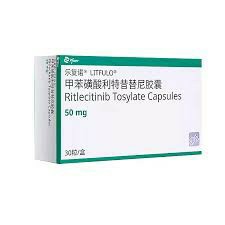
Ritexitinib irreversibly inhibits Janus kinase 3 and tyrosine kinases expressed in the hepatocellular carcinoma kinase family by blocking the adenosine triphosphate binding site. In vitro, ritexitinib inhibits cytokine-induced STAT phosphorylation mediated by JAK3-dependent receptors, as well as signaling by immune receptors that are dependent on members of the TEC kinase family. Although JAK inhibitors like ritixitinib may inhibit inflammatory pathways activated in alopecia areata, their exact mechanisms of action have not been fully elucidated.
Ritexitinib also promoted the reduction of NK cells (CD16/56), which remained stable within 48 weeks after starting treatment. For patients taking rituxitinib 50 mg once daily, the decrease in median lymphocyte levels remained consistent through week 48.
Give to patients with alopecia areata once a dayRitrucitinib had no clinically relevant effect on the QTc interval at a mean maximum exposure of 12 times the 50 mg dose. Ritexitinib use has been associated with the development of serious infections, malignancies (including non-melanoma skin cancers), major adverse cardiovascular events, thromboembolic events, and hypersensitivity reactions. In another postmarketing safety study of JAK inhibitors in rheumatoid arthritis patients aged 50 years and older with at least one cardiovascular risk factor, JAK inhibitors were associated with higher all-cause mortality, including sudden cardiovascular death, compared with TNF blockers.
[ 免责声明 ] 本页面内容来自公开渠道(如FDA官网、Drugs官网、原研药厂官网等),仅供持有医疗专业资质的人员用于医学药学研究参考,不构成任何治疗建议或药品推荐。所涉药品可能未在中国大陆获批上市,不适用于中国境内销售和使用。如需治疗,请咨询正规医疗机构。本站不提供药品销售或代购服务。


