
.jpeg)
What are the main manifestations of cholangiocarcinoma?
The main manifestations of cholangiocarcinoma vary depending on factors such as the location and size of the tumor, and whether it invades surrounding tissues and organs.
Jaundice is one of the most common symptoms of cholangiocarcinoma and is characterized by yellowing of the skin and whites of the eyes. This is caused by bile duct obstruction caused by cholangiocarcinoma, which prevents bile from flowing into the intestines normally and flows back into the bloodstream, causing an increase in bilirubin. Jaundice usually becomes progressively worse and may be accompanied by itching and weight loss.
Patients with cholangiocarcinoma often experience abdominal discomfort or pain, and the pain may be located in the upper right area of the abdomen, under the ribs. The pain may appear as dull, swollen or cramping pain, and sometimes may radiate to the shoulder and back. This is caused by the tumor pressing on nearby tissues or organs.
Cholangiocarcinoma may cause a buildup of gas in the intestines, causing digestive problems such as bloating, heartburn, indigestion, and loss of appetite. In addition, patients may experience symptoms such as nausea, vomiting, diarrhea, or constipation. These symptoms may be related to insufficient bile secretion and impaired digestive function.
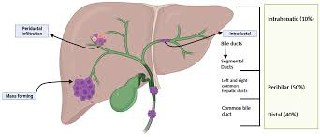
Patients with cholangiocarcinoma may have lighter or off-white (white clay) stools and dark yellow urine, like strong tea. This is caused by a blockage in the bile ducts that prevents bile from flowing into the intestines, affecting the color of stool and urine.
In patients with middle and lower cholangiocarcinoma, an enlarged gallbladder may be palpable. In addition, cholangiocarcinoma may also cause liver damage, manifested as hepatomegaly, ascites, or edema of the lower limbs. In advanced stages, tumor invasion or compression of the portal vein may lead to portal hypertension, which may lead to complications such as upper gastrointestinal bleeding.
Patients with cholangiocarcinoma may be complicated by biliary tract infection, manifesting as symptoms such as right upper quadrant pain, chills, high fever, and jaundice. The most common infecting bacteria are Escherichia coli, Streptococcus faecalis and anaerobic bacteria. In addition, if the cancer ruptures and causes upper gastrointestinal bleeding, the patient may also experience symptoms such as melena, positive fecal occult blood, and anemia.
It should be noted that early symptoms of cholangiocarcinoma may not be obvious and can easily be ignored. Therefore, for people at risk of cholangiocarcinoma (such as patients with bile duct stones, primary sclerosing cholangitis and other diseases), regular physical examinations and screenings should be performed to facilitate early detection and treatment of cholangiocarcinoma.
(Click to view the introduction of drugs for the treatment of cholangiocarcinoma. For specific drug details, please click for one-on-one consultation.)
References:https://my.clevelandclinic.org/health/diseases/21524-cholangiocarcinoma
[ 免责声明 ] 本页面内容来自公开渠道(如FDA官网、Drugs官网、原研药厂官网等),仅供持有医疗专业资质的人员用于医学药学研究参考,不构成任何治疗建议或药品推荐。所涉药品可能未在中国大陆获批上市,不适用于中国境内销售和使用。如需治疗,请咨询正规医疗机构。本站不提供药品销售或代购服务。


