
.jpeg)
10 major signs of fallopian tube cancer
Fallopian tube cancer is a relatively rare malignant tumor of the female reproductive system. Its symptoms may vary depending on individual differences, and early symptoms may not be obvious and can be easily confused with other gynecological diseases. However, knowing some common signs of fallopian tube cancer can help with early detection and treatment.
Early symptoms of fallopian tube cancer may include vaginal discharge, abdominal pain, abdominal mass, abnormal uterine bleeding, and lower abdominal pain. The occurrence of these symptoms is usually related to the growth of the tumor and its compression of surrounding tissues or organs.
Vaginal discharge is a typical symptom of fallopian tube cancer, and aboutmore than 50% of patients will experience this phenomenon. The discharge is usually serous, blood-like, or rice-like, varying in amount, and may be accompanied by a foul odor. This is caused by tumor cells dying and falling off, causing the fallopian tube wall to rupture and exudate to flow into the vagina. After vaginal discharge, some patients may feel that lower abdominal cramps are relieved and pelvic masses shrink or disappear.
Abdominal pain is another common symptom of fallopian tube cancer, and about half of patients will have lower abdominal pain. This pain may be caused by the tumor pressing on surrounding tissues or organs, or it may be related to increased pressure caused by fluid accumulation in the fallopian tubes. The pain is usually located on one side of the lower abdomen. It may be persistent or paroxysmal, and may be mild or severe. It is sometimes accompanied by low back pain and a feeling of fullness in the anus.
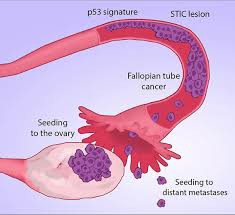
Abdominal mass is also an important sign of fallopian tube cancer. Adnexal mass can be found in 61%-65% of patients during gynecological examination. The mass is mostly a solid mass in the unilateral adnexal area, with poor mobility, uneven surface and nodular shape, and is generally non-tender. The mass is usually located near the edge of the pelvic cavity, varies in size, and can be felt as a soft or hard mass in the abdomen.
Abnormal uterine bleeding is another common symptom of fallopian tube cancer, which manifests as non-menstrual vaginal bleeding with variable amounts and varying degrees of abdominal pain. This is due to stimulation of the fallopian tube mucosa, which leads to endocrine disorders and menstrual disorders.
In addition to the above symptoms, fallopian tube cancer may also be accompanied by other precursors, such as weight loss, anemia, indigestion, abdominal distension, loss of appetite, frequent urination, urgency, painful urination, low back pain or pelvic discomfort, etc. The occurrence of these symptoms is usually related to the growth of tumors, oppression of surrounding tissues or organs, and the consumption of body energy by malignant tumors.
It should be noted that the early symptoms of fallopian tube cancer may not be obvious and can easily be ignored. Therefore, for patients with the above symptoms, it is recommended to seek medical treatment in time for relevant examination and treatment. The diagnosis of fallopian tube cancer usually requires imaging examinations such as gynecological ultrasound, CT scans, and magnetic resonance imaging (MRI), combined with laboratory tests such as CA125 level testing. Treatment measures mainly include surgical removal of diseased tissue. For advanced cases, chemotherapy is also necessary.
In short, the symptoms of fallopian tube cancer vary, and early symptoms may not be obvious. Understanding these symptoms can help detect and treat fallopian tube cancer promptly. For patients with the above symptoms, it is recommended to seek medical attention in time for detailed examination and treatment to improve survival rate and quality of life. At the same time, maintaining good personal hygiene habits, avoiding overexertion, and regular review to monitor changes in the condition are also important measures to prevent and treat fallopian tube cancer.
(Click to view an introduction to drugs for the treatment of fallopian tube cancer)
Reference materials:https://www.ucsfhealth.org/conditions/fallopian-tube-cancer
[ 免责声明 ] 本页面内容来自公开渠道(如FDA官网、Drugs官网、原研药厂官网等),仅供持有医疗专业资质的人员用于医学药学研究参考,不构成任何治疗建议或药品推荐。所涉药品可能未在中国大陆获批上市,不适用于中国境内销售和使用。如需治疗,请咨询正规医疗机构。本站不提供药品销售或代购服务。


