
.jpeg)
Discussion on the application of everolimus in the treatment of ovarian clear cell carcinoma
The application of everolimus in the treatment of clear cell ovarian cancer (Clear Cell Ovarian Carcinoma, CCOC) has significant significance and potential.
Everolimus is an mTOR (mammalian target of rapamycin) inhibitor that binds to intracellular proteins to form an inhibitory complex, thereby interfering with cell synthesis and inhibiting the growth and proliferation of tumor cells. In ovarian clear cell carcinoma, the PI3K/AKT/mTOR signaling pathway is often abnormally activated. Everolimus can effectively inhibit tumor growth by blocking this pathway.
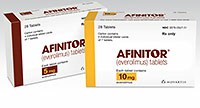
The application of everolimus in ovarian clear cell carcinoma is mainly focused on the palliative treatment of patients with advanced or recurrent disease. Multiple clinical studies have shown that for patients with platinum-resistant or refractory ovarian clear cell carcinoma, treatment with everolimus alone or in combination with other targeted drugs (such as bevacizumab) can prolong the progression-free survival (PFS) and improve the quality of life.
Treatment of clear cell ovarian cancer requires individualized evaluation, and the use of everolimus is no exception. Doctors will comprehensively judge whether everolimus is suitable for use based on the patient's gene mutation (such as PIK3R1gene mutation), tumor stage, previous treatment history and other factors. For patients with certain genetic mutations, the therapeutic effect of everolimus may be more significant.
Everolimus may cause a series of adverse reactions during treatment, such as oral mucositis, anemia, hyperglycemia, infection, rash, etc. Therefore, when using everolimus, the patient's physical condition needs to be closely monitored and the treatment plan adjusted in a timely manner. At the same time, patients should also pay attention to maintaining good living habits and nutritional status to avoid excessive fatigue to support the treatment effect.
In order to improve the therapeutic effect, everolimus is often used in combination with other drugs. For example, combined with bevacizumab, it can block tumor neovascularization and further inhibit tumor growth. In addition, everolimus can also be used in combination with chemotherapy drugs to enhance the killing effect on tumor cells.
References:
https://pmc.ncbi.nlm.nih.gov/articles/PMC3913549/
[ 免责声明 ] 本页面内容来自公开渠道(如FDA官网、Drugs官网、原研药厂官网等),仅供持有医疗专业资质的人员用于医学药学研究参考,不构成任何治疗建议或药品推荐。所涉药品可能未在中国大陆获批上市,不适用于中国境内销售和使用。如需治疗,请咨询正规医疗机构。本站不提供药品销售或代购服务。


