
.jpeg)
Analysis of the therapeutic effect of ensidipine on acute myeloid leukemia
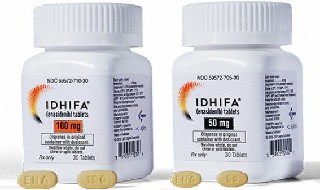
Enasidenib, widely known by the trade name Idhifa, is a drug that has emerged in the field of medicine in recent years. As an isocitrate dehydrogenase 2 (IDH2) inhibitor, it plays a pivotal role in the treatment of patients with relapsed or refractory acute myeloid leukemia (AML) who carry IDH2 gene mutations.
IDH2Gene mutation is a common genetic abnormality in AML, which can lead to disorders of cell metabolism, thereby producing a metabolite called 2-hydroxyglutarate (2-HG). The abnormal accumulation of this metabolite can promote the rapid proliferation of malignant cells, thus aggravating the condition. The uniqueness of ensidipine is that it can precisely inhibit mutants of IDH2 enzyme and effectively reduce the production of 2-HG, thereby breaking this vicious cycle and interfering with the growth and division of leukemia cells.
In multiple rigorous clinical trials, ensidipine has demonstrated impressive therapeutic effects. Taking a single-center phase II clinical trial as an example, this study explored the efficacy of ensidipine combined with azacitidine in the treatment of patients with IDH2 mutated AML. The results were gratifying. The patients' complete remission rate and composite complete remission rate reached a high level, and the median response duration was also relatively long. This discovery undoubtedly brings new hope to patients suffering from the disease.
Another eye-catching study is the clinical trial of ensidipine combined with venetoclax (VEN) in the treatment of IDH2 mutated AML patients. The results of this study are also encouraging. The overall response rate is as high as 70%, and the complete response rate is as high as 57%. This data not only further confirms the excellent efficacy of ensidipine, but also reveals the effectiveness of combination therapyAMLGreat potential in treatment.
In a single-arm study that enrolled 199 patients with relapsed or refractory AML carrying IDH2 mutations, the efficacy of ensidipine was once again strongly verified. After a minimum of 6 months of treatment, approximately 19% of patients achieved complete remission, with the median duration of response being 8.2 months. What is more worth mentioning is that among the 157 patients who originally needed to rely on blood transfusion or platelet therapy, 34% of them were free of dependence on blood transfusion after receiving ensidipine treatment. This not only reduces the physical burden on patients, but also greatly improves their quality of life.
In addition, there is a I/ phase II clinical trial code-named NCT01915498 which provides more strong evidence for the efficacy of ensidipine. The trial enrolled a total of 239 patients with hematological malignancies, with the largest number of patients in the relapsed and refractory AML group. In dose-escalation trials, the daily dose range of ensidipine was set to be 50 to 650 mg. Happily, the maximum tolerated dose of the drug was not reached within this range. After careful dose exploration, the research team finally determined 100 mg as the daily dosage, and based on this, carried out subsequent verification tests on efficacy, pharmacokinetics and efficacy. The results showed that the overall response rate of patients with relapsed and refractory AML was as high as 40.3%, the median duration of response was 5.8 months, and the median overall survival was 9.3 months. It is particularly worth mentioning that 34 patients (19.3%) achieved complete remission, and their overall survival was extended to 19.7 months.
References:
https://ashpublications.org/blood/article/130/6/722/36814/Enasidenib-in-mutant-IDH2-relapsed-or-refractory
[ 免责声明 ] 本页面内容来自公开渠道(如FDA官网、Drugs官网、原研药厂官网等),仅供持有医疗专业资质的人员用于医学药学研究参考,不构成任何治疗建议或药品推荐。所涉药品可能未在中国大陆获批上市,不适用于中国境内销售和使用。如需治疗,请咨询正规医疗机构。本站不提供药品销售或代购服务。


