
.jpeg)
Effect of taking ensidipine on survival time
Multiple clinical trial data show that ensidipine can significantly prolong the survival time of patients with relapsed or refractory AML carrying IDH2 gene mutations. For example, in a single-arm clinical trial of 199 patients with relapsed or refractory AML, ensidipine was treated with ensidipine. At 6 months, 19% of patients achieved a complete response, with a median response time of 8.2 months. In addition, 4% of patients experienced complete remission and partial hematological recovery, with a median survival of 19.7 months. These data indicate that ensidipine treatment significantly improves patient survival time.
Median overall survival (OS) is one of the important indicators to measure the efficacy of drugs. In clinical trials, the median OS of ensidipine-treated patients was 9.3 months. For patients who achieved complete remission (CR), the median OS reached 19.7 months. This result was significantly better than that of patients who did not receive ensidipine treatment, indicating that ensidipine can effectively prolong the survival time of patients.
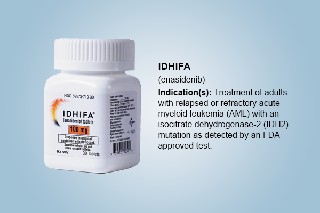
Progression-free survival (PFS) is another important indicator for evaluating drug efficacy. The median PFS of patients treated with ensidipine was 6.9 months, which means that the disease did not progress within a certain period of time after receiving ensidipine. Although this period of time is relatively short, considering the malignancy and relapse and refractory nature of AML, ensidipine can control disease progression during this period and gain more treatment time and survival opportunities for patients.
The combined use of ensidipine with other treatments is expected to further extend the survival time of patients. For example, in one clinical trial, ensidipine was combined with azacitidine to treat patients with IDH2 mutations.AMLpatients have achieved remarkable results. The overall response rate of combination therapy was as high as 67%, and the complete response rate was also 29%. These results suggest that the combined use of ensidipine and other treatments may have a synergistic effect, thereby further improving the treatment effect and prolonging patient survival.
Although ensidipine has a positive impact on prolonging the survival time of AML patients, patients still need to pay close attention to their physical condition and drug side effects during treatment. Common side effects of ensidipine include nausea, vomiting, diarrhea, increased bilirubin levels, etc. Serious side effects may include abnormal liver function, arrhythmia, etc. Therefore, patients should regularly monitor physical indicators during treatment and adjust treatment plans in a timely manner to ensure the safety and effectiveness of treatment.
References:
https://pmc.ncbi.nlm.nih.gov/articles/PMC6347084/
[ 免责声明 ] 本页面内容来自公开渠道(如FDA官网、Drugs官网、原研药厂官网等),仅供持有医疗专业资质的人员用于医学药学研究参考,不构成任何治疗建议或药品推荐。所涉药品可能未在中国大陆获批上市,不适用于中国境内销售和使用。如需治疗,请咨询正规医疗机构。本站不提供药品销售或代购服务。


