
.jpeg)
Discussion on the effects and clinical manifestations of ensidipine
Enasidenib, trade name: Idhifa, is a targeted drug mainly used to treat patients with isocitrate dehydrogenase2 (IDH2) gene mutations in adults with relapsed or refractory acute myeloid leukemia (AML). As an IDH2 inhibitor, ensidipine inhibits the activity of IDH2 mutant enzyme, thereby blocking the abnormal proliferation and differentiation of leukemia cells and restoring the normal hematopoietic process.
Ensidipine has shown significant efficacy in clinical applications. IDH2 mutations can lead to the production of abnormal metabolites 2-hydroxyglutarate (2-HG) in leukemia cells. The accumulation of this metabolite can promote tumor growth. Ensidipine effectively inhibits the growth of tumor cells by inhibiting the activity of IDH2 mutant enzyme and reducing the production of 2-HG.
Ensidipine can promote the differentiation of leukemia cells into normal mature blood cells, which helps reduce the number of abnormal leukemia cells and improve the patient's condition.
For symptoms such as anemia, bleeding, and infection that are commonly seen in patients with leukemia, ensidipine may alleviate these symptoms during treatment and improve the patient's quality of life.
Ensidipine can delay the progression of the disease and buy more survival time for patients. Especially when treating patients with AML carrying IDH2 mutations, ensidipine can significantly extend the progression-free survival and overall survival of patients.
During clinical use of ensidipine, patients may suffer from a series of clinical manifestations. Multiple clinical trials have confirmed the significant efficacy of ensidipine in the treatment of IDH2 mutated AML patients. For example, results from a trial involving patients with relapsed or refractory AML who were moderately or highly ineligible for chemotherapy showed that patients treated with ensidipine had significantly longer progression-free survival. In addition, ensidipine has been proven to improve patients' blood hematopoietic function, reduce the need for blood transfusions, and improve patients' quality of life.
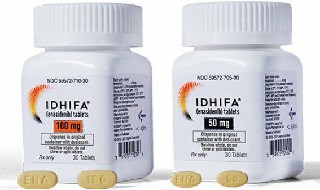
Although ensidipine has shown good efficacy in treating leukemia, it may also cause some side effects. Common side effects include:
Digestive system reactions: such as nausea, vomiting, diarrhea, etc. These side effects are usually noticeable early in treatment, but may gradually decrease in incidence and severity as treatment continues.
Abnormal liver function: Ensidipine may cause abnormal liver function, such as increased liver enzymes or increased lactate dehydrogenase. Therefore, regular liver function monitoring is required during use.
Electrocardiogram abnormalities: Individual patients may have electrocardiogram abnormalities, such asQT prolongation of the interval. This requires close monitoring of heart function to ensure patient safety.
Myelosuppression: Some patients may develop symptoms of bone marrow suppression such as leukopenia, anemia and thrombocytopenia after taking ensidipine. This may affect the patient's immunity and hematopoietic function, requiring regular blood routine examinations.
Other side effects include hypokalemia, fatigue, joint pain, rash, and decreased appetite. These side effects may affect the patient's daily life and nutritional status and require prompt treatment.
In order to ensure the safety and effectiveness of ensidipine, patients need to pay attention to taking ensidipine at a fixed time every day during clinical use to ensure a stable concentration of the drug in the body. This helps maintain treatment effects and reduces adverse effects from missing or taking too many doses. When taking ensidipine, swallow the tablet whole and avoid chewing or breaking the tablet to avoid affecting the efficacy or increasing the risk of adverse reactions.
References:
https://en.wikipedia.org/wiki/Enasidenib
[ 免责声明 ] 本页面内容来自公开渠道(如FDA官网、Drugs官网、原研药厂官网等),仅供持有医疗专业资质的人员用于医学药学研究参考,不构成任何治疗建议或药品推荐。所涉药品可能未在中国大陆获批上市,不适用于中国境内销售和使用。如需治疗,请咨询正规医疗机构。本站不提供药品销售或代购服务。


