
.jpeg)
The difference between urothelial cancer and bladder cancer
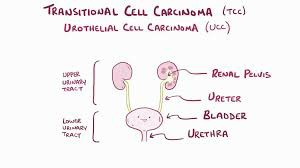
Urothelial Carcinoma and Bladder Cancer are often confused, but they have different scopes and definitions. Urothelial carcinoma refers to malignant tumors that occur in the urothelial cells (also called transitional epithelial cells), which cover various parts of the urinary tract system, including the bladder, renal pelvis, ureters, and urethra. Bladder cancer usually refers to cancer that occurs in the bladder, and the vast majority of bladder cancers (about 90%) are actually urothelial cancers. Therefore, bladder cancer is a manifestation of urothelial cancer, but urothelial cancer is broader and covers cancers in multiple sites such as the bladder, kidneys, ureters, and urethra.
1. Differences in definition and location of onset
Urothelial carcinoma is a malignant tumor that originates from the urothelial cells, which line the urinary tract organs such as the bladder, ureters, renal pelvis, and urethra. Urothelial cells are highly elastic and can adapt to the expansion and contraction of urine, so cancers in these areas are often collectively referred to as urothelial cancers. Bladder cancer specifically refers to cancer that occurs in the bladder. The bladder is an important part of the urinary tract system and is mainly responsible for storing urine.
Among bladder cancers, about90%of cases are urothelial cancers, with the remainder being other types of cancer, such as squamous cell carcinoma or adenocarcinoma. Urothelial cancer is a broader concept that includes, in addition to bladder cancer, renal pelvis cancer, ureteral cancer, and urethra cancer.
2. Differences in clinical manifestations
The most common symptoms of bladder cancer include hematuria (painless blood in the urine), frequent urination, urgency, difficulty urinating, and painful urination. Hematuria is one of the most typical manifestations of bladder cancer. Patients usually find blood in the urine without obvious pain. Symptoms of bladder cancer may not be obvious early on, so some patients are not diagnosed until the tumor is larger.
Similar to bladder cancer, symptoms of urothelial cancer may include hematuria, urgency, frequency, and discomfort during urination. However, the symptoms of urothelial cancer vary depending on where it occurs. For example, urothelial cancer of the renal pelvis may cause waist pain, hematuria, and weight loss; urothelial cancer of the ureter may cause renal colic or decreased urine output due to urinary tract obstruction; urothelial cancer of the urethra may present with urethral bleeding or urethral mass.
3. Differences in causes and risk factors
Main risk factors for bladder cancer include smoking, chemical exposure, chronic cystitis and urinary tract infections, and family history. Smoking is considered to be the most important cause of bladder cancer because the harmful substances in tobacco are excreted through urine, causing damage to the epithelial cells of the bladder and promoting canceration. In addition, long-term exposure to certain chemicals (such as aniline dyes, aromatic amines, etc.) is also an important risk factor for bladder cancer.
Risk factors for urothelial cancer are similar to those for bladder cancer, but it also includes other specific factors. For example, cancers of the renal pelvis and ureter may be associated with long-standing kidney stones or chronic pyelonephritis; cancers of the urinary tract may be associated with factors such as sexually transmitted diseases, long-term urethral inflammation, and urethral injury. Although bladder cancer shares many common causative factors with urothelial cancer, the pathogenic mechanisms and risk factors for urothelial cancer are more diverse.
4. Differences in diagnostic methods
The diagnosis of bladder cancer usually relies on urine cytology, cystoscopy, imaging examinations (such asCTor ultrasound), and biopsy. Cystoscopy is a very important diagnostic tool that can directly observe abnormalities in the lining of the bladder and perform a biopsy to confirm whether it is cancer.
For urothelial cancer, the diagnostic methods are similar but vary depending on where the tumor occurs. For example, cancer of the renal pelvis and ureter are usually diagnosed with CT scans, ultrasound, and endoscopy (such as pyeloscopy or ureteroscopy). The diagnosis of urethral cancer may need to be confirmed by urethroscopy and urine cytology.
5. Differences in treatment methods
Treatment methods for bladder cancer include surgery, chemotherapy, radiotherapy, immunotherapy and targeted therapy. Early-stage bladder cancer is usually treated by cystectomy or transurethral resection, while advanced or metastatic bladder cancer may require chemotherapy, immune checkpoint inhibitors, or targeted therapy.
Treatment for urothelial cancer depends on where the cancer occurs. For example, cancer of the renal pelvis may require a nephrectomy, cancer of the ureter is usually treated with ureterectomy surgery, and cancer of the urethra may be treated with urethral resection or radiation therapy. Although treatment methods vary, immunotherapy and targeted therapy are increasingly used in the treatment of advanced and metastatic urothelial cancer. In particular, immune checkpoint inhibitors targeting the PD-1/PD-L1 pathway have been approved for the treatment of advanced bladder cancer and have achieved significant efficacy.
In general, urothelial cancer is a broad type of cancer, covering cancers in multiple sites such as the bladder, renal pelvis, ureters, and urethra. Bladder cancer is a part of urothelial cancer, and about 90%of bladder cancers are urothelial cancers. There is some overlap in symptoms, risk factors, diagnostic methods, and treatment options, but there are also clear differences. For patients, knowing these differences can help them better understand the disease, choose appropriate treatment options, and increase the likelihood of a cure.
(Click to view an introduction to drugs for the treatment of urothelial cancer.)
xa0
Reference materials:
1.National Cancer Institute. Bladder Cancer. https://www.cancer.gov/types/bladder
2.Mayo Clinic. Bladder cancer.
https://www.mayoclinic.org/diseases-conditions/bladder-cancer/symptoms-causes/syc-20350564
[ 免责声明 ] 本页面内容来自公开渠道(如FDA官网、Drugs官网、原研药厂官网等),仅供持有医疗专业资质的人员用于医学药学研究参考,不构成任何治疗建议或药品推荐。所涉药品可能未在中国大陆获批上市,不适用于中国境内销售和使用。如需治疗,请咨询正规医疗机构。本站不提供药品销售或代购服务。


