
.jpeg)
Is mitotane a chemotherapy drug or a targeted drug?
Mitotane (trade name: Lysodren) plays an important role in the treatment of adrenocortical cancer.
Mitotan exerts its pharmacological effects mainly by interfering with the mitochondrial function and sterol metabolism pathway of adrenocortical cells. It inhibits the mitochondrial respiratory chain activity of adrenocortical cells and reduces the production of steroid hormones such as cortisol, aldosterone and androgens. In addition, mitotane also inhibits the activity of sterol-O-acyltransferase1 (SOAT1), leading to the accumulation of intracellular cholesterol and fatty acids, inducing endoplasmic reticulum stress response, thereby promoting cancer cell apoptosis.
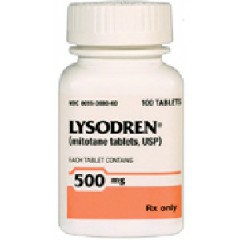
From the perspective of pharmacological mechanism, mitotane does not directly act on specific molecular targets of tumor cells, as some targeted drugs do. Instead, it affects tumor cell growth and proliferation through broad cytotoxic effects. This mechanism of action makes mitotane more likely to be classified as a chemotherapy drug rather than a targeted drug.
Mitotane is widely used clinically to treat inoperable, functional and non-functional adrenocortical carcinomas, as well as adrenocortical hyperplasia and hypercortisolism. It slows tumor growth and relieves symptoms by interfering with the function of adrenocortical cells and reducing the production of steroid hormones. Although mitotane is similar to targeted drugs in some aspects (eg, targeting specific organs or cell types), its mechanism of action does not rely on the recognition and binding of specific molecular targets.
References:
https://www.cancerresearchuk.org/about-cancer/treatment/drugs/mitotane-lysodren
xa0
[ 免责声明 ] 本页面内容来自公开渠道(如FDA官网、Drugs官网、原研药厂官网等),仅供持有医疗专业资质的人员用于医学药学研究参考,不构成任何治疗建议或药品推荐。所涉药品可能未在中国大陆获批上市,不适用于中国境内销售和使用。如需治疗,请咨询正规医疗机构。本站不提供药品销售或代购服务。


