
.jpeg)
The role and efficacy of axitinib/axitinib
Axitinib/Axitinib is a targeted therapy drug mainly used for the treatment of advanced renal cell carcinoma (RCC). The drug is suitable for patients who have not received systemic therapy or who have not seen significant improvement after other systemic therapies. The efficacy of axitinib stems from its unique mechanism of action. It blocks the activity of growth factor receptors, thereby inhibiting the proliferation of cancer cells and the formation of new blood vessels, effectively controlling the growth and spread of tumors.
Axitinib can effectively inhibit a series of receptors related to tumor growth, especially vascular endothelial growth factor receptor (VEGFR)-1, VEGFR-2 and VEGFR-3. These receptors play important roles in pathological angiogenesis, tumor growth, and cancer progression. Through studies conducted in vitro and in animal models, axitinib has been shown to inhibit VEGF-mediated endothelial cell proliferation and survival. In addition, in tumor xenograft mouse models, axitinib also showed significant ability to inhibit tumor growth and successfully inhibited the phosphorylation process of VEGFR-2.
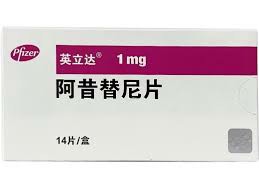
Concerning the pharmacokinetics of axitinib, studies have shown that its effective plasma half-life is relatively short, usually between 2.5 and 6.1 hours. Axitinib is rapidly absorbed after oral administration, typically reaching maximum plasma concentration (Cmax) within 4 hours. Its average absolute bioavailability is 58%. In patients with advanced renal cell carcinoma, the geometric mean Cmax of the drug was 27.8 ng/mL and the area under the plasma concentration-time curve (AUC24) was 265 ng·h/mL when 5 mg was administered twice daily. It is worth mentioning that axitinib has a binding rate of more than 99% to human plasma proteins in vivo, mainly binding to albumin, and also binds to α1-acid glycoprotein to a moderate extent.
Axitinib is mainly metabolized by the liver, mainly relying on cytochromeP450 (CYP) 3A4/5. It is also metabolized by CYP1A2, CYP2C19 and uridine diphosphate glucuronosyltransferase (UGT) 1A1. Its major plasma metabolites, M12 and M7, are considered to have no pharmacological activity. The excretion of axitinib is primarily via the liver and gallbladder, with relatively small amounts excreted in the urine. Studies have shown that mild hepatic impairment does not significantly affect the plasma exposure of axitinib, but in patients with moderate hepatic impairment, the AUC (from time 0 to infinity) increases twofold after taking a 5 mg dose.
In terms of drug interactions, when working with strongWhen CYP3A4/5 inhibitors such as ketoconazole are used together, the C max and AUC of axitinib increase by 1.5-fold and 2-fold respectively; while when used together with strong CYP3A4/5 inducers such as rifampicin, the C max and AUC decrease by 71% and 79% respectively. In addition, when used at normal clinical doses, axitinib does not inhibit multiple CYP enzymes, including CYP3A4/5, CYP1A2, CYP2C8, etc., and is not expected to have significant interactions with drugs metabolized by these enzymes.
Reference materials:https://pubmed.ncbi.nlm.nih.gov/23677771/
[ 免责声明 ] 本页面内容来自公开渠道(如FDA官网、Drugs官网、原研药厂官网等),仅供持有医疗专业资质的人员用于医学药学研究参考,不构成任何治疗建议或药品推荐。所涉药品可能未在中国大陆获批上市,不适用于中国境内销售和使用。如需治疗,请咨询正规医疗机构。本站不提供药品销售或代购服务。


