
.jpeg)
What are the precautions for Trientine?
Trientine (Trientine) precautions include the following aspects. In clinical studies for the treatment of Wilson's disease (hepatolenticular degeneration), it is necessary to pay attention to issues related to allergic reactions, laboratory tests, drug interactions, and special populations under the guidance of doctors. At the same time, special attention should be paid to discontinuation measures. For example, the dose should be gradually reduced when recovering after discontinuation of medication, or permanent discontinuation of medication should be considered based on specific circumstances.
1. Allergic reactions: There are no reports of allergic reactions in patients using trientine hydrochloride to treat hepatolenticular degeneration. However, there have been reports of asthma, bronchitis, and dermatitis in workers using trientine hydrochloride as an epoxy resin hardener after long-term exposure. Patients should be closely observed for signs of possible allergy.
2. Medication Instructions: Patients should be instructed to take trientine on an empty stomach, at least one hour before or two hours after meals, and to stay away from any other drugs, food or milk for at least one hour. Capsules should be swallowed whole with water and should not be opened or chewed. Due to potential contact dermatitis, any area exposed to capsule contents should be washed immediately with water. During the first month of treatment, the patient's temperature should be taken every night and he or she should be asked to report any symptoms, such as fever or rash.
3. Laboratory tests:The most reliable indicator for monitoring treatment is the measurement of free copper in serum, which is equal to the difference between quantitatively determined total copper and ceruloplasmin copper. Serum free copper levels in adequately treated patients are usually less than10mcg/dL. Treatment can be monitored by a 24-hour urine copper analysis at regular intervals (i.e. every6-12 months). Urine must be collected in copper-free glassware. Because a low-copper diet should keep copper absorption below 1 mg per day, if 0.5-1.0 mg of copper is present in a 24-hour urine collection, the patient may be in the desired negative copper balance.
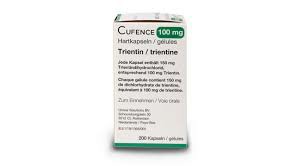
4. Drug Interactions: In general, mineral supplements should not be given as they may hinder purine absorption. However, iron deficiency may develop, especially in children and during menstruation or in pregnant women, or due to Wilson's disease as recommended by a low copper diet. If necessary, iron can be given in the short term, but since iron and trientine inhibit each other's absorption, a two-hour gap should be allowed between trientine and iron doses.
It is important to take trientine on an empty stomach, at least one hour before or two hours after a meal, and at least one hour away from other medicines, food, or milk. This maximizes absorption and reduces the likelihood of drug inactivation in the gastrointestinal tract due to metal binding.
5. Pregnancy: The teratogenic dose of trientine hydrochloride in rats is similar to that in humans. When rats were given trientine hydrochloride in the maternal diet, the frequency of resorption and fetal abnormalities (including hemorrhage and edema) increased, while fetal copper levels decreased. There are no adequate and well-controlled studies in pregnant women. Trientine should be used during pregnancy only if the potential benefit justifies the potential risk to the fetus.
6. Breastfeeding mothers: It is unknown whether this drug is excreted in human milk. Because many drugs are excreted in breast milk, nursing mothers should be cautious when taking this product.
Reference materials:https://dailymed.nlm.nih.gov/dailymed/drugInfo.cfm?setid=c34f77a7-996b-4470-b5df-d946a7fe5dbe##
[ 免责声明 ] 本页面内容来自公开渠道(如FDA官网、Drugs官网、原研药厂官网等),仅供持有医疗专业资质的人员用于医学药学研究参考,不构成任何治疗建议或药品推荐。所涉药品可能未在中国大陆获批上市,不适用于中国境内销售和使用。如需治疗,请咨询正规医疗机构。本站不提供药品销售或代购服务。


