
.jpeg)
Obeticholic Acid Versus Ursodeoxycholic Acid: Which Drug Is Better?
Obeticholic acid (Obeticholic acid) and ursodeoxycholic acid (ursodeoxycholic acid) are both widely used in the treatment of primary biliary cirrhosis (PBC), but there are significant differences in their mechanism of action, scope of application and efficacy.
Usodeoxycholic acid, as a traditional bile acid, is a commonly used drug in the treatment of PBC. It reduces liver damage and inflammation primarily by improving bile flow and reducing cholestasis. Ursodeoxycholic acid can promote the excretion of bile salts and reduce the concentration of harmful bile salts in liver cells, thereby effectively reducing liver cell damage and fibrosis. In addition, it has immunomodulatory properties and can reduce local inflammation in the liver. This makes ursodeoxycholic acid the treatment of choice in patients with early-stage or mild PBC, often significantly improving liver function and slowing disease progression.
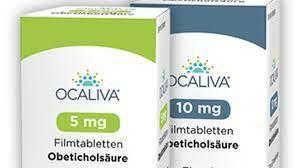
Relatively speaking, obeticholic acid is a new farnesoidX receptor (FXR) agonist. It not only improves the flow of bile, but also further alleviates liver inflammation and fibrosis by inhibiting the synthesis of bile acids and reducing the burden of bile acids in hepatocytes. Obeticholic acid is particularly useful in patients who have a poor response to ursodeoxycholic acid or who cannot tolerate the drug. Research shows that in some cases, obeticholic acid can provide more significant therapeutic benefits. At the same time, while obeticholic acid increases liver bile flow, it also helps improve metabolic status and reduce the risk of complications caused by cholestasis.
In clinical applications, many medical professionals tend to use these two drugs together in order to obtain better effects. Ursodeoxycholic acid can be used as basic treatment, while obeticholic acid can be used as an auxiliary drug to enhance the therapeutic effect. For some severely ill patients, obeticholic acid alone has also shown good efficacy.
Reference materials:https://pmc.ncbi.nlm.nih.gov/articles/PMC5723701/
[ 免责声明 ] 本页面内容来自公开渠道(如FDA官网、Drugs官网、原研药厂官网等),仅供持有医疗专业资质的人员用于医学药学研究参考,不构成任何治疗建议或药品推荐。所涉药品可能未在中国大陆获批上市,不适用于中国境内销售和使用。如需治疗,请咨询正规医疗机构。本站不提供药品销售或代购服务。


