
.jpeg)
Comparison of the effects of vorasidenib-VORANIGO and vorasidenib in the treatment of glioma
Both Vorasidenib (Vorasidenib) and Ivosidenib (Ivosidenib) are IDH mutation inhibitor, mainly targeting isocitrate dehydrogenase 1 (IDH1) or IDH2 mutant enzyme. Voxiranib can simultaneously inhibit IDH1 and IDH2 mutations, in IDH1/2< The accumulation of 2-hydroxyglutarate (2-HG) is reduced in patients with span>mutated glioma and inhibits tumor cell proliferation. Ivonib mainly targets IDH1 mutations and has a similar mechanism of action. It improves the tumor metabolic environment and cell differentiation status by reducing 2-HG levels.
Voxirinib is currently mainly used in clinical trials of low-grade glioma (LGG) and recurrent glioma. It is suitable for IDH1/2 mutation-positive patients, especially maintenance treatment after surgery or adjuvant treatment with radiotherapy and chemotherapy. Ivonib is suitable for IDH1 mutated relapsed or refractory gliomas, and is also approved for use in some hematological tumors (such as acute myeloid leukemia). Overall, the indication coverage of vorsidenib is slightly wider and can target more patients with gliomas with IDH mutations.
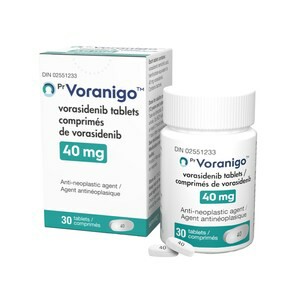
Clinical trial data show that vorsidenib can significantly prolong progression-free survival (PFS) in patients with IDH mutated gliomas, and maintain tumor stability for more than 12 months in some cases. Ivosidenib also shows certain efficacy in IDH1 mutated gliomas, but the treatment duration and some indicators are slightly lower than those of vosidenib, and it is ineffective in patients with IDH2 mutations. The dual-target properties of vorsidenib make it useful in a wider range of IDHIDHPotential advantages in mutated glioma populations.
Both voxanib and ivosidenib are well tolerated, and common side effects include Fatigue, nausea, mild abnormalities in hematological indicators, and elevated liver function. In the long-term maintenance treatment of voxanib, attention needs to be paid to changes in liver function and blood indicators. However, voxanib has a single target and a slightly narrow side effect spectrum. During clinical selection, which drug to use should be decided based on IDH mutation type, glioma grade, previous treatment history, and patient tolerance to maximize efficacy and balance safety.
Reference link:https://www.drugs.com
[ 免责声明 ] 本页面内容来自公开渠道(如FDA官网、Drugs官网、原研药厂官网等),仅供持有医疗专业资质的人员用于医学药学研究参考,不构成任何治疗建议或药品推荐。所涉药品可能未在中国大陆获批上市,不适用于中国境内销售和使用。如需治疗,请咨询正规医疗机构。本站不提供药品销售或代购服务。


