
.jpeg)
Detailed requirements on usage and dosage in Platinib (Pujihua) instructions
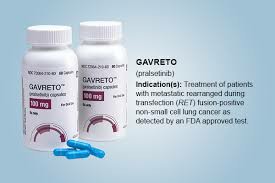
Pralsetinib (trade name: Gavreto) is a new type of RET inhibitor, mainly used to treat malignant tumors related to RET gene fusion or RET mutations. As a representative targeted drug in the era of precision medicine, platinib has shown good efficacy in the treatment of lung cancer and thyroid cancer. However, in order to ensure maximum efficacy and reduce adverse reactions, it is important to correctly grasp the "usage and dosage" in its instructions. The relevant content in the instructions for Platinib will be explained in detail below.
1. Recommended usage and dosage
1.Standard recommended dosage
The recommended adult dose of Platinib is 400mg, taken orally once daily on an empty stomach.
Fasting requirements: Take at least 2 hours before meals or 1 hours after meals.
When taking the medicine, swallow the tablet whole and do not crush, chew or break it.
The reason why fasting is required is because food may affect the absorption rate and blood concentration of drugs in the body, thus changing the efficacy and safety.
2.Applicable people
Non-small cell lung cancer (NSCLC): Patients diagnosed as RET gene fusion positive.
Medullary thyroid cancer (MTC) or RETfusion-positive thyroid cancer: includes patients with locally advanced or metastatic cases who are refractory to or intolerant to other therapies.
For children and adolescent patients, there is currently insufficient safety and efficacy data, so the recommended dosage is not yet clear in the instructions.
2. Dose adjustment and adverse reaction management
In actual clinical application, different patients have different tolerances to platinib. When serious adverse reactions occur, the instructions recommend adjusting the dose or suspending the medication according to the situation.
1.Common dose adjustment strategies
First dose reduction: from 400mg/ times to 300mg/ times, once a day.
Reduce the dose again: If it is still intolerable, further reduce to 200mg/ times, once a day.
If the lowest dose is not tolerated: Permanent discontinuation is recommended.
2.Principles for handling adverse reactions
Abnormal liver function (ALT/AST elevation): If it is ≥3 grade, platinib needs to be suspended until it returns to ≤1 grade or baseline value, and then consider resuming the drug at a reduced dose.
Hematological toxicity (such as neutropenia, anemia): ≥3 The treatment should be suspended, and the drug can be restarted at a reduced dose after recovery.
Hypertension: When severe or difficult-to-control hypertension occurs, medication needs to be interrupted and symptomatic treatment is required. Treatment can be resumed after blood pressure is controlled, and the dose can be reduced according to the situation.
Interstitial lung disease (ILD)/Pneumonitis: If drug-related is confirmed, the drug usually requires permanent discontinuation.
The instructions emphasize that the key to dosage adjustment is to ensure safety while taking into account efficacy to avoid a decrease in efficacy due to blind reduction in dosage.
3. Medication Instructions for Special Populations
1.Patients with liver function impairment
Patients with mild and moderate hepatic impairment (Child-Pugh A or B) generally do not need to adjust the dose.
In patients with severe hepatic impairment (Child-Pugh C), drug metabolism may be significantly affected and should be used with caution. Data are currently limited.
2.Patients with renal impairment
No dose adjustment is required in patients with mild and moderate renal impairment.
In patients with severe renal impairment, the risks versus benefits should be carefully assessed due to the lack of adequate clinical studies.
3.Elderly patients
Clinical trial data show that there is no significant difference in efficacy and safety between elderly patients and young patients, so no special dosage adjustment is recommended in the instructions.
4.Pregnant and lactating women
Platinib may cause harm to the fetus and is therefore contraindicated in pregnant women. Breastfeeding women should avoid breastfeeding during treatment and for some time after stopping the drug.
4. Medication precautions and patient medication guidance
1.What to do if you forget to take medication
If it is ≥12 hours before the next dose, take it as soon as possible;
If the next dose is <12 hours away, the missed dose should be skipped and the missed dose should not be doubled.
2.Drug interactions
Platinib is mainly metabolized byCYP3A4, therefore:
Avoid co-administration of strong CYP3A4 inhibitors (such as itraconazole, clarithromycin), otherwise it will increase the plasma concentration of platinib and cause toxicity.
Avoid co-administration of strong CYP3A4 inducers (such as rifampicin, carbamazepine), otherwise the efficacy of platinib will be reduced.
At the same time, platinib may affect the metabolism of certain P-gp substrate drugs, and blood drug levels need to be monitored.
3.Monitoring and follow-up
Regularly monitor blood routine, liver and kidney function, and electrolyte levels.
Patients with dyspnea, persistent cough, or fever should be alert to interstitial pneumonia.
For patients taking medication for a long time, blood pressure should be monitored and drug-related hypertension should be dealt with in a timely manner.
Platinib is a precision targeted therapy drug whose efficacy has been confirmed in multiple clinical studies. But its safety management is equally important, so the instructions put forward strict requirements for "usage and dosage". The core content can be summarized as the following points:
The standard dose is400mg once a day, taken orally on an empty stomach.
According to adverse reactions, dose adjustment or discontinuation is performed in stages.
Special groups need individualized assessment of medication risks, especially pregnant women and patients with severe liver and kidney function impairment.
Strictly pay attention to drug interactions and follow-up monitoring to ensure efficacy and safety to the greatest extent.
For patients, following the instructions and standardizing the medication under the guidance of a doctor are the prerequisites for ensuring the efficacy and safety of Platinib. Any dosage adjustment or discontinuation should be made under the evaluation and supervision of a professional physician and should never be changed on your own.
Reference link:https://www.drugs.com
[ 免责声明 ] 本页面内容来自公开渠道(如FDA官网、Drugs官网、原研药厂官网等),仅供持有医疗专业资质的人员用于医学药学研究参考,不构成任何治疗建议或药品推荐。所涉药品可能未在中国大陆获批上市,不适用于中国境内销售和使用。如需治疗,请咨询正规医疗机构。本站不提供药品销售或代购服务。


