
.jpeg)
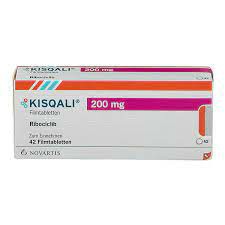
Detailed instruction manual for Ribociclib/Calilon
1. Common name and product name
-Common names: Ribociclib, Ribociclib
-Product name: KISQALI, Kaililong
-Other names: ribociclib succinate tablets, ribociclib, ribocicillin
2. Indications
Ribociclib is a targeted drug for hormone receptor (HR)-positive and human epidermal growth factor receptor 2 (HER2)-negative breast cancer. It is mainly suitable for the treatment of advanced or metastatic breast cancer in adult patients. Its indications include:
1. Combination drug treatment strategy:
- As initial endocrine-based therapy, reboxiclib can be used in combination with an aromatase inhibitor;
- In combination with fulvestrant for use in postmenopausal women or men as initial therapy with endocrine therapy or as a treatment option after disease progression.
3. Usage and dosage
1. Recommended dose: Take 600 mg of Riboxiclib every day, divided into three 200 mg film-coated tablets. Use it continuously for 21 days and then stop taking it for 7 days, forming a 28-day cycle. It can be taken with food or on an empty stomach.
2. Combined dosage:
-Aromatase inhibitor dosage should be adjusted according to the prescribing information for the specific drug;
-The recommended dose of fulvestrant is 500 mg on days 1, 15, 29, then monthly thereafter.
3. Dose adjustment:
- If the patient experiences discomfort, the doctor can adjust the dose of Riboxil according to the situation, including reducing or stopping the medication.
- The initial dose can be adjusted to 400mg/day and further reduced to 200mg/day if necessary.
- For patients receiving concomitant use of strong CYP3A inhibitors, it is recommended that the dose be adjusted to 400 mg/day.
- The starting dose in patients with moderate or severe hepatic impairment should be 400 mg/day.
- The recommended starting dose for patients with severe renal impairment is 200mg/day.
4. Adverse reactions
In clinical studies of Riboxil, common adverse reactions (incidence≥20%) include:
-Hematological abnormalities: leukopenia, neutropenia, hemoglobin decrease, lymphopenia, thrombocytopenia.
-Abnormal liver function: elevation of aspartate aminotransferase, alanine aminotransferase and gamma-glutamyl transferase.
-Other common reactions: infection, nausea, fatigue, diarrhea, constipation, hair loss, etc.
-Rare but serious adverse reactions include: interstitial lung disease, Stevens-Johnson syndrome, toxic epidermal necrolysis, etc.
5. Storage
Riboxiclib should be stored20°C to 25°C (68°F to 77°F) in the original packaging to ensure its stability and effectiveness.
6. Mechanism of action
Riboxiclib, as aCDK4/6 inhibitor, mainly exerts anti-tumor effects by inhibiting the activity of cyclin-dependent kinases 4 and 6. Its mechanisms include:
-Cell cycle regulation: CDK4/6 binds to and activates D-cyclin, thereby promoting cell cycle progression and proliferation.
-pRb phosphorylation: Riboxiclib reduces the phosphorylation level of pRb, causing cell cycle arrest in the G1 phase, thereby inhibiting the proliferation of breast cancer cells.
-Clinical Observations: In xenograft models, administration of reboxiclib was shown to be a significant reduction in tumor volume and was associated with inhibition of pRb phosphorylation.
-Combination therapy effect: When used in combination with anti-estrogen drugs (such as letrozole), the inhibitory effect on tumor growth can be significantly improved.
Reference materials:https://us.kisqali.com/
[ 免责声明 ] 本页面内容来自公开渠道(如FDA官网、Drugs官网、原研药厂官网等),仅供持有医疗专业资质的人员用于医学药学研究参考,不构成任何治疗建议或药品推荐。所涉药品可能未在中国大陆获批上市,不适用于中国境内销售和使用。如需治疗,请咨询正规医疗机构。本站不提供药品销售或代购服务。


