
.jpeg)
Clinical efficacy and data of vorasidenib-VORANIGO in the treatment of glioma
Vorasidenib (trade name VORANIGO) is an oral small molecule selective IDH1/IDH2 mutation inhibitor, mainly used to treat patients with low-grade gliomas carrying IDH1 or IDH2 mutations. IDHMutation is one of the important driving factors of glioma, which can lead to the accumulation of intracellular 2-hydroxyglutarate (2-HG), interfere with cell differentiation and promote tumorigenesis. By selectively inhibiting mutant IDHenzyme activity and reducing 2-HG levels, vorsidenib restores cell differentiation and inhibits tumor growth, providing a new option for precise targeted therapy for patients with low-grade gliomas.
In clinical trials, vorsidenib has shown good efficacy. According to clinical study data from Phase III and Phase II clinical studies, vorsidenib can significantly delay tumor progression (PFS) and improve patients' quality of life. Among patients with recurrent low-grade glioma treated with voroxiranib, some cases show that the disease stabilization rate (DCR) reaches 70% or more. Although the overall response rate (ORR) is not as high as chemotherapy, the long-term disease control effect is significantly better than traditional treatments.
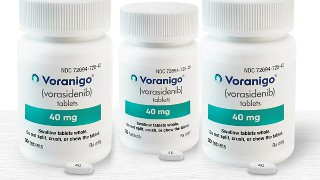
Vorsidenib has a manageable side effect profile in terms of safety. Common adverse reactions include mild to moderate fatigue, nausea, mild abnormalities in hematological parameters, and mild increases in liver function. Overall, most of the adverse events of vorsidenib can be controlled through dose adjustment or symptomatic treatment, and the incidence of serious adverse events is low, which allows patients to take it for a long time to maintain disease control while taking into account quality of life.
In addition, the clinical application of vorsidenib provides personalized treatment options for patients with low-grade glioma. By confirming the IDH1/2 mutation status through molecular testing, doctors can choose vorsidenib as a targeted therapy, especially suitable for maintenance treatment after surgery or for patients with recurrence. With the accumulation of more long-term follow-up data, the advantages of vorsidenib in delaying disease progression, improving prognosis, and reducing the side effects of traditional radiotherapy and chemotherapy will become more obvious, providing a new clinical option for the treatment of glioma.
Reference link:https://www.drugs.com
[ 免责声明 ] 本页面内容来自公开渠道(如FDA官网、Drugs官网、原研药厂官网等),仅供持有医疗专业资质的人员用于医学药学研究参考,不构成任何治疗建议或药品推荐。所涉药品可能未在中国大陆获批上市,不适用于中国境内销售和使用。如需治疗,请咨询正规医疗机构。本站不提供药品销售或代购服务。


