
.jpeg)
What is the recommended dose of adagrasib (Krazati) and medication adjustment suggestions for different patients?
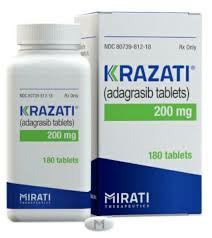
Adagrasib (brand name Krazati) is an oral KRAS G12C inhibitor that has been approved by the FDA for use in patients with previously treated KRAS G12C mutated non-small cell lung cancer. The recommended standard dose is 600mg, taken orally twice a day (BID), and needs to be taken regularly until disease progression or intolerable toxicity occurs. The method of administration can be with food or on an empty stomach, but it is recommended to take the medicine at a roughly fixed time every day to ensure stable blood concentration.
During the actual treatment, if the patient develops adverse reactions of grade ≥3 (such as severe diarrhea, nausea, vomiting, abnormal liver function, etc.), clinicians will usually recommend temporarily discontinuing the drug. After the symptoms return to grade ≤1 or the baseline level, the dose will be adjusted according to the grading principle. A common adjustment method is to reduce from 600mg BID to 400mg BID; if the patient is still unable to tolerate it, it can be further reduced to 600mg QD (once daily). If intolerable toxicity persists at the lowest dose, permanent discontinuation is usually required.
For patients with mild to moderate hepatic impairment, initial dose adjustment is usually not required, but changes in liver enzymes should be closely monitored; patients with severe hepatic impairment should be used with caution, and dose reduction or extended dosing intervals may be considered. Patients with mild to moderate renal impairment generally do not require dose adjustment, but clinical data in patients with severe renal impairment or dialysis are limited and individualized assessment should be made. Elderly patients did not show significant differences from younger people in clinical trials, but due to more underlying diseases, closer follow-up is still recommended.
Adagrasib is mainly metabolized by CYP3A4 . Therefore, when strong CYP3A4 inhibitors (such as ketoconazole) or inducers (such as rifampicin) are used together, its plasma concentration may be significantly changed, and the medication needs to be avoided or adjusted. At the same time, it may affect the metabolism of other drugs, such as P-gp substrates, and attention should be paid to potential interactions. During treatment, patients also need to regularly monitor liver function, electrocardiogram (due to the risk of QTc interval prolongation), gastrointestinal reactions, and communicate with their doctor in a timely manner in the event of relevant adverse events so that dosage adjustments can be made.
Reference link:https://www.drugs.com
[ 免责声明 ] 本页面内容来自公开渠道(如FDA官网、Drugs官网、原研药厂官网等),仅供持有医疗专业资质的人员用于医学药学研究参考,不构成任何治疗建议或药品推荐。所涉药品可能未在中国大陆获批上市,不适用于中国境内销售和使用。如需治疗,请咨询正规医疗机构。本站不提供药品销售或代购服务。


