
.jpeg)
Comprehensive analysis of the mechanism of action and treatment principle of vorasidenib-VORANIGO
Vorasidenib (Vorasidenib, trade name VORANIGO) is an oral small molecule targeted drug, a dual IDH1/IDH2 inhibitor, mainly used to treat patients with IDH1 or IDH2 mutated relapsed or refractory low-grade glioma (LGG) and other hematologic tumors. The core of its mechanism of action is to block the abnormal accumulation of 2-hydroxyglutarate (2-HG) caused by IDH mutations, restore normal cell metabolism and differentiation, thereby delaying or inhibiting tumor development.
At the molecular level, IDH1/IDH2 mutant enzymes are able to abnormally reduce α-ketoglutarate (α-KG) to 2-HG. Excessive 2-HG inhibits a variety of α-KG -dependent demethylases, leading to DNA and histone hypermethylation, thereby hindering cell differentiation, maintaining cancer stem cell properties and promoting tumor proliferation. Vorsidenib inhibits tumor growth by highly selectively inhibiting mutant IDH1 and IDH2 enzyme activities, reducing 2-HG levels, and restoring cell differentiation ability.
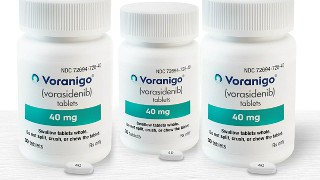
Clinical studies have shown that voroxiranib can significantly reduce the 2-HG concentration in patients with brain glioma or blood tumors, improve the tumor microenvironment, and delay tumor progression. Compared with traditional chemotherapy, its advantages include strong targeting, controllable side effects, and limited impact on normal IDH enzyme, allowing patients to obtain effective treatment while maintaining their quality of life. Vorsidenib can be used as a single agent or in combination with other targeted therapies or chemotherapy regimens to delay the recurrence or progression of patients with low-grade glioma.
In short, the therapeutic principle of voroxanib (VORANIGO) is to inhibit mutant IDH enzyme activity and reduce 2-HG Abnormal accumulation restores cell differentiation ability and blocks the continued growth of tumors. This mechanism makes it highly selective and potentially long-term effective in IDH mutation-related tumors. It also provides a new direction for tumor targeted therapy and provides important clinical intervention options for relapsed or refractory patients.
Reference link:https://www.drugs.com
[ 免责声明 ] 本页面内容来自公开渠道(如FDA官网、Drugs官网、原研药厂官网等),仅供持有医疗专业资质的人员用于医学药学研究参考,不构成任何治疗建议或药品推荐。所涉药品可能未在中国大陆获批上市,不适用于中国境内销售和使用。如需治疗,请咨询正规医疗机构。本站不提供药品销售或代购服务。


