
.jpeg)
The latest news and developments of Carpiseti/Tunicade in 2025
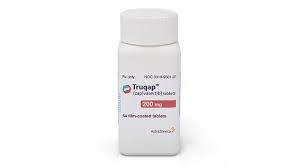
Capivasertib (Capivasertib), as a selective pan-AKT inhibitor, is one of the focus drugs in the field of precision treatment of breast cancer in recent years. Its research and development background is based on the key role of the AKT pathway in various tumors, especially in hormone receptor (HR)-positive/human epidermal growth factor receptor 2 (HER2)-negative advanced breast cancer, where abnormalities in the AKT pathway are often closely related to the occurrence of drug resistance. In 2025, with the update of data from multiple international studies, carpiseti has once again attracted widespread attention in the global oncology community.
Judging from the pivotalPhase III CAPItello-291 study, the combination treatment of capicipositi and fulvestrant has achieved breakthrough results in patients with aromatase inhibitor resistance. The study showed that this combination prolonged progression-free survival both in the overall population and in the subgroup of patients with altered PIK3CA, AKT1, and PTEN genes. This result shows that carpisetin can not only overcome some resistance to hormone therapy, but also bring deeper disease control by inhibiting downstream signaling pathways. This clinical benefit has also become an important basis for multiple regulatory agencies around the world to approve its marketing from the end of 2023 to 2025, making it gradually enter the clinical routine treatment system.
From the perspective of pharmacokinetics and safety, based on the pooled data of more than800 patients, there is no obvious correlation between the drug exposure level and efficacy (including progression-free survival and objective response rate) of capizetin, but there is a certain connection in the incidence of adverse events. In particular, common side effects such as diarrhea and rash are positively correlated with drug exposure levels. Hyperglycemia and serious adverse events did not show a direct relationship with exposure levels. This finding has important clinical value, suggesting that doctors do not need to make dose adjustments due to patient age, weight or racial differences during medication, but mainly rely on adverse reaction monitoring to determine whether dose modification is needed.
In terms of dosing regimen, Carpiseti adopts an "intermittent" mode, that is, 400 mg twice a day, administered for 4 consecutive days, and then stopped for 3 days. This design not only improves patient tolerability but also reduces the risk of long-term toxicity. The latest real-world study results in 2025 further verify the applicability of this dosing model in different populations, indicating that it has extensive promotion value worldwide.
Judging from the latest developments, the application of carpisetin is not limited to breast cancer. Multiple clinical trials are exploring its potential in prostate cancer, ovarian cancer, and some gastrointestinal tumors. BecauseThe AKT signaling pathway plays a key role in the occurrence and drug resistance mechanisms of various tumors, which also lays a theoretical foundation for the application of capizetine across cancer types. Some preliminary data in 2025 have shown positive signals, and its indications may be expanded in the next few years.
In the global market landscape, carpiseti has been included in the clinical guideline recommendations of many countries due to its breakthrough status in the field of breast cancer, especially in Europe and the United States, and has gradually become an important choice for second-line and subsequent treatment. Asia has accelerated its review in the past two years and is expected to enter the medical insurance systems of more countries after 2025, which will improve patient accessibility.
Reference materials:https://www.drugs.com/mtm/capivasertib.html
[ 免责声明 ] 本页面内容来自公开渠道(如FDA官网、Drugs官网、原研药厂官网等),仅供持有医疗专业资质的人员用于医学药学研究参考,不构成任何治疗建议或药品推荐。所涉药品可能未在中国大陆获批上市,不适用于中国境内销售和使用。如需治疗,请咨询正规医疗机构。本站不提供药品销售或代购服务。


