
.jpeg)
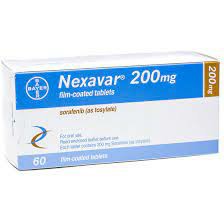
What important information does the detailed instructions for Sorafenib/Nexavar contain?
1. Common name: sorafenib, Sorafenib
Product name:Nexavar, Nexavar
2. Indications
Sorafenib/Nexavar(Sorafenib) is mainly used for the treatment of the following types of cancer:
1. Hepatocellular carcinoma (HCC): Especially for those patients who cannot be surgically removed, the use of sorafenib can delay the progression of the disease.
2. Renal cell carcinoma (RCC): It is suitable for patients with advanced renal cell carcinoma to help improve their survival and quality of life.
3. Differentiated thyroid cancer (DTC): For patients who fail radioactive iodine therapy, sorafenib provides a new treatment option when local recurrence or metastasis occurs.
3. Usage and dosage
1. Recommended dosage: The standard dosage of sorafenib is 400mg per day, divided into two doses. It must be taken before or 2 hours after eating to ensure effective absorption of the drug.
2. Dosage adjustment:
1) Patients with hepatocellular carcinoma and renal cell carcinoma can adjust drug dosage according to tolerance. The initial dose can be reduced to 400mg once a day. If subsequent adjustments are still needed, it can be changed to 200mg once a day or 400mg once every other day.
2) For differentiated thyroid cancer, the initial dose can be 200 mg in the morning and 200 mg in the evening, or 400 mg in the morning and 200 mg in the evening, and then adjusted to a lower dose based on the patient's response.
3. Interruption of treatment: If the patient does not recover after 30 days of interruption of treatment, it is recommended to discontinue treatment unless the patient shows clinical benefit. If multiple dose reductions are necessary, permanent discontinuation of treatment should be considered.
4. Adverse reactions
In clinical studies, common adverse reactions of sorafenib include diarrhea, fatigue, infection, alopecia, hand-foot skin reaction, rash, weight loss, decreased appetite, nausea and gastrointestinal discomfort, abdominal pain, hypertension, and bleeding. After marketing, more serious adverse events were observed, including thrombotic microangiopathy, Stevens-Johnson syndrome, and toxic epidermal necrolysis.
5. Storage conditions
Sorafenib should be stored at a temperature of 20°C to 25°C (68°F to 77°F), with an allowed temperature fluctuation of 15°C to 30°C (59°F to 86°F), and should be stored in a dry place to prevent drug deterioration.
6. Contraindications
This drug should be absolutely contraindicated in patients with a known severe allergic reaction to sorafenib or its components. In addition, sorafenib is contraindicated in patients with certain types of squamous cell lung cancer when combined with other chemotherapy drugs (such as carboplatin and paclitaxel).
7. Mechanism of action
As a multi-target kinase inhibitor, sorafenib can interfere with multiple signaling pathways related to tumor cell growth, angiogenesis and apoptosis. It can inhibit the activity of c-CRAF, BRAF, KIT and other intracellular and intracellular kinases. Sorafenib exhibits its anti-tumor effect by reducing tumor angiogenesis and promoting tumor cell apoptosis.
Through the detailed introduction of the above aspects, it can be seen that sorafenib, as an anti-cancer drug, plays an important role in the treatment of various tumor types, but it is also necessary to strictly follow medical instructions and monitor adverse reactions during use.
Reference materials:https://www.nexavar.com/
[ 免责声明 ] 本页面内容来自公开渠道(如FDA官网、Drugs官网、原研药厂官网等),仅供持有医疗专业资质的人员用于医学药学研究参考,不构成任何治疗建议或药品推荐。所涉药品可能未在中国大陆获批上市,不适用于中国境内销售和使用。如需治疗,请咨询正规医疗机构。本站不提供药品销售或代购服务。


