
.jpeg)
Neoadjuvant letrozole/entrectinib shows limited activity in invasive lobular breast cancer
Patients with non-evaluable invasive lobular breast cancer (n=41) who received first-line endocrine therapy plus entrectinib achieved a residual cancer burden (RCB) of 0 or 1 and did not meet the primary endpoint of the single-arm phase 2 ROSALINE trial (NCT04551495).
Data published in 2025 show that in the efficacy-evaluable patient population, the incidence of RCB II and III after treatment with entrectinib plus letrozole was 61% and 39%, respectively. In the intention-to-treat (ITT) population (n=52), which included patients who received less than 80% of the planned dose of entrectinib, 1 patient had a red blood cell count of 0 or 1. The incidence rates of RCB II and III were 50% and 48%, respectively. Endocrine therapy plus entrectinib has limited efficacy in the neoadjuvant treatment of lobular breast cancer.
Invasive lobular breast cancer accounts for approximately 15% of cancer cases and has different clinical and pathological characteristics compared with other subtypes. One of the most common genomic events in this disease subtype is CDH1 alteration, and approximately 90% of invasive lobular breast tumors lack E-cadherin. Of note, even with the addition of CDK4/6 inhibitors, the pathological complete response (pCR) rate of this subtype of endocrine therapy is relatively low. For example, in the phase 2 neoMONARCH trial (NCT02441946), 190 postmenopausal patients with stage I to III hormone receptor-positive, HER2-negative cancer who underwent surgery after neoadjuvant treatment with abemaciclib, with or without anastrozole, had a pCR rate of 4%.
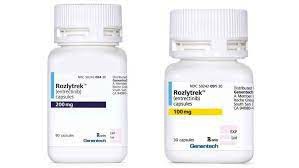
Importantly, in vivo studies ofROS1 inhibitors such as crizotinib and foretinib (formerly XL880) have demonstrated synthetic lethality between E-cadherin deficiency and ROS1 inhibition. 1 The researchers hypothesized that entrectinib, a potent small molecule TKI targeting the TRK, ROS1, and ALK tyrosine kinases, would be active in tumors harboring NTRK, ROS1, or ALK gene fusion mutations and would be effective in first-line aggressive lobules of the cancer based on previously reported lung cancer drug data.
1.ROSALINE Design Overview
Researcher-initiatedThe ROSALINE trial enrolled female patients at least 18 years of age with previously untreated stage IIA to IIIA invasive lobular breast cancer, tumor size greater than 20 mm, N0 or N1 disease, and ECOG performance status 0 or 1. Patients underwent a 28-day screening period, followed by four 28-day treatment cycles with 600 mg of entrectinib and 2.5 mg of letrozole, with or without 3.6 mg of goserelin. After neoadjuvant therapy, the patient underwent surgery. Of note, entrectinib treatment was required to be interrupted at least 7 days before planned surgery, letrozole treatment was allowed to continue until the day of surgery, and goserelin treatment could be initiated prior to study enrollment.
The primary endpoint of the study was the RCB 0/I rate per local assessment. Secondary endpoints included pCR rate per local assessment, overall response rate (ORR) per local assessment MRI, ORR per mRECIST criteria, and safety. Translational research evaluated genomic aberrations and transcriptional programs, RNA sequencing data, and circulating tumor DNA findings.
2. Describe the characteristics of the patient population
A total of65 patients were assessed for eligibility, of whom 56 were eligible and started treatment. Of the patients enrolled, 41 were considered evaluable. Of note, 15 patients who received less than 80% of the planned dose of entrectinib were considered not evaluable. The median age of all evaluable patients was 56 years (interquartile range, 48-62). Of these patients, 44% were premenopausal and 85% had an ECOG performance status of 0. Clinical stage IIA, IIB, and IIIA disease occurred in 37%, 46%, and 17% of patients, respectively. Additionally, 12%, 78%, and 10% of patients had grade 1, 2, and 3 disease, respectively. All patients had estrogen receptor-positive disease, 10% had progesterone receptor-negative disease, and 56% had HER2 1+ or 2+ nonamplified disease. A total of 23% of patients had a Ki-67 score higher than 20%.
3. Demonstrate other therapeutic findings
No patients in the efficacy population achievedpCR. The incidence rates of stage I, IIA, IIB, IIIA, and IIIC disease were 11%, 30%, 20%, 30%, and 10%, respectively. The MRI-assessed confirmed ORR (cORR) rate was 49%, including best overall response of complete response (CR; 10%), partial response (PR; 39%), and stable disease (SD; 51%).
InITT population, 1 patient achieved pCR after 7 days of treatment with letrozole and entrectinib. The incidence rates of stage I, IIA, IIB, IIIA, and IIIC disease were 10%, 28%, 23%, 28%, and 9%, respectively. The MRI-assessed cORR rate was 48%, including best overall response of CR (8%), PR (40%), and SD (52%).
Although according to the testSimon's two-stage design did not reach the RCB 0/I threshold in the first stage, but because of these ORR data, the researchers continued the second stage of the study.
4. Safety data and next steps
In the efficacy population, all patients experienced adverse events (AEs), with 22% grade 3 or higher. Serious adverse events (SAEs) and adverse events of special concern occurred in 7% and 2% of patients, respectively. Sixty-one percent of patients had dose reductions and no patients discontinued treatment. In the safety-evaluable ITT population (n=56), 98% of patients experienced adverse events, 25% of which were grade 3 or higher. Serious adverse events and adverse events of special concern were reported by 7% and 5% of patients, respectively.
The most common adverse events of any grade included constipation, dysgeusia, dizziness, fatigue, arthralgia, nausea, diarrhea, peripheral edema, asthenia, myalgia, dyspnea, dizziness, stomatitis attention, muscle weakness, and vomiting. The most common grade 3 or higher adverse events were arthralgia, fatigue, rash, dizziness, peripheral edema, and myalgia.
Despite these discouraging results, translational analyzes to identify mechanisms of resistance and identify biomarkers are ongoing and will be published.
Reference materials:https://www.onclive.com/view/neoadjuvant-letrozole-entrectinib-shows-limited-activity-in-invasive-lobular-breast-cancer
[ 免责声明 ] 本页面内容来自公开渠道(如FDA官网、Drugs官网、原研药厂官网等),仅供持有医疗专业资质的人员用于医学药学研究参考,不构成任何治疗建议或药品推荐。所涉药品可能未在中国大陆获批上市,不适用于中国境内销售和使用。如需治疗,请咨询正规医疗机构。本站不提供药品销售或代购服务。


