
.jpeg)
Summary of the top ten contraindications for taking Enasidenib
Enasidenib is a selective IDH2 inhibitor that has been approved overseas for the treatment of relapsed or refractory acute myeloid leukemia (AML) with IDH2 gene mutations. As a targeted drug, it achieves therapeutic effects by reversing abnormal cell metabolism and promoting the normal differentiation of leukemia cells. Although ensidipine has shown great value in precision treatment, patients must strictly abide by medical instructions during use, especially paying attention to medication contraindications, to ensure efficacy and reduce risks. The following is a summary of the top ten clinically important contraindications.
First of all, it is prohibited for pregnant and lactating women. Ensidipine has been shown to be potentially toxic to fetal development in animal studies and may cause embryonic damage or birth defects, so its use during pregnancy should be strictly avoided. At the same time, drugs may be secreted through milk and affect infant development, so medication or breastfeeding should also be stopped during lactation.
Secondly, people who are allergic to drug ingredients are strictly prohibited from using it. Ensidipine is a small molecule targeted drug. If a patient has had a severe allergic reaction to its active ingredients or excipients, it cannot be used again to prevent life-threatening anaphylactic shock or severe skin reactions.
Third, untested patients should not take it blindly. Ensidipine is only effective for AML patients with clear IDH2 mutations. If used without molecular testing, not only will there be no benefit, but other effective treatments may be delayed. Therefore, genetic testing is a prerequisite before medication.
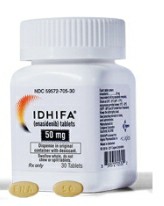
Fourth, patients with severe liver damage should avoid using it. Ensidipine is metabolized in the liver. If the patient has obvious hepatic insufficiency, the drug may accumulate and increase toxicity. For mild to moderate liver function abnormalities, the dose should be adjusted or closely monitored under the guidance of a physician.
Fifth, patients who are taking strongCYP3A4 inhibitors or inducers should be cautious or even banned. Ensidipine is metabolized by the CYP3A4 enzyme. If related drugs are used together, the blood concentration of the drug will significantly increase or decrease, thus affecting the efficacy and safety.
Sixth, patients with significant leukocyte elevation should be cautious. Ensidipine can induce the differentiation of leukemia cells, and some patients may develop hyperleukemia, resulting in increased blood viscosity and increased risk of thrombosis. Therefore, if there is a significant increase in white blood cells before treatment, corresponding control measures should be taken first.
Seventh, patients with severe cardiac insufficiency or a history of severe arrhythmia should be banned. Ensidipine may cause electrolyte imbalance and QT interval prolongation in some cases, thereby increasing the risk of arrhythmias. Extreme caution is required when administering the drug to these patients.
Eighth, it cannot be mixed with unverified herbal medicine or health products. Some herbal medicines may interfere with drug metabolism or increase toxic reactions. For example, preparations containing St. John’s Wort may affect the CYP pathway, thereby reducing the efficacy of ensidipine.
Ninth, use should be suspended when combined with active infection. Ensidipine improves leukemia through differentiation mechanism, but the differentiation process may cause differentiation syndrome, with symptoms similar to infection. If the patient already has a serious infection, hasty medication may aggravate the condition or mask the progression of the infection.
Tenth, if patients cannot be followed up and monitored regularly, long-term use is not recommended. During ensidipine treatment, blood, liver and kidney function, electrolytes, and electrocardiogram need to be monitored regularly. In the absence of monitoring, the risks may outweigh the benefits, so it is not suitable for patients with poor compliance or insufficient conditions.
Reference materials:https://www.idhifa.com/
[ 免责声明 ] 本页面内容来自公开渠道(如FDA官网、Drugs官网、原研药厂官网等),仅供持有医疗专业资质的人员用于医学药学研究参考,不构成任何治疗建议或药品推荐。所涉药品可能未在中国大陆获批上市,不适用于中国境内销售和使用。如需治疗,请咨询正规医疗机构。本站不提供药品销售或代购服务。


