
.jpeg)
What is the resistance to Vandetanib?
Vandetanib (Vandetanib) has shown good efficacy in the treatment of advanced medullary thyroid cancer (MTC; thyroid cancer), but long-term use inevitably faces resistance problems, which is also a common challenge in clinical management. The mechanisms of drug resistance are complex and mainly include target mutations, activation of signaling pathways, differences in drug metabolism, and changes in the tumor microenvironment. Secondary mutations in the RET receptor are one of the most critical drug resistance factors. Such mutations will reduce the binding affinity of vandetanib to RET tyrosine kinase, reactivating the downstream RAS-RAF-MEK-ERK signaling pathway and allowing tumor cell proliferation to continue. In addition, tumor cells may escape from treatment by activating EGFR, VEGFR or other receptor tyrosine kinase pathways, resulting in reduced efficacy.
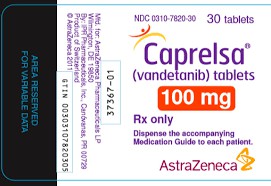
In clinical practice, the emergence of drug resistance is usually manifested by tumor volume growth on imaging, abnormal biochemical indicators, or aggravation of symptoms. Some patients may experience new lesions or progression of existing lesions after 6 to 12 months of treatment. Differences in drug metabolism also affect the risk of drug resistance. Vandetanib is mainly metabolized by liver CYP3A4, and its N-desmethyl metabolite remains active. However, individual differences in enzyme activity may lead to insufficient blood drug concentration, thereby reducing efficacy.
In the face of drug resistance, a variety of intervention strategies can be adopted clinically. The first is dose adjustment. Some patients can delay the emergence of drug resistance by increasing the dose or changing the frequency of dosing. The second is the combination of drugs, such as other targeted drugs or anti-angiogenic drugs, which inhibit tumor proliferation through multiple pathways. In addition, a new generation of RET selective inhibitors has been shown to be effective against secondary mutation resistance in clinical trials, providing new treatment options for patients.
Long-term follow-up and surveillance are critical for resistance management. Imaging examinations (CT, MRI), serum biomarkers (such as calcitonin, CEA) and genetic testing can detect drug resistance signals in time. For high-risk patients, physicians may recommend more frequent follow-up and individualized dose adjustments to maximize the period of disease control. In addition, drug resistance management should also take into account the patient's quality of life to prevent the accumulation of side effects from affecting tolerance.
Reference materials:https://www.drugs.com/caprelsa.html
[ 免责声明 ] 本页面内容来自公开渠道(如FDA官网、Drugs官网、原研药厂官网等),仅供持有医疗专业资质的人员用于医学药学研究参考,不构成任何治疗建议或药品推荐。所涉药品可能未在中国大陆获批上市,不适用于中国境内销售和使用。如需治疗,请咨询正规医疗机构。本站不提供药品销售或代购服务。


