
.jpeg)
Analysis of the efficacy of larotrectinib (Vitaika) combined with other targeted drugs
Larotrectinib is a highly selective NTRK fusion inhibitor, mainly used to treat patients with solid tumors carrying NTRK gene fusions. Although the incidence of this type of gene fusion is not high in various tumors, it responds significantly to targeted therapy. With the development of precision medicine, single-drug targeted therapy may have reduced efficacy or resistance in some patients. Therefore, exploring the efficacy and safety of larotrectinib in combination with other targeted drugs has become the focus of clinical research.
The main purpose of using larotrectinib in combination with other targeted drugs is to enhance the anti-tumor effect and delay the occurrence of drug resistance. Patients treated with larotrectinib alone usually achieve higher objective response rates in the early stages, but some patients may experience tumor progression as treatment time increases. Combining targeted drugs that inhibit related signaling pathways, such as MEK inhibitors or PI3K pathway inhibitors, can complement larotrectinib in terms of mechanism, thereby enhancing the effect of tumor cell apoptosis and inhibiting proliferation. Pre-clinical studies have shown that this combination can significantly inhibit tumor growth in cell lines and animal models, and some drug-resistant cells show higher sensitivity to combined treatment.
In clinical practice, there have been some exploratory studies on the use of larotrectinib in combination with other targeted drugs. For patients with drug resistance or unsatisfactory partial response, combined use of EGFR inhibitors, ALK inhibitors or other signaling pathway inhibitors can target different driver genes and bypass activation mechanisms. Preliminary clinical data indicate that this combination therapy can improve disease control rates and prolong progression-free survival (PFS) in a certain proportion of patients. The advantage of combination regimens is that they can overcome the limitations of single-agent targeted therapy, especially when tumors have complex molecular backgrounds or multiple mutations.
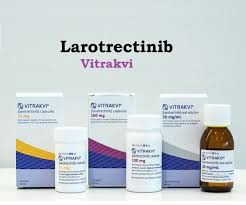
However, combined drug use also brings safety challenges that cannot be ignored. Larotrectinib itself is well tolerated, but when used in combination with other targeted drugs, patients may develop hematological abnormalities, liver function abnormalities, rashes, or adverse gastrointestinal reactions. Clinically, it is usually necessary to reduce the risk of side effects through dose optimization, interval adjustment, and symptomatic treatment. For example, for patients with abnormal hematological indicators, the dosing interval can be appropriately extended or the dosage reduced. For patients with abnormal liver function, liver function needs to be closely monitored and the dosage adjusted according to the situation.
Combination strategies need to be highly individualized. The patient's age, underlying disease, previous treatment experience, tolerance ability, and tumor molecular characteristics will all affect the choice of combination regimen. The individualized treatment plan involving the multidisciplinary team (MDT) can effectively balance efficacy and safety, ensuring that patients obtain the best anti-tumor effect while minimizing side effects. Clinical guidelines and studies recommend that comprehensive molecular testing and risk assessment should be conducted before combined use, and a regular follow-up and monitoring mechanism should be established.
Taken together, larotrectinib has significant clinical potential when used in combination with other targeted drugs. Through complementary mechanisms and delaying drug resistance, combination therapy can improve the objective response rate, prolong progression-free survival, and improve overall survival benefit. Although the safety of the combination regimen requires strict monitoring, through scientific dose adjustment and individualized management, most patients can tolerate the treatment and benefit. In the future, as more clinical research data accumulates, larotrectinib combined with targeted drugs is expected to become an important treatment option for patients with NTRK fusion tumors, providing broader application prospects for precision medicine.
Reference materials:https://www.drugs.com/
[ 免责声明 ] 本页面内容来自公开渠道(如FDA官网、Drugs官网、原研药厂官网等),仅供持有医疗专业资质的人员用于医学药学研究参考,不构成任何治疗建议或药品推荐。所涉药品可能未在中国大陆获批上市,不适用于中国境内销售和使用。如需治疗,请咨询正规医疗机构。本站不提供药品销售或代购服务。


