.jpeg)
Hetrombopag vs. Avatrombopag: Key Differences Between Two Oral TPO-RAs and Safety Considerations
1.Drug Positioning and Shared Foundation
Hetrombopag and avatrombopag both belong to the class of oral thrombopoietin receptor agonists(TPO-RAs).They exert their therapeutic effect by activating the thrombopoietin receptor(c-Mpl),thereby stimulating megakaryocyte proliferation and differentiation and ultimately increasing platelet production.While both agents are used clinically for the management of thrombocytopenia,they differ significantly in chemical structure,pharmacokinetic properties,breadth of approved indications,and dosing convenience.A thorough understanding of these distinctions is essential for clinicians to make precise,individualized treatment decisions.
2.Mechanism of Action and Structural Differences
Although hetrombopag and avatrombopag share the same ultimate pharmacological outcome—enhanced platelet production—their molecular structures and receptor-binding characteristics differ.
Hetrombopag contains a metal-chelating moiety in its molecular structure,a feature it shares with eltrombopag.Due to this chelating group,hetrombopag can form complexes with polyvalent cations(such as calcium,iron,magnesium,and aluminum)in the gastrointestinal tract,which may impair drug absorption.Consequently,hetrombopag should be administered on an empty stomach and patients should avoid concurrent intake of metal ion-containing foods or supplements.
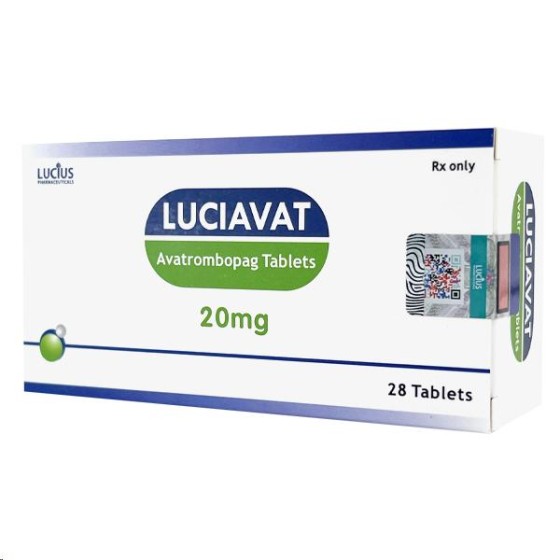
Avatrombopag,by contrast,is a small-molecule non-peptide TPO-RA that does not contain a metal-chelating group.This structural characteristic means its pharmacokinetics are not significantly affected by food or polyvalent cations.Patients may take avatrombopag with or without meals,offering substantially greater dosing convenience compared to hetrombopag.
3.Comparison of Approved Indications
The two drugs share overlapping indications but also have distinct areas of focus.
In chronic immune thrombocytopenia(ITP),both hetrombopag and avatrombopag are approved for patients who have had an insufficient response to prior standard therapies such as corticosteroids and immunoglobulins.Avatrombopag's ITP indication extends to pediatric patients aged one year and older,whereas hetrombopag is currently approved primarily for adult chronic ITP.
In thrombocytopenia associated with chronic liver disease,avatrombopag holds a specific perioperative indication for patients with chronic liver disease who are scheduled to undergo invasive procedures,supported by robust evidence for pre-procedural platelet elevation.Hetrombopag has relatively limited clinical data in this setting and has not yet established an equivalent level of evidence.
Additionally,hetrombopag is approved for the treatment of severe aplastic anemia(SAA),an indication not currently covered by avatrombopag.
4.Dosing Regimens and Onset of Action
The dosing approaches for the two agents differ considerably.
For chronic ITP,avatrombopag is initiated at 20 mg orally once daily,with dose adjustments based on platelet count response,up to a maximum of 40 mg per day.For perioperative platelet elevation in chronic liver disease,the daily dose(40 mg or 60 mg)is determined by baseline pre-procedural platelet count and administered for five consecutive days.Avatrombopag demonstrates a relatively rapid onset of action,with significant platelet count increases typically observed within three to five days of initiation.
Hetrombopag is initiated at a lower dose of 2.5 mg to 5 mg once daily,with gradual dose titration based on platelet response,up to a maximum of 7.5 mg per day.Compared to avatrombopag,hetrombopag requires a longer titration period and a more gradual dose adjustment process.
Regarding administration conditions,avatrombopag may be taken with food and is unaffected by high-fat meals.Hetrombopag must be taken on an empty stomach—one hour before or two hours after a meal—and patients should avoid consuming polyvalent cation-containing foods or supplements around the time of dosing.
5.Pre-Treatment Safety Warnings
Regardless of whether hetrombopag or avatrombopag is selected,a comprehensive safety assessment is required before initiating therapy.
Thrombotic Risk Assessment:TPO-RA agents carry a potential risk of thromboembolic events,including deep vein thrombosis,pulmonary embolism,and arterial thrombosis.Caution is warranted in patients with a history of thrombosis,hypercoagulable states,or other thrombotic risk factors.If signs of thromboembolism—such as lower extremity swelling and pain,chest pain,dyspnea,sudden severe headache,or visual disturbances—occur during treatment,immediate medical attention is required.
Hepatic Monitoring:Both agents may cause elevations in liver enzymes.Patients with baseline hepatic impairment should start at a lower dose,and liver function should be monitored regularly throughout treatment.If significant transaminase elevations or signs of hepatic injury such as jaundice develop,prompt evaluation for dose adjustment or treatment discontinuation is necessary.
Hematologic Evaluation:A complete hematologic workup should be performed before initiating TPO-RA therapy to exclude underlying malignant clonal hematologic disorders.Patients with myelodysplastic syndromes(MDS)should not receive TPO-RA agents due to the potential risk of promoting clonal evolution.
Special Populations:Safety data for both hetrombopag and avatrombopag during pregnancy and lactation are insufficient.Women of childbearing potential should use effective contraception during treatment.
6.Summary
As oral agents within the same TPO-RA class,hetrombopag and avatrombopag each offer distinct advantages in the management of thrombocytopenia.Avatrombopag stands out in terms of dosing convenience,speed of onset,and perioperative evidence.Hetrombopag provides unique value through its broader indication coverage,including severe aplastic anemia.Clinical selection should integrate the patient's specific disease type,comorbidities,adherence considerations,and individual risk profile to determine the most appropriate therapeutic strategy.
[ 免责声明 ] 本页面内容来自公开渠道(如FDA官网、Drugs官网、原研药厂官网等),仅供持有医疗专业资质的人员用于医学药学研究参考,不构成任何治疗建议或药品推荐。所涉药品可能未在中国大陆获批上市,不适用于中国境内销售和使用。如需治疗,请咨询正规医疗机构。本站不提供药品销售或代购服务。