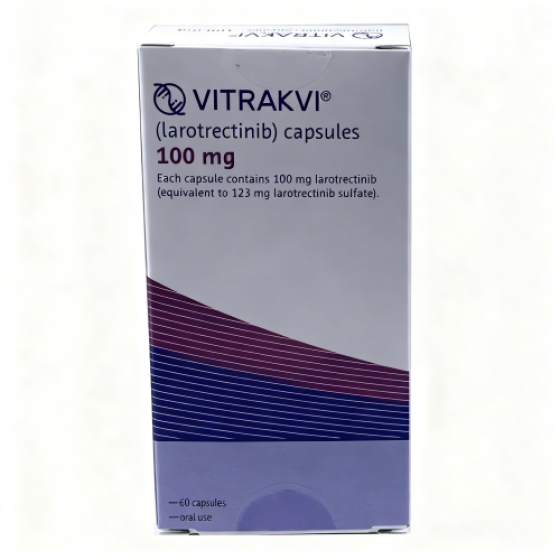
.jpeg)
Can larotrectinib effectively treat the disease?
Introduction: On November 26, 2018, the U.S. Food and Drug Administration granted accelerated approval to larotrectinib for the treatment of adult and pediatric patients with solid tumors that have neurotrophic receptor tyrosine kinase (NTRK) gene fusions, no known acquired resistance mutations, have metastasized or where surgical resection may result in severe morbidity, and have no satisfactory alternative treatments or whose cancer has progressed after treatment.
Can the generic version of larotrectinib also be effective in treating diseases?
The more common versions of generic versions include Bangladesh Everest Pharmaceutical Edition, Bangladesh Yaopin International Edition, Laos ASEAN Pharmaceutical Edition, Laos Lucius Pharmaceutical Edition, Laos Daxiong Pharmaceutical Edition, etc. Its drug ingredients, mechanism of action, efficacy, etc. are basically the same as the original drug. It can also effectively treat related diseases. The efficacy of larotrectinib generic drugs approved by relevant departments is basically the same as the original drug.

The efficacy of generic drugs may be affected by a variety of factors, including production processes, quality control, etc. Therefore, although generic drugs may be effective, the specific efficacy may need to be further verified based on actual clinical data.
Efficacy of larotrectinib
The efficacy of larotrectinib was evaluated in three trials in the first 55 patients with unresectable or metastatic solid tumors and NTRK gene fusions. All patients had disease progression despite systemic therapy or required surgery for locally advanced disease with severe complications. Twelve patients were younger than 18 years old and had a total of 12 cancer types, the most common being salivary gland tumors (22%), soft tissue sarcoma (20%), infantile fibrosarcoma (13%) and thyroid cancer (9%).
The ORR of patients was 75%, of which 22% were complete responses and 53% were partial responses. At the time of database lock, the median mitigation duration has not been reached. The duration of response was 6 months or longer in 73% of patients, 9 months or longer in 63%, and 12 months or longer in 39% of patients.
Larotinib usage and dosage
1. Adults: The dose of larotinib is 100 mg twice a day until disease progression or unacceptable toxicity occurs.
2. Children: For pediatric patients whose body surface area is less than 1.0 meters and whose dosage is based on age and weight, the recommended dose of larotrectinib is 100 mg/m², taken orally twice a day, with or without food.
If the patient experiences grade 3 or 4 adverse reactions during medication, the dosage of larotinib needs to be reduced under the guidance of a doctor until improvement or the adverse reaction is grade 1. If the adverse reaction improves within 4 weeks, resume at the next dose. If adverse reactions do not resolve within 4 weeks, permanently discontinue larotrectinib.
[ 免责声明 ] 本页面内容来自公开渠道(如FDA官网、Drugs官网、原研药厂官网等),仅供持有医疗专业资质的人员用于医学药学研究参考,不构成任何治疗建议或药品推荐。所涉药品可能未在中国大陆获批上市,不适用于中国境内销售和使用。如需治疗,请咨询正规医疗机构。本站不提供药品销售或代购服务。