.jpeg)
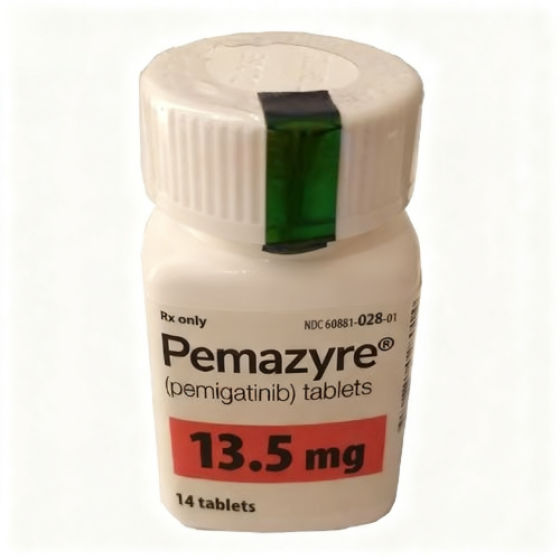
Pemigatinib for FGFR2-Rearranged Cholangiocarcinoma: Eligibility, Response Limits, Hyperphosphatemia and Ocular Monitoring
1.Who It Is For
Pemigatinib is a selective FGFR tyrosine kinase inhibitor positioned as targeted therapy,not a general cholangiocarcinoma drug.
All conditions should fit:
adult patient;
locally advanced unresectable or metastatic cholangiocarcinoma;
prior systemic therapy;
tumor testing confirms FGFR2 fusion or other rearrangement.
Cholangiocarcinoma subtypes differ molecularly.FGFR2 fusions appear more often in intrahepatic CCA,but not every patient carries them.Do not start on the basis of“biliary cancer”alone without NGS,FISH,or RNA fusion testing.FGFR amplification,point mutation,or other drivers alone do not define the labeled population.
2.Mechanism
In some CCA cells,FGFR2 fusion or rearrangement causes sustained fibroblast growth factor receptor signaling that supports proliferation and survival.Pemigatinib inhibits FGFR1/2/3 phosphorylation and downstream signaling.
Key points:
targeted therapy,not cytotoxic chemotherapy;
acts on FGFR2-aberrant signaling rather than all rapidly dividing cells;
may produce objective response but does not guarantee tumor shrinkage;
benefit depends on correct molecular selection.
3.Evidence and Limits
Approvals were based on pretreated FGFR2 fusion/rearrangement populations.Studies showed objective responses and durable disease control in a subset.
Cautions:
evidence comes from selected single-arm or enriched populations;
response rate does not equal guaranteed survival gain;
individual outcome depends on fusion type,prior lines,liver function,coexisting alterations,and resistance;
“available targeted option”is not the same as“will shrink tumors.”
After first-line chemotherapy progression,FGFR2 fusion positivity can prompt pemigatinib evaluation by a hepatobiliary oncology team;negative testing should shift to other systemic options or trials.
4.Main Risks and Monitoring
Hyperphosphatemia
FGFR inhibition disrupts phosphate handling.
check serum phosphate per protocol;
mild rise:low-phosphate diet;
persistent rise:phosphate binders and possible hold/dose reduction by prescriber;
long-term hyperphosphatemia raises soft-tissue calcification concern.
Mucosal,nail,skin reactions
Stomatitis,dry mouth,taste change,alopecia,nail changes,dry skin.Mild cases need oral care,emollients,soft diet;severe pain or infection needs review.
Ocular toxicity
Retinal pigment epithelial detachment,blurred vision,photopsia,visual field change.
baseline ophthalmology before start;
scheduled eye checks during therapy;
any visual change reported immediately;
suspected RPED:ophthalmology+oncology decide hold or dose change.
Other common toxicities
Fatigue,diarrhea,nausea,constipation,abdominal pain,reduced appetite,arthralgia,hypophosphatemia.Monitor LFTs,hydration,electrolytes.
Dose adjustment
Prescriber decides continue/reduce/hold by toxicity grade;patients should not self-stop.Disclose pemigatinib before surgery,dental procedures,or contrast imaging.
[ 免责声明 ] 本页面内容来自公开渠道(如FDA官网、Drugs官网、原研药厂官网等),仅供持有医疗专业资质的人员用于医学药学研究参考,不构成任何治疗建议或药品推荐。所涉药品可能未在中国大陆获批上市,不适用于中国境内销售和使用。如需治疗,请咨询正规医疗机构。本站不提供药品销售或代购服务。