.jpeg)
Lapatinib: An Oral Dual EGFR/HER2 TKI in HER2-Positive Breast Cancer
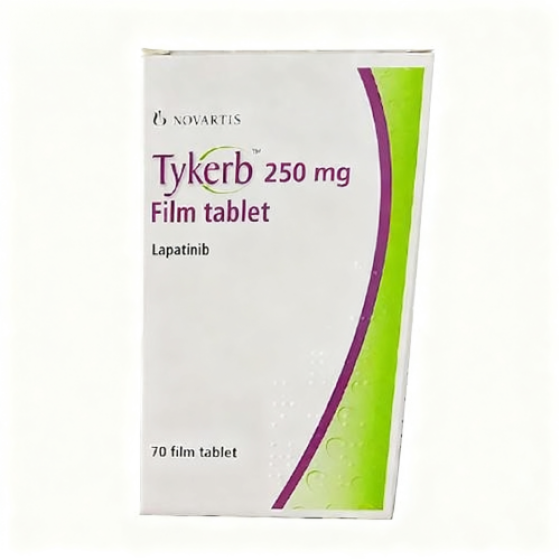
Lapatinib (Tykerb/Tyverb; originally developed by GlaxoSmithKline) is an oral, reversible small-molecule tyrosine kinase inhibitor that binds the intracellular ATP-binding site of both EGFR (ErbB1) and HER2 (ErbB2), preventing receptor autophosphorylation and downstream MAPK and PI3K/AKT signaling. Inhibitory potency against both kinases is in the low nanomolar range . Its clinical value lies in disease control and prolonging progression-free survival rather than tumor eradication, and benefit is restricted to patients whose tumors show HER2 overexpression or amplification confirmed by validated testing .
Mechanistically, lapatinib differs fundamentally from trastuzumab. Antibodies bind the extracellular domain of HER2 and act through blockade of dimerization and ADCC, whereas lapatinib penetrates the cell membrane to inhibit the intracellular kinase directly — retaining activity against the truncated p95HER2 form that lacks the extracellular domain. This underpins its preserved antitumor activity in some patients who have progressed on trastuzumab .
The FDA approved lapatinib with capecitabine in 2007 for HER2-overexpressing advanced or metastatic breast cancer previously treated with an anthracycline, a taxane and trastuzumab, and with letrozole in 2010 for postmenopausal women with hormone receptor–positive, HER2-positive metastatic disease for whom endocrine therapy is indicated . In practice it is combined rather than used alone — with capecitabine, letrozole, or (on the basis of clinical trials and guideline recommendations) trastuzumab — achieving multi-level blockade of HER2 signaling . Recommended dosing is 1250 mg once daily with capecitabine and 1500 mg once daily with letrozole, taken as a single daily dose at least one hour apart from food .
Response depends on HER2 status, number of prior lines, tumor burden, PTEN loss and PIK3CA mutation; patients already refractory to HER2-directed therapy derive limited benefit from continued targeting of the same pathway . Among trastuzumab-pretreated patients, lapatinib plus capecitabine significantly prolonged progression-free survival versus capecitabine alone (8.4 vs 4.4 months; HR 0.49) . With tucatinib, T-DM1, trastuzumab deruxtecan and neratinib now established in later lines, lapatinib has shifted further back in the sequence while remaining a combination option after multiple prior regimens .
Beyond diarrhea, rash and hepatotoxicity, key risks include decreased left ventricular ejection fraction, QT prolongation, interstitial lung disease and hand-foot reaction. Cardiac function and liver function should be assessed before initiation, with transaminases, bilirubin and alkaline phosphatase monitored every 4–6 weeks; severe diarrhea requires prompt fluid and electrolyte replacement with treatment interruption, and severe hepatotoxicity warrants permanent discontinuation without rechallenge .
[ 免责声明 ] 本页面内容来自公开渠道(如FDA官网、Drugs官网、原研药厂官网等),仅供持有医疗专业资质的人员用于医学药学研究参考,不构成任何治疗建议或药品推荐。所涉药品可能未在中国大陆获批上市,不适用于中国境内销售和使用。如需治疗,请咨询正规医疗机构。本站不提供药品销售或代购服务。