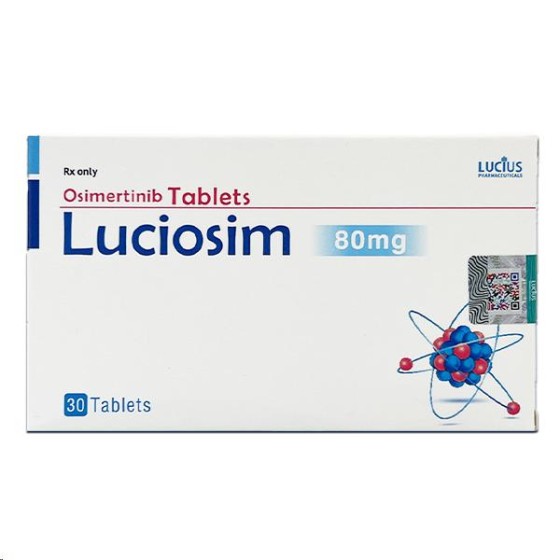
.jpeg)
Osimertinib Treatment and Dosing Guide: Efficacy, Administration, and Precautions
1.Overview and Therapeutic Positioning
Osimertinib(brand name:TAGRISSO)is an irreversible third-generation epidermal growth factor receptor(EGFR)tyrosine kinase inhibitor(TKI)that specifically targets EGFR sensitizing mutations(e.g.,exon 19 deletions,L858R)as well as the EGFR T790M resistance mutation.Compared with first-and second-generation EGFR-TKIs,osimertinib demonstrates superior blood-brain barrier penetration and holds a central role in the management of EGFR-mutant non-small cell lung cancer(NSCLC)across the entire disease continuum—from first-line treatment and adjuvant therapy to consolidation after chemoradiation in unresectable stage III disease.
2.Clinical Efficacy Overview
Osimertinib has demonstrated remarkable efficacy in multiple pivotal trials,delivering significant survival benefits for patients at different stages:
First-line treatment:In treatment-naïve patients with advanced EGFR-mutant NSCLC,osimertinib achieved a median progression-free survival(PFS)of approximately 19 months,significantly outperforming first-generation EGFR-TKIs,with a notable overall survival(OS)advantage.
Brain metastasis control:For patients with central nervous system(CNS)metastases,osimertinib produces an intracranial objective response rate(ORR)exceeding 70%,effectively shrinking brain lesions and delaying neurologic progression,making it a preferred systemic option for this population.
Adjuvant therapy:In patients with completely resected stage IB-IIIA EGFR-mutant NSCLC,adjuvant osimertinib reduced the risk of disease recurrence or death by approximately 80%,substantially improving disease-free survival(DFS).
Combination approaches:In patients requiring rapid tumor shrinkage,combining osimertinib with chemotherapy has shown further PFS extension,highlighting a synergistic effect.
3.Administration with or without Food
Osimertinib can be taken with or without food,as food intake does not meaningfully alter its absorption profile.There is no strict requirement for fasting or post-meal dosing.
To maintain steady plasma concentrations,however,it is recommended to take the dose at approximately the same time each day(e.g.,after breakfast or before bedtime).Patients who experience mild gastrointestinal discomfort(such as nausea)when taking the drug on an empty stomach may choose to take it with food to alleviate symptoms.Consistency in daily dosing time is more important than the meal relationship.
4.Tablet Handling Instructions
Osimertinib tablets are film-coated to control the release rate and ensure stable absorption.Tablets must be swallowed whole and must not be split,crushed,or chewed.
Breaking or crushing the tablet may damage the coating,leading to rapid,uncontrolled drug release.This can cause an abrupt spike in plasma concentration,increasing the risk of adverse reactions such as diarrhea,rash,or paronychia,while potentially shortening the effective duration of action.Patients with swallowing difficulties should not attempt to split tablets but should consult their physician about alternative formulations(e.g.,dispersible tablets or oral solution).The common 80 mg tablet is light brown to brown,film-coated,debossed with"AZ"on one side and"80"on the other.
5.Dosing and Missed Dose Management
The standard recommended dose of osimertinib is 80 mg once daily.For a missed dose:
If more than 12 hours remain until the next scheduled dose,take the missed dose immediately,then resume the regular schedule.
If less than 12 hours remain,skip the missed dose and take the next dose at the usual time.Never take a double dose to make up for a missed dose.
If vomiting occurs after taking a dose,do not take an additional dose;simply continue with the next scheduled dose.
6.Drug Interactions and Safety Monitoring
Grapefruit juice precaution:Osimertinib is primarily metabolized by CYP3A4.Grapefruit juice contains compounds that inhibit CYP3A4 and may alter osimertinib plasma concentrations.Patients should avoid consuming grapefruit juice or grapefruit products during treatment.
Common adverse reactions:Thrombocytopenia,diarrhea,rash,and stomatitis are among the frequently reported side effects.Most events are mild to moderate and can be managed symptomatically(e.g.,antidiarrheals,skin care,mouth rinses).For grade 3 or higher toxicities,treatment should be interrupted and dose adjustments made under medical guidance.
Regular follow-up:Patients require periodic monitoring,including complete blood counts,liver function tests,and imaging assessments.Any new or persistent cough,dyspnea,or chest pain should be reported promptly to rule out serious complications such as interstitial lung disease(ILD).
Summary
As a leading third-generation EGFR-TKI,osimertinib demands careful adherence to dosing instructions—whole-tablet swallowing,consistent timing,avoidance of grapefruit juice,and regular safety monitoring.Patients should always follow their oncologist's guidance and never self-adjust the dose or administration method,ensuring optimal therapeutic benefit with minimized risks.
[ 免责声明 ] 本页面内容来自公开渠道(如FDA官网、Drugs官网、原研药厂官网等),仅供持有医疗专业资质的人员用于医学药学研究参考,不构成任何治疗建议或药品推荐。所涉药品可能未在中国大陆获批上市,不适用于中国境内销售和使用。如需治疗,请咨询正规医疗机构。本站不提供药品销售或代购服务。