.jpeg)
Ruxolitinib Drug Safety Guide: Drug Interactions, Hepatic/Renal Function, and Infection Risk Management
1.Overview and Metabolic Profile
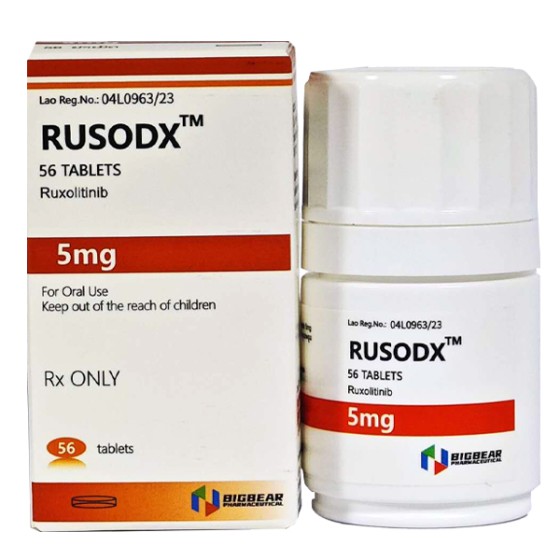
Ruxolitinib is a highly selective Janus kinase 1/2(JAK1/JAK2)inhibitor that improves splenomegaly,constitutional symptoms,and disease progression in patients with myelofibrosis and other myeloproliferative neoplasms by blocking the JAK-STAT signaling pathway.From a pharmacokinetic perspective,ruxolitinib is primarily metabolized by hepatic cytochrome P450 enzymes—CYP3A4 is the major metabolic pathway,with CYP2C9 contributing partially.This metabolic profile makes ruxolitinib highly susceptible to drug-drug interactions:any concomitant medication that inhibits or induces these enzymes can significantly alter ruxolitinib exposure,affecting both efficacy and safety.
2.Interactions with Strong CYP3A4 Inhibitors
When ruxolitinib is co-administered with strong CYP3A4 inhibitors,its metabolism is markedly suppressed,leading to substantially elevated plasma exposure.Ketoconazole,a broad-spectrum antifungal,is a classic example—it significantly increases ruxolitinib's area under the curve(AUC)and peak concentration(C_max).Other strong CYP3A4 inhibitors(e.g.,itraconazole,voriconazole,clarithromycin)produce similar effects.
If co-administration is unavoidable,the starting dose of ruxolitinib should typically be reduced according to clinical guidelines,with close monitoring of platelet counts,hemoglobin levels,and signs of infection during the initial treatment phase.Patients should never self-combine ruxolitinib with such antifungal agents without consulting their physician.
3.Interactions with Dual CYP3A4/CYP2C9 Inhibitors
Some medications inhibit both CYP3A4 and CYP2C9,producing an even more pronounced effect on ruxolitinib clearance.Fluconazoleis a representative drug in this category—it inhibits both enzymes.Because ruxolitinib relies on both pathways for metabolism,combining it with fluconazole results in a more substantial increase in plasma concentrations,particularly at higher fluconazole doses(e.g.,400 mg daily or above).
Therefore,concomitant use of fluconazole and ruxolitinib should be avoided.If a patient requires fluconazole for an invasive fungal infection and no alternative is available,the ruxolitinib dose must be significantly reduced under specialist supervision,with intensified monitoring of adverse effects—including complete blood counts and liver function tests every 1 to 2 weeks.
4.Interactions with Strong CYP3A4 Inducers
In contrast to inhibitors,strong CYP3A4 inducers accelerate ruxolitinib metabolism,resulting in markedly reduced plasma concentrations and potential therapeutic failure.Rifampin,a widely used anti-tuberculosis and broad-spectrum antibiotic,is a typical example.Other strong inducers include phenytoin,carbamazepine,and St.John's wort.
When a patient on ruxolitinib requires rifampin or another inducer for an infection,ruxolitinib exposure may fall below the effective therapeutic range.Whenever possible,an alternative anti-infective agent without CYP3A4-inducing properties should be selected.If no substitute is available,the ruxolitinib dose may need to be increased under medical guidance,with ongoing assessment of spleen size,symptom control,and hematologic parameters throughout the combination period.
5.Management in Hepatic Impairment and During Infection
Hepatic impairment:Since ruxolitinib is primarily liver-metabolized,patients with moderate to severe hepatic dysfunction have reduced clearance and increased exposure.Starting doses should be adjusted downward,with liver function tests(ALT,AST,total bilirubin)and complete blood counts monitored every 2 to 4 weeks during treatment.
Infection risk:Ruxolitinib has immunosuppressive effects that may increase susceptibility to bacterial,viral(e.g.,herpes zoster),and fungal infections.Patients experiencing fever,cough,dysuria,or skin erythema should seek medical attention promptly—never self-discontinue,increase,or decrease the dose.Abrupt discontinuation may cause symptom rebound,while unauthorized dose escalation can worsen myelosuppression.
Hematologic monitoring:Baseline and regular monitoring of platelet and absolute neutrophil counts is essential.In cases of grade 3 or 4 cytopenias,treatment should be interrupted with supportive care,and ruxolitinib may be restarted at a reduced dose once blood counts recover.
6.Summary
The"precautions"for ruxolitinib extend far beyond avoiding certain foods;the core principle is rigorous management of concomitant medications—especially those affecting CYP3A4 and CYP2C9 enzymes.Furthermore,ongoing attention to hepatic and renal function,proactive infection prevention,and regular hematologic monitoring form the three pillars of safe long-term therapy.Before taking any new prescription drug,over-the-counter medication,supplement,or anti-infective agent,patients should always consult their healthcare team to check for potential interaction risks.
[ 免责声明 ] 本页面内容来自公开渠道(如FDA官网、Drugs官网、原研药厂官网等),仅供持有医疗专业资质的人员用于医学药学研究参考,不构成任何治疗建议或药品推荐。所涉药品可能未在中国大陆获批上市,不适用于中国境内销售和使用。如需治疗,请咨询正规医疗机构。本站不提供药品销售或代购服务。