.jpeg)
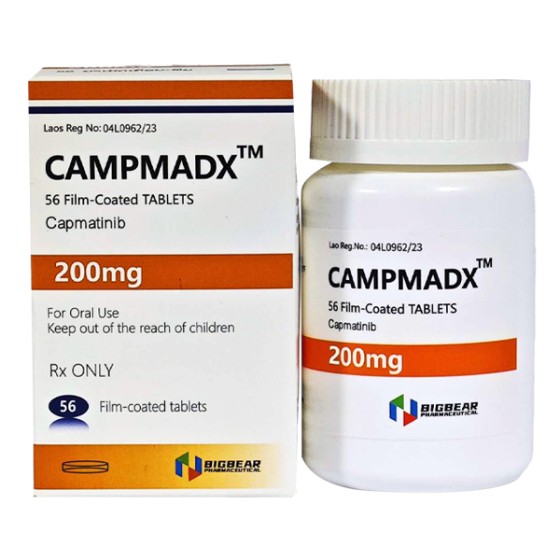
Capmatinib (Tabrecta): Generational Positioning, Adverse Effect Incidence, and Comprehensive Management
1.Generational Positioning:From Multi-Target to Highly Selective MET Inhibition
In the evolution of MET-targeted therapy,Capmatinib is widely classified as a second-generation,highly selective MET inhibitor(type Ib),representing a significant upgrade from multi-target to precision-targeted approaches.
First-generation agents such as crizotinib,while possessing some MET inhibitory activity,are fundamentally multi-target inhibitors primarily directed against ALK and ROS1,with MET inhibition being a secondary effect.This lack of selectivity results in greater off-target toxicity and limited specificity for MET exon 14 skipping mutations,with objective response rates of approximately 32%.
Capmatinib was specifically designed to target the MET kinase,demonstrating approximately 30-fold greater MET inhibitory potency than crizotinib and approximately 5-fold greater potency than tepotinib.Its optimized molecular structure provides significantly enhanced affinity for the MET ATP-binding site,greater specificity for MET exon 14 skipping mutations,and substantially reduced off-target effects.In the pivotal GEOMETRY mono-1 study,capmatinib achieved an objective response rate of 68%in treatment-naïve patients,with a median progression-free survival of 12.4 months and median overall survival of 25.5 months.In previously treated patients,the objective response rate was 44%.
Importantly,capmatinib demonstrates excellent blood-brain barrier penetration.In the brain metastasis subgroup of GEOMETRY mono-1,the intracranial objective response rate reached 54%,with a complete response rate of 31%and an intracranial disease control rate of 92.3%across all patients.This property provides a unique advantage for MET exon 14 skipping mutation patients with brain metastases.Additionally,second-generation MET inhibitors show preliminary potential in overcoming certain acquired resistance mutations.
2.Standard Dosing Regimen and Administration Guidelines
The recommended dose of capmatinib is 400 mg(two 200 mg tablets)taken orally twice daily,with or without food.To maintain steady-state plasma concentrations,patients should take doses at fixed times each day,approximately 12 hours apart.Tablets must be swallowed whole and must not be split,crushed,or chewed.
If a dose is missed or vomiting occurs after administration,the dose should not be repeated;the patient should take the next scheduled dose at the regular time.If a patient cannot tolerate 200 mg twice daily,capmatinib should be permanently discontinued.
3.Adverse Effect Landscape:Incidence and Severity Distribution
In the pivotal GEOMETRY mono-1 study,capmatinib's adverse effect profile was broad but predominantly mild to moderate(Grade 1–2).The most common adverse reactions(incidence≥20%)included peripheral edema(approximately 26%–50%,with cumulative incidence increasing over treatment duration),nausea(30%–40%),fatigue(20%–30%),vomiting(20%–25%),and decreased appetite(approximately 20%).Additional reported effects include dyspnea,constipation,stomatitis,rash,abdominal pain,dizziness,headache,insomnia,and musculoskeletal pain.
Peripheral edema is the most characteristic class-effect adverse event of MET inhibitors,manifesting as facial,extremity,or generalized swelling,and is one of the leading causes of treatment discontinuation.The overall incidence of severe(Grade 3 or higher)adverse events is approximately 20%–30%,with worsening edema and hepatic dysfunction being the most common manifestations.The rate of permanent discontinuation due to adverse reactions is approximately 10%–15%.
4.Peripheral Edema:Graded Management and Lifestyle Interventions
Peripheral edema is the most troublesome adverse effect for patients on capmatinib and the central challenge in clinical management.Its mechanism relates to the physiological role of the MET pathway in vascular permeability regulation,making it a class effect rather than an idiosyncratic reaction.
For Grade 1–2 mild edema(not affecting daily activities),comprehensive lifestyle interventions are recommended:strict low-sodium diet(≤5 g sodium daily);elevating lower extremities above heart level during rest;wearing loose,comfortable footwear;avoiding prolonged standing or sitting;and daily morning weight measurement with prompt medical notification if weight increases by more than 2 kg within one week.Diuretics(furosemide or spironolactone)may be used under physician guidance with close electrolyte monitoring to prevent hypokalemia or hyponatremia.
If edema progresses to Grade 3(significantly limiting daily activities)or is accompanied by dyspnea(requiring exclusion of pleural or pericardial effusion),capmatinib should be withheld and imaging studies performed.Upon recovery to Grade 1 or baseline,therapy may resume at one dose level lower.For recurrent severe edema uncontrolled despite multiple dose reductions,permanent discontinuation should be considered.
5.Gastrointestinal Effects:Prevention and Symptomatic Management
Nausea,vomiting,and decreased appetite represent another high-frequency adverse effect cluster,typically most pronounced during the first two treatment cycles,with some patients developing gradual tolerance over time.
Preventive measures include taking medication with or after meals to reduce gastric irritation,adopting small frequent meals,and avoiding greasy,spicy,or strongly aromatic foods.During initial treatment,physicians typically prescribe prophylactic antiemetics(such as 5-HT3 receptor antagonists like ondansetron or dopamine receptor antagonists like metoclopramide).If severe vomiting causes dehydration or electrolyte imbalance,treatment should be interrupted with intravenous fluid support initiated.
Patients with decreased appetite should consult a nutritionist for high-protein,high-calorie,easily digestible meal planning,with oral nutritional supplements as needed to maintain stable weight.Persistent Grade 3 gastrointestinal symptoms(e.g.,vomiting more than 5 times daily,complete inability to eat)warrant treatment interruption and dose reduction consideration.
6.Hepatotoxicity:Systematic Monitoring and Dose Adjustment
Capmatinib may cause elevations in transaminases(ALT/AST)and bilirubin,indicating drug-related hepatotoxicity risk.In GEOMETRY mono-1,hepatic enzyme elevation occurred in approximately 10%–15%of patients,predominantly Grade 1–2,though rare cases progressed to severe liver injury.
Baseline comprehensive hepatic function testing(ALT,AST,total bilirubin,alkaline phosphatase,albumin)should be completed before treatment initiation.During the first month,liver function should be rechecked every two weeks,then monthly thereafter,or more frequently as clinically indicated.
If transaminases exceed 3×ULN but remain below 5×ULN(Grade 2),monitoring frequency should increase to weekly with exclusion of viral hepatitis,alcohol-related injury,and concomitant hepatotoxic medications.If transaminases exceed 5×ULN or bilirubin exceeds 2×ULN(Grade 3+),capmatinib must be immediately withheld.Upon recovery to Grade 1 or baseline,therapy may resume at one dose level lower with intensified monitoring.Recurrence of Grade 3 hepatotoxicity or any Grade 4 event warrants permanent discontinuation.
Patients with pre-existing liver disease(chronic hepatitis B/C,alcoholic liver disease)require greater caution,potentially lower starting doses,and more frequent monitoring.Alcohol and other known hepatotoxic agents should be strictly avoided throughout treatment.
7.Other Adverse Effects and Special Population Management
Additional adverse effects include fatigue,dry skin,creatinine elevation,photosensitivity,and interstitial pneumonitis.Fatigue is managed through balanced rest and light activity(walking).Dry skin responds to gentle,fragrance-free emollients.Creatinine elevation is typically reversible and requires periodic renal function monitoring without specific intervention.New-onset cough,dyspnea,or fever warrants immediate high-resolution chest CT to exclude interstitial pneumonitis.
Special populations:Elderly patients(≥65 years)may have reduced hepatic/renal clearance,increasing adverse effect susceptibility;enhanced initial monitoring is recommended.Mild hepatic impairment(Child-Pugh A)does not require dose adjustment;moderate-to-severe impairment(Child-Pugh B/C)requires careful benefit-risk assessment given limited data.Mild-to-moderate renal impairment generally does not necessitate adjustment;severe renal impairment data are limited.
Pediatric and adolescent patients lack safety and efficacy data;routine use is not recommended.Women of childbearing potential should use highly effective contraception during treatment and for at least 1 week after the last dose.Men should use contraception during treatment and for 1 week after discontinuation.
8.Drug Interactions and Comprehensive Monitoring Schedule
Capmatinib is primarily metabolized by CYP3A4 and aldehyde oxidase.Co-administration with strong CYP3A4 inhibitors(itraconazole,clarithromycin,ketoconazole)may elevate plasma concentrations and increase toxicity risk;avoidance or close monitoring is advised.Strong CYP3A4 inducers(rifampicin,phenytoin,St.John's wort)may significantly reduce capmatinib exposure and compromise efficacy;co-administration should be avoided.
Baseline assessments before treatment should include comprehensive hepatic and renal panels,complete blood count,electrolytes,and ECG.During treatment,hepatic function is monitored monthly(every two weeks for the first three months),renal function every 2–3 months.First imaging assessment is typically performed 6–8 weeks after initiation,then every 8–12 weeks.Patients should self-monitor daily weight and blood pressure,seeking immediate medical attention for new respiratory symptoms.
Complete disclosure of all prescription medications,over-the-counter drugs,vitamins,and herbal supplements is essential before initiating therapy.Balanced nutrition,moderate physical activity,and adequate rest support functional status throughout long-term targeted treatment.
[ 免责声明 ] 本页面内容来自公开渠道(如FDA官网、Drugs官网、原研药厂官网等),仅供持有医疗专业资质的人员用于医学药学研究参考,不构成任何治疗建议或药品推荐。所涉药品可能未在中国大陆获批上市,不适用于中国境内销售和使用。如需治疗,请咨询正规医疗机构。本站不提供药品销售或代购服务。