.jpeg)
Comprehensive Interpretation of Osimertinib: Efficacy, Side Effects and Medication Standards
Osimertinib is a cornerstone targeted drug in the treatment of EGFR mutation-positive non-small cell lung cancer.Comprehensively mastering its therapeutic efficacy,characteristics of adverse reactions and core points of the instructions is the key to achieving standardized medication and ensuring therapeutic effects.
In terms of therapeutic efficacy,Osimertinib is a third-generation EGFR tyrosine kinase inhibitor that irreversibly binds to the kinase domain of epidermal growth factor receptor sensitive mutations and T790M resistance mutations,effectively inhibiting EGFR-mediated cell signal transduction and thus blocking the proliferation and progression of tumor cells.For non-small cell lung cancer carrying EGFR exon 19 deletion or 21 L858R mutation,first-line treatment can achieve a median progression-free survival of about 18 to 20 months,with significantly better efficacy than first-generation EGFR targeted drugs;for patients with T790M mutation-positive resistance,the objective response rate is about 70%,and the median progression-free survival can reach 10 to 12 months.In addition,3 years of postoperative adjuvant therapy can significantly reduce the risk of recurrence in patients by about 80%,and consolidation therapy for stage III patients can also bring progression-free survival benefits.
Adverse reaction management is an important part of the medication process.The overall adverse reactions of Osimertinib are mainly mild to moderate with good controllability.Common adverse reactions include diarrhea,rash,stomatitis,thrombocytopenia,nausea and decreased appetite.Among them,the incidence of diarrhea is about 40%to 50%,and the incidence of rash is about 30%to 40%,which need key symptomatic management.Compared with first-generation EGFR targeted drugs,the incidence of diarrhea and rash of this product is lower,but the risk of interstitial lung disease needs to be vigilant.
Although the incidence of serious adverse reactions is low,it needs great attention and timely treatment.Interstitial lung disease is the most serious adverse reaction with an incidence of about 2%to 3%,and permanent discontinuation is required once diagnosed;the incidence of QTc interval prolongation is about 5%to 10%,and electrocardiogram needs to be monitored regularly during medication;at the same time,liver function needs to be monitored regularly to pay attention to the elevation of liver enzymes,as well as myelosuppression such as thrombocytopenia,anemia and neutropenia.If grade 3 or above serious adverse reactions occur,medication needs to be suspended and dosage adjusted.
From the core points of the instructions,indications cover multiple treatment scenarios:it can be used for postoperative adjuvant therapy in patients with EGFR exon 19 deletion or 21 L858R mutation non-small cell lung cancer;consolidation therapy after chemoradiotherapy for unresectable stage III non-small cell lung cancer;first-line treatment for metastatic non-small cell lung cancer;it can also be combined with pemetrexed and platinum-based chemotherapy for first-line treatment,and is suitable for second-line treatment of patients with T790M mutation-positive.
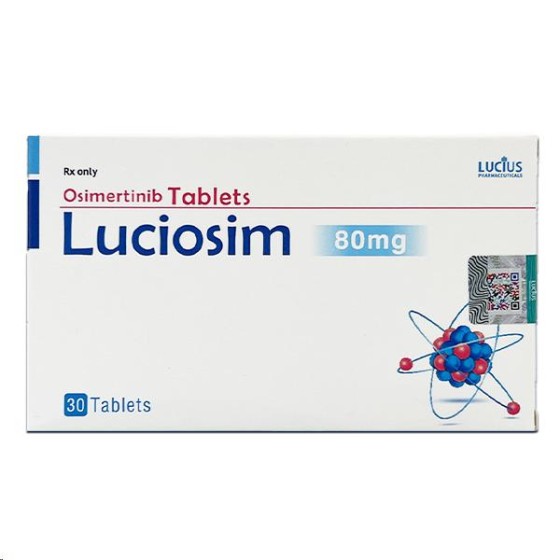
In terms of usage and dosage,the recommended oral dose is 80mg once a day,which can be taken with or without food.Adjuvant therapy needs to last for 3 years,or until disease recurrence or intolerable toxicity;advanced patients continue medication until disease progression or intolerable toxicity.If a dose is missed,it can be taken as soon as possible on the same day.If it is close to the next dose time,skip it directly and do not take double doses.Dosage adjustment is implemented according to the classification of adverse reactions.Grade 3 adverse reactions require suspension of medication,and the dose is reduced to 40mg for restart after recovery.Permanent discontinuation is required for diagnosed interstitial lung disease.
Drug interactions need to be focused on avoiding.Osimertinib is mainly metabolized by CYP3A4,and combined use with strong CYP3A4 inhibitors will increase blood concentration,which needs to be used with caution;combined use with strong CYP3A4 inducers may reduce the therapeutic effect and should be avoided;when combined with drugs that can prolong QTc interval,electrocardiogram monitoring needs to be strengthened,and grapefruit and related products should be avoided during medication.
Medication for special populations needs to follow the principle of individualization.Patients with mild to moderate hepatic impairment and mild to moderate renal impairment do not need dosage adjustment,and patients with severe hepatic and renal impairment need to use with caution;elderly patients aged 65 and above do not need dosage adjustment.It is contraindicated in pregnant and lactating patients.Women of childbearing age need to take effective contraceptive measures during treatment and for at least 2 weeks after the end of treatment;patients with a history of interstitial lung disease need to use this product with caution.
[ 免责声明 ] 本页面内容来自公开渠道(如FDA官网、Drugs官网、原研药厂官网等),仅供持有医疗专业资质的人员用于医学药学研究参考,不构成任何治疗建议或药品推荐。所涉药品可能未在中国大陆获批上市,不适用于中国境内销售和使用。如需治疗,请咨询正规医疗机构。本站不提供药品销售或代购服务。