.jpeg)
Belzutifan (Welireg): HIF-2α Inhibitor for VHL-Associated Tumors and Renal Cell Carcinoma — Dosing Phases, Survival Data, and Efficacy Insights
Drug Overview and Therapeutic Positioning
Belzutifan(brand name Welireg)is a selective hypoxia-inducible factor-2α(HIF-2α)inhibitor and the first orally available small molecule in this drug class.VHL gene inactivation is the central driver of both VHL disease and the majority of sporadic clear cell renal cell carcinomas.Loss of VHL protein function results in abnormal accumulation of HIF-2α,which in turn activates downstream pro-angiogenic and proliferative signaling pathways.Belzutifan directly blocks the heterodimerization of HIF-2αwith HIF-1β,suppressing transcription of downstream target genes such as VEGF and cyclin D1,thereby exerting anti-tumor activity.The drug occupies an irreplaceable role in the multi-system management of VHL-associated renal cell carcinoma,central nervous system hemangioblastomas,and pancreatic neuroendocrine tumors.
Phased Treatment Strategy
The standard regimen for belzutifan is 120 mg taken orally once daily in adults,with pediatric dosing calculated by body weight.Treatment continues until disease progression or intolerable toxicity,and there is no conventional rigid"staging"framework.In practical clinical management,the treatment course is typically divided into three phases:initiation,maintenance,and dose modification.
Initiation phase:Therapy begins at the standard dose,with intensified safety monitoring during the first two months,focusing on hemoglobin levels and oxygen saturation,recommended at two-week intervals for early detection of anemia and hypoxemia.Maintenance phase:If tolerance is adequate and imaging response is stable,treatment continues at the original dose,with radiographic evaluation performed every 6 to 9 weeks to dynamically track tumor response.Dose modification phase:If grade 3 anemia(hemoglobin below 80 g/L)or significant hypoxemia(SpO2 below 90%)occurs,dosing should be interrupted.Once parameters recover,treatment resumes with stepwise dose reductions through the 120 mg,80 mg,and 40 mg tiers.
Survival and Efficacy Data
In VHL disease-associated tumors,long-term survival data for belzutifan continue to mature,yet its disease control capability is well established.In VHL-associated renal cell carcinoma,the objective response rate(ORR)is approximately 30%to 40%,with disease control rates exceeding 80%.More importantly,the drug significantly delays or reduces the need for repeated surgical interventions,preserving renal function and quality of life.In later-line treatment of advanced clear cell renal cell carcinoma,phase II studies have demonstrated a median progression-free survival(PFS)of approximately 5 to 6 months and a median overall survival(OS)of approximately 12 to 14 months.Larger-scale,long-term OS follow-up data remain under continued investigation.
Key Factors Influencing Efficacy
Multiple clinical factors may influence the therapeutic benefit derived from belzutifan.VHL gene inactivation status serves as an important efficacy predictor,with patients harboring VHL loss-of-function demonstrating superior responses.Regarding prior treatment lines,earlier-line use is associated with better outcomes.Patients with lower baseline hemoglobin face elevated anemia-related risks,potentially limiting dose intensity and compromising efficacy.Concomitant medications also matter:strong CYP3A4 inducers or inhibitors may alter belzutifan exposure levels,necessitating thorough drug interaction assessment at prescribing.Patient performance status is equally critical,with ECOG scores of 0 to 1 generally correlating with greater benefit than scores of 2 or higher.Additionally,combinations with immune checkpoint inhibitors such as pembrolizumab are under active exploration in adjuvant settings and may further enhance efficacy.
Adverse Event Management
The most characteristic adverse effects of belzutifan are anemia and hypoxemia,which relate to the physiological role of the HIF-2αpathway in erythropoiesis and hypoxic adaptation.Regular monitoring of complete blood counts and oxygen saturation is essential throughout treatment,with supportive interventions such as erythropoiesis-stimulating agents,iron supplementation,or transfusion administered when necessary;severe cases require dose interruption or reduction.Hypertension also warrants standardized monitoring and control.When combined with pembrolizumab,vigilance for immune-related adverse events—including immune-mediated pneumonitis,hepatitis,and endocrinopathies—must be heightened,enabling early recognition and prompt intervention.
Special Population Considerations
Elderly patients(aged 65 and above)exhibit heightened sensitivity to anemia and hypoxemia,warranting shortened monitoring intervals and enhanced supportive care.Patients with mild to moderate hepatic impairment generally require no dose adjustment,while severe hepatic impairment warrants cautious use with close follow-up.No dose adjustment is typically needed for patients with renal insufficiency.The drug is contraindicated during pregnancy and lactation,and individuals of reproductive potential should employ effective contraception during treatment and for a defined period after discontinuation.
Treatment Cost and Accessibility
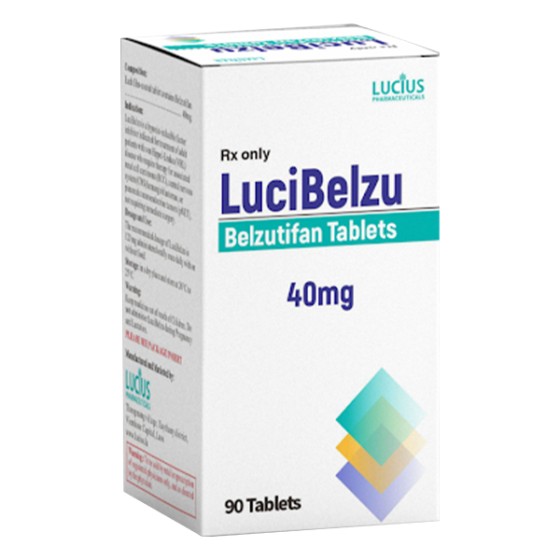
As an innovative targeted agent,belzutifan's originator formulation carries a relatively high treatment cost,and long-term use places considerable demands on patients'financial capacity.Generic versions,such as the Laos-manufactured formulation,are now available overseas at approximately several hundred USD per box,substantially lower than the originator,offering a more economical option for sustained maintenance therapy.Whether choosing the originator or a generic version,procurement through legitimate channels is strongly recommended to ensure product quality and appropriate storage and transportation conditions.Prices fluctuate with market conditions,and patients are advised to verify the latest information with their medical team or professional pharmaceutical consultants before initiating therapy.
[ 免责声明 ] 本页面内容来自公开渠道(如FDA官网、Drugs官网、原研药厂官网等),仅供持有医疗专业资质的人员用于医学药学研究参考,不构成任何治疗建议或药品推荐。所涉药品可能未在中国大陆获批上市,不适用于中国境内销售和使用。如需治疗,请咨询正规医疗机构。本站不提供药品销售或代购服务。