.jpeg)
Osimertinib Safety Guide: Foods to Avoid, Mechanism of Action, and Pre-Treatment Warnings
1.Drug Composition and Formulation
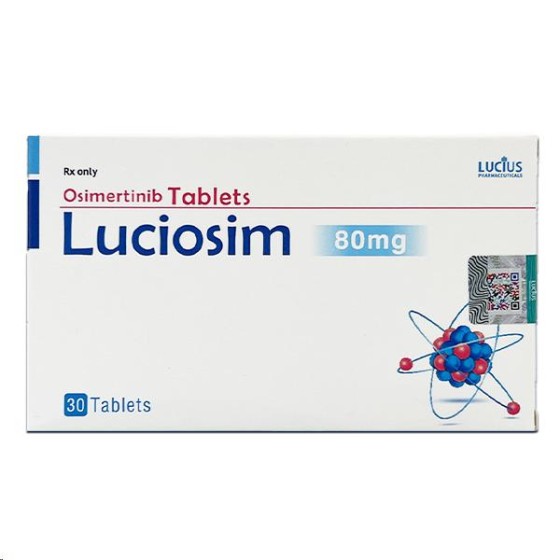
The active ingredient of osimertinib is osimertinib mesylate,chemically designated as N-{2-[2-(dimethylamino)ethyl-methylamino]-4-methoxy-5-[4-(1-methylindol-3-yl)pyrimidin-2-yl]amino}phenyl}prop-2-enamide mesylate.The medication is available as film-coated tablets in 80 mg and 40 mg strengths(expressed as free base).Excipients include mannitol,microcrystalline cellulose,hypromellose,and magnesium stearate.
Osimertinib is a third-generation EGFR tyrosine kinase inhibitor(EGFR-TKI)with a molecular design that confers potent inhibitory activity against both EGFR sensitizing mutations and the T790M resistance mutation,establishing it as a cornerstone therapy in EGFR mutation-positive NSCLC.
2.Mechanism of Action
Osimertinib irreversibly binds via covalent interaction to the C797 cysteine residue in the ATP-binding site of the EGFR kinase domain,thereby inhibiting EGFR autophosphorylation and downstream signaling through the RAS-RAF-MEK-ERK and PI3K-AKT pathways.This effectively blocks tumor cell proliferation and induces apoptosis.
Compared with first-and second-generation EGFR-TKIs,osimertinib offers two critical advantages.First,it demonstrates superior affinity for the T790M resistance mutation while retaining potent activity against sensitizing mutations(exon 19 deletion and L858R).Second,osimertinib exhibits significantly enhanced blood-brain barrier penetration compared to earlier TKIs,demonstrating meaningful efficacy against brain metastases.This dual advantage positions osimertinib at the center of comprehensive EGFR mutation-positive NSCLC management.
3.Dietary Precautions:Three Foods to Avoid
Osimertinib is primarily metabolized by the CYP3A4 enzyme system.Certain natural compounds in foods can significantly alter CYP3A4 activity,thereby changing osimertinib plasma concentrations and increasing toxicity or reducing efficacy.
The first food to avoid is grapefruit and all grapefruit-containing products.Grapefruit contains furanocoumarins that potently and irreversibly inhibit intestinal and hepatic CYP3A4,leading to markedly elevated osimertinib plasma levels and increased risk of serious adverse effects.Grapefruit and grapefruit juice should be completely avoided throughout treatment.
The second category includes pomelo varieties(such as Shatian pomelo and honey pomelo).Pomelo also contains furanocoumarin compounds,though with somewhat lower CYP3A4 inhibitory potency than grapefruit.Patients are advised to avoid or strictly limit pomelo consumption during therapy.
The third item is parsley(including its close relatives).Parsley contains coumarin derivatives that may moderately inhibit CYP3A4 activity.Large quantities could interfere with osimertinib metabolism,and patients should avoid excessive consumption.Other vegetables such as celery and cilantro contain trace amounts of coumarins but pose minimal risk at normal dietary intake levels.
4.Pre-Treatment Warnings and Assessments
Several critical assessments must be completed before initiating osimertinib therapy.
First,EGFR mutation status must be confirmed through validated genetic testing at an accredited laboratory,verifying the presence of exon 19 deletion or exon 21 L858R mutation before initiating targeted therapy.
Second,baseline chest CT imaging is essential to assess the risk of interstitial lung disease(ILD).Patients with a history of ILD or pulmonary fibrosis require particular caution and close respiratory monitoring during treatment.
Third,a baseline electrocardiogram(ECG)must be performed.Osimertinib may prolong the QTc interval;patients with baseline ECG abnormalities or electrolyte disturbances require enhanced cardiac monitoring.
Fourth,hepatic function tests including ALT,AST,and bilirubin should be obtained at baseline for subsequent comparison.
Fifth,patients should be counseled about expected adverse reactions including rash,paronychia,diarrhea,and stomatitis,with guidance on daily care and management strategies.
Sixth,women of childbearing potential must undergo pregnancy testing before treatment initiation.Osimertinib is contraindicated during pregnancy.
5.Drug Interactions
Beyond dietary precautions,osimertinib has clinically significant interactions with multiple medications.
Co-administration with strong CYP3A4 inhibitors(such as itraconazole,clarithromycin,or posaconazole)significantly increases osimertinib plasma concentrations and toxicity risk,requiring careful evaluation or dose modification.Co-administration with strong CYP3A4 inducers(such as rifampicin,phenytoin,or carbamazepine)reduces osimertinib exposure and efficacy,and should be avoided.
When osimertinib is used concomitantly with other QTc-prolonging agents(including certain antiarrhythmics,antipsychotics,or fluoroquinolone antibiotics),enhanced ECG monitoring is necessary with potential treatment adjustments.
Patients should proactively inform their treating physician of all prescription medications,over-the-counter drugs,and supplements being taken.
6.Special Populations
For hepatic impairment,no dose adjustment is required for mild to moderate impairment;data are insufficient for severe hepatic impairment.For renal impairment,no adjustment is needed for mild to moderate impairment;caution is advised in severe renal impairment.No dose adjustment is required for elderly patients aged 65 years and older.
Osimertinib is contraindicated during pregnancy.Breastfeeding women should either discontinue breastfeeding or discontinue the drug.Women of childbearing potential should use effective contraception during treatment and for at least 4 months after the last dose.
7.Adverse Reaction Monitoring and Management
During osimertinib therapy,regular monitoring should include complete blood counts,hepatic and renal function tests(recommended every 4 to 6 weeks),and ECG(especially during initial treatment).If progressive dyspnea,dry cough,or fever suggesting ILD occurs,osimertinib should be discontinued immediately and imaging performed.Severe rash,persistent diarrhea(4 or more episodes daily),or severe stomatitis warrant prompt medical attention with potential dose modification or temporary treatment interruption.
[ 免责声明 ] 本页面内容来自公开渠道(如FDA官网、Drugs官网、原研药厂官网等),仅供持有医疗专业资质的人员用于医学药学研究参考,不构成任何治疗建议或药品推荐。所涉药品可能未在中国大陆获批上市,不适用于中国境内销售和使用。如需治疗,请咨询正规医疗机构。本站不提供药品销售或代购服务。