.jpeg)
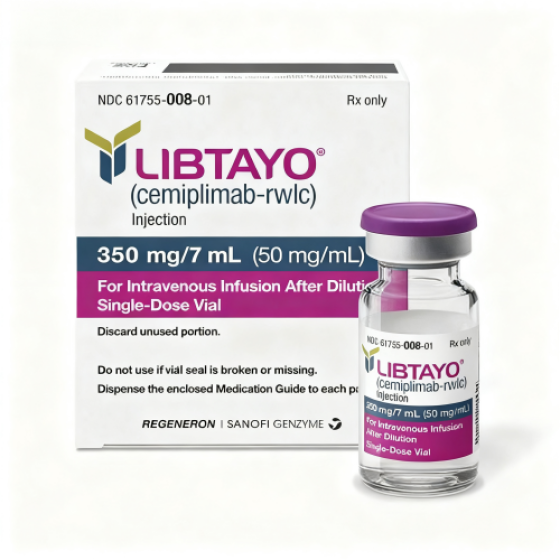
Cemiplimab (Libtayo) Drug Information
Cemiplimab-rwlc(brand name:Libtayo)is a fully human monoclonal antibody developed independently by Regeneron Pharmaceuticals,Inc.It belongs to the class of programmed death receptor-1(PD-1)immune checkpoint inhibitors for cancer treatment.The drug was approved by the U.S.Food and Drug Administration(FDA)in September 2018,with its first indication being metastatic or locally advanced cutaneous squamous cell carcinoma,making it the first drug to receive breakthrough therapy designation in this therapeutic area.
The mechanism of action of cemiplimab involves specifically binding to the PD-1 receptor on the surface of T cells,blocking its interaction with PD-L1 and PD-L2 ligands on tumor cells.This releases the immune system from tumor-induced suppression,restores T-cell anti-tumor immune activity,and achieves the effect of killing tumor cells.With ongoing clinical research,its indications have gradually expanded to multiple solid tumor types including basal cell carcinoma and non-small cell lung cancer,occupying an important position in the global field of cancer immunotherapy.
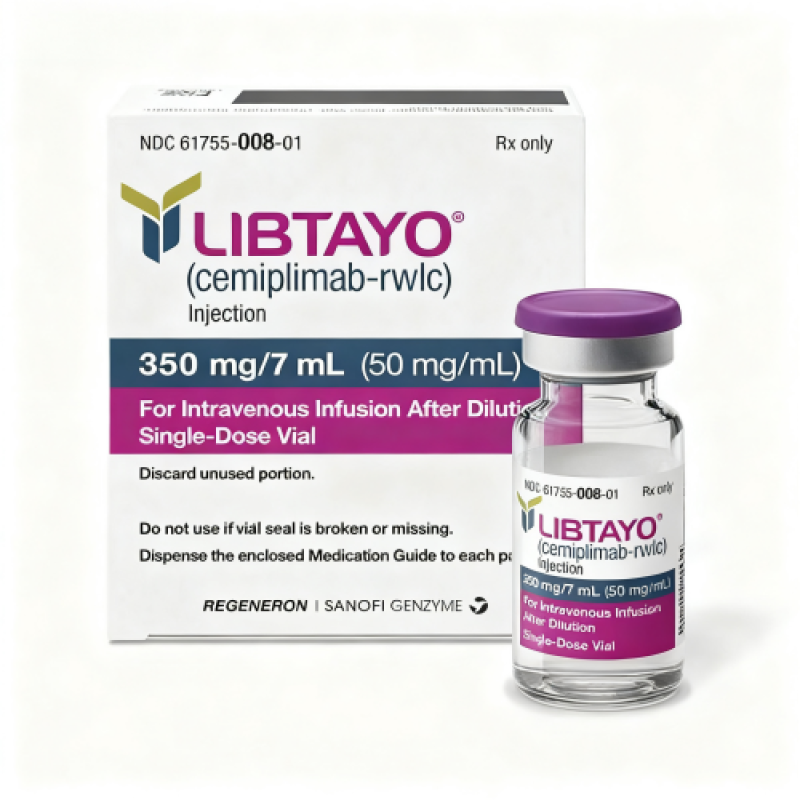
Indications
Cutaneous Squamous Cell Carcinoma
Cemiplimab is indicated for the treatment of adult patients with metastatic cutaneous squamous cell carcinoma(mCSCC)or locally advanced cutaneous squamous cell carcinoma(laCSCC)who are not candidates for curative surgery or curative radiation.
Additionally,cemiplimab is indicated for the adjuvant treatment of adult patients with cutaneous squamous cell carcinoma who are at high risk of recurrence following surgery and radiation therapy.
Basal Cell Carcinoma
Cemiplimab is indicated for the treatment of adult patients with locally advanced or metastatic basal cell carcinoma(laBCC/mBCC)who have previously received a Hedgehog pathway inhibitor,or for whom a Hedgehog pathway inhibitor is not appropriate.
Non-Small Cell Lung Cancer
Cemiplimab in combination with platinum-based chemotherapy is indicated for the first-line treatment of adult patients with non-small cell lung cancer whose tumors have no EGFR,ALK,or ROS1 aberrations,and whose disease is locally advanced and not amenable to surgical resection or definitive chemoradiation,or metastatic.
Cemiplimab as a single agent is indicated for the first-line treatment of adult patients with non-small cell lung cancer whose tumors have high PD-L1 expression(TPS≥50%)as determined by an FDA-approved test,with no EGFR,ALK,or ROS1 aberrations,and whose disease is locally advanced and not amenable to surgical resection or definitive chemoradiation,or metastatic.
Dosage and Administration
Recommended Dosage
For patients with locally advanced or metastatic basal cell carcinoma and cutaneous squamous cell carcinoma,the recommended dose of cemiplimab is 350 mg administered as an intravenous infusion every 3 weeks until disease progression,unacceptable toxicity,or for a maximum of 24 months.
For patients with non-small cell lung cancer,the recommended dose of cemiplimab is 350 mg administered as an intravenous infusion every 3 weeks until disease progression or unacceptable toxicity.
Dosage Modifications for Adverse Reactions
Dose reduction of cemiplimab is not recommended.
Withhold cemiplimab for severe(Grade 3)immune-mediated adverse reactions.
Permanently discontinue cemiplimab for life-threatening(Grade 4)immune-mediated adverse reactions,recurrent severe(Grade 3)reactions that require systemic immunosuppressive treatment,or inability to taper corticosteroids to prednisone equivalent≤10 mg/day within 12 weeks of initiating steroid therapy.
Adverse Reactions
The most common adverse reactions(incidence≥15%)of cemiplimab vary by indication and treatment regimen:
As monotherapy for metastatic/locally advanced cutaneous squamous cell carcinoma,metastatic/locally advanced basal cell carcinoma,and PD-L1 high-expression non-small cell lung cancer:fatigue,musculoskeletal pain,rash,diarrhea,and anemia.
As monotherapy for adjuvant treatment of high-risk cutaneous squamous cell carcinoma:rash and pruritus.
In combination with platinum-based chemotherapy for non-small cell lung cancer:alopecia,musculoskeletal pain,nausea,fatigue,peripheral neuropathy,and decreased appetite.
Contraindications
There are no known contraindications to cemiplimab at this time.
Warnings and Precautions
Severe and Fatal Immune-Mediated Adverse Reactions
As a PD-1/PD-L1 pathway inhibitor,cemiplimab exerts its anti-tumor effect by releasing the immune system from suppression,which may break peripheral immune tolerance and induce immune-mediated adverse reactions.These reactions can affect any organ system or tissue,may be severe or fatal,and can occur at any time after initiation of treatment,even after discontinuation of therapy.Multiple organ systems may be affected simultaneously.
The incidence and severity of immune-mediated adverse reactions are similar when cemiplimab is used as monotherapy or in combination with chemotherapy.Early recognition and prompt management are critical to ensuring safe use.Patients should be closely monitored for signs and symptoms of these reactions during treatment,and liver function,creatinine,and thyroid function should be checked at baseline and periodically during treatment.When an immune-mediated adverse reaction is suspected,appropriate evaluations should be performed to exclude other etiologies,particularly infection,and treatment should be initiated promptly with specialist consultation if necessary.
Depending on the severity of the adverse reaction,cemiplimab should be withheld or permanently discontinued.Systemic corticosteroid therapy(prednisone 1-2 mg/kg/day or equivalent)is usually required,followed by a gradual taper over at least 1 month once the reaction has resolved to Grade 1 or lower.For patients who do not respond adequately to corticosteroids,other systemic immunosuppressants may be considered.
Infusion-Related Reactions
In clinical studies of cemiplimab monotherapy,severe or life-threatening infusion reactions occurred in approximately 0.2%of patients,with common symptoms including nausea,fever,and vomiting.Depending on the severity of the infusion reaction,interrupt the infusion,slow the infusion rate,or permanently discontinue cemiplimab.
Complications of Allogeneic Hematopoietic Stem Cell Transplantation
Fatal and severe transplant-related complications,including hyperacute,acute,and chronic graft-versus-host disease,hepatic veno-occlusive disease,and steroid-requiring febrile syndrome,have been reported in patients who received PD-1/PD-L1 inhibitors before or after allogeneic hematopoietic stem cell transplantation(HSCT).These complications can occur despite intervening therapy between PD-1/PD-L1 inhibition and transplantation.Patients should be closely monitored and managed promptly,and the benefits and risks should be carefully weighed before treatment.
Embryo-Fetal Toxicity
Based on its mechanism of action,cemiplimab can cause fetal harm.Animal studies have shown that inhibition of the PD-1/PD-L1 pathway increases the risk of fetal immune rejection and leads to fetal death.Pregnant women should be informed of the potential risk to the fetus;women of reproductive potential should use effective contraception during treatment and for at least 4 months after the last dose of cemiplimab.
Special Populations
Pregnancy
There are no adequate clinical data on the use of cemiplimab in pregnant women.Based on its mechanism of action and animal study findings,cemiplimab may cause fetal harm when administered to a pregnant woman.Human IgG4 crosses the placenta,and therefore cemiplimab has the potential to be transmitted from the mother to the developing fetus.All pregnant women should be informed of the potential risk to the fetus.
Lactation
There are no clinical data on the presence of cemiplimab in human milk,the effects on the breastfed infant,or the effects on milk production.Because of the potential for serious adverse reactions in breastfed infants,women should not breastfeed during treatment with cemiplimab and for at least 4 months after the last dose.
Females and Males of Reproductive Potential
Pregnancy status should be verified in females of reproductive potential prior to initiating cemiplimab treatment.Women of reproductive potential should use effective contraception during treatment and for at least 4 months after the last dose of cemiplimab.
Pediatric Use
The safety and effectiveness of cemiplimab in pediatric patients have not been established.
Geriatric Use
Of the 1281 patients with advanced cancer who received cemiplimab monotherapy in clinical studies,26%were 65 to 75 years of age,and 22%were 75 years of age and older.No overall differences in safety or effectiveness were observed between these elderly patients and younger patients.
Drug Interactions
No formal drug interaction studies have been conducted with cemiplimab.
Overdosage
There is no clinical data on cemiplimab overdosage.
Pharmacokinetics
The pharmacokinetic parameters of cemiplimab in patients with various solid tumors are presented below as mean(coefficient of variation%)unless otherwise specified:
Cemiplimab exhibits dose-proportional pharmacokinetics over the dose range of 1 mg/kg to 10 mg/kg administered intravenously every 2 weeks(equivalent to 0.2 to 2 times the highest approved recommended dose for a 70 kg patient).
Absorption:With the 350 mg every 3 weeks regimen,cemiplimab has a trough concentration of 59 mg/L(47%)and a peak concentration of 171 mg/L(27%),reaching steady state at approximately 4 months.With the regimen of 350 mg every 3 weeks for 12 weeks followed by 700 mg every 6 weeks,the trough concentration is 50 mg/L(32%)after 30 weeks of treatment.
Distribution:The apparent volume of distribution of cemiplimab is 5.9 L(29%).
Elimination:The clearance after the first dose is 0.25 L/day(41%),which decreases by approximately 11%over time,resulting in a steady-state clearance of 0.22 L/day(44%).The elimination half-life is approximately 22 days(42%).
[ 免责声明 ] 本页面内容来自公开渠道(如FDA官网、Drugs官网、原研药厂官网等),仅供持有医疗专业资质的人员用于医学药学研究参考,不构成任何治疗建议或药品推荐。所涉药品可能未在中国大陆获批上市,不适用于中国境内销售和使用。如需治疗,请咨询正规医疗机构。本站不提供药品销售或代购服务。