
.jpeg)
Enzalutamide/enzalutamide shows higher relative efficacy than darotamide in mHSPC
Match-adjusted indirect comparison (MAIC) analysis showed that in patients with metastatic hormone-sensitive prostate cancer (mHSPC), compared with darolutamide (darolutamid e) plus androgen deprivation therapy (ADT), enzalutamide/enzalutamide (Enzalutamide) plus androgen deficiency therapy (ADT) significantly prolonged progression-free survival (rFS) and castration resistance time. The study includes data from the Phase 3 ARCHES (NCT02677896; enzalutamide + ADT) and ARANOTE (NCT04736199; darotamide + ATT) trials.
In the absence of direct head-to-head trials,MAIC analysis provides an efficient method of comparing data, minimizing bias caused by differences in study design and population. Applying this approach to the ARCHES and ARANOTE phase 3 trials showed that enzalutamide plus androgen deprivation therapy slowed disease progression or death and prolonged castration resistance in patients with mHSPC compared with darolutamide plus ADT. The difference in efficacy was statistically significant.
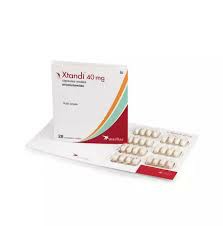
Specifically, in the intention-to-treat (ITT) population, enzalutamide plusADT was associated with a 46% reduction in the risk of radiographic progression or death (HR, 0.54; 95% CI, 0.32-0.93; P =0.03) The risk of progression to castration resistance was 43% lower (HR, 0.57; 95% CI, 0.34-0.94; P=0.03) compared with darolutamide plus ADT. These trends were also observed in patients not previously treated with docetaxel. In these patients, enzalutamide plus ADT showed significantly longer rPFS (HR, 0.47; 95% CI, 0.26-0.84; P =0.01) and time to castration resistance (HR, 0.46; 95% CI, 0.27-0.79; P =0.01) compared with darolutamide plus ADT.
Time to prostate-specific antigen (PSA) progression also trended toward improvement in the enzalutamide plus ADT group, although this difference did not reach statistical significance (HR, 0.61; 95% CI, 0.29-1.30; P =0.20). This finding is consistent with observations in the docetaxel-naive population (HR, 0.48; 95% CI, 0.21-1.10; P =0.08). The data also suggest that in the ITT population, enzalutamide plus ADT is superior to darotamide plus ADT when initiating new antineoplastic treatments.ADT (HR, 0.65; 95% CI, 0.34-1.24; P =0.19) and docetaxel-naïve people (HR, 0.57; 95% CI, 0.28-1.17; P =0.13), although the difference did not reach statistical significance.
The ARCHES trial enrolled 1,150 patients who were randomized 1:1 to receive enzalutamide plus ADT (n=574) or placebo plus ADT (n=576). The median follow-up time was 14.4 months. The ARANOTE trial enrolled 669 patients who were randomized 1:1 to receive darotamide plus ADT (n=446) or placebo plus ADT (n=223). The median follow-up time was 25.3 months.
All patients in the ARANOTE trial were new to docetaxel. In the ARCHES trial, 17.9% of patients in the enzalutamide plus ADT group and 17.7% of patients in the placebo plus ADT group had been previously exposed to docetaxel. Additionally, there was a higher proportion of Asian patients in the ARANOTE trial compared with the ARCHES trial (31.2% vs. 13.5%, respectively), which the authors considered a "potential effect moderator."
The two studies also differed in regional and disease characteristics of the study sites, such as the distribution of ECOG performance scores and baseline PSA levels. This is the first MAIC study to compare the efficacy of ADT with enzalutamide or darotamide in patients with mHSPC. As multiple ARPI options are currently available, the results of this study, along with other patient factors, will help guide therapeutic decisions in the management of mHSPC.
References:https://www.urologytimes.com/view/enzalutamide-shows-improved-relative-efficacy-over-darolutamide-in-mhspc
[ 免责声明 ] 本页面内容来自公开渠道(如FDA官网、Drugs官网、原研药厂官网等),仅供持有医疗专业资质的人员用于医学药学研究参考,不构成任何治疗建议或药品推荐。所涉药品可能未在中国大陆获批上市,不适用于中国境内销售和使用。如需治疗,请咨询正规医疗机构。本站不提供药品销售或代购服务。


