
.jpeg)
Are there any differences and connections between Vemurafenib/Zobov and dabrafenib?
Vemurafenib/Zobovo(Vemurafenib) and dabrafenib (trade name: Tafinlar) are oral targeted drugs targeting BRAF V600 mutations and are widely used in the treatment of advanced melanoma and some solid tumors. Although these two drugs have similar mechanisms of action and are both BRAF inhibitors, they have certain differences in chemical structure, pharmacokinetics, clinical application strategies and side effect characteristics.
From a mechanism of action perspective, both vemurafenib and dabrafenib selectively inhibit mutantBRAF kinase, thus blocking the MAPK/ERK signaling pathway, inhibiting tumor cell proliferation and inducing apoptosis. This means that the two are intrinsically linked in the basic anti-tumor mechanism, and both achieve precise treatment by targeting the BRAF V600 mutation. For melanoma patients carrying BRAF V600E or V600K mutations, both drugs can significantly delay disease progression and improve the patient's quality of life to a certain extent.
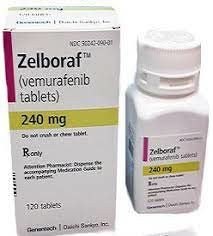
There are differences between vemurafenib and dabrafenib in terms of medicinal chemical properties and pharmacokinetics. Vemurafenib is a small molecule BRAF inhibitor. Its bioavailability is relatively stable after oral administration, but it is highly dependent on liver metabolism. Patients should pay attention to the interaction between the drug and other liver enzyme inducers or inhibitors. Dabrafenib is also an oral small molecule, but its half-life is short and it usually needs to be taken twice a day. When combined with MEK inhibitor treatment, it can extend the efficacy and reduce the risk of drug resistance through synergistic effects. Differences in pharmacokinetics also mean that patients need to conduct a comprehensive evaluation based on their personal constitution, concomitant medications, and tolerance when selecting drugs.
In clinical application, the applicable strategies of vemurafenib and dabrafenib are different. Vemurafenib is usually used as a monotherapy or in combination with other targeted drugs under specific circumstances. It has the advantages of rich experience in use, fixed dosage, and high drug stability. Dabrafenib is more commonly used in combination with MEK inhibitors (such as trametinib/Trametinib) to form a BRAF/MEK dual inhibition regimen. This combination strategy has shown a higher objective response rate and longer progression-free survival in studies. It can also partially alleviate skin-related side effects, reflecting a more advanced precision combination treatment concept.
Side effects characteristics are also one of the differences between the two. Vemurafenib is common with hand-foot skin reactions, rashes, hair loss, and mild liver function abnormalities, while dabrafenib has relatively mild skin toxicity when used alone, but may cause fever, joint pain, and mild changes in cardiac indicators when combined with MEK inhibitors. Therefore, when doctors formulate treatment plans, they will consider drug selection and combination plans based on patient tolerance, comorbid diseases, and quality of life.
To sum up, vemurafenib and dabrafenib are both related and different. The connection is that both are precision-targeted drugs targeting the BRAF V600 mutation and exert anti-tumor effects by inhibiting the MAPK/ERK signaling pathway. The difference lies in the chemical structure, pharmacokinetic properties, dosage regimen, combination treatment strategy and side effect spectrum. In actual clinical practice, the choice of which drug requires a comprehensive evaluation based on the patient's tumor type, molecular mutation, tolerance, previous treatment experience, and economic and medical insurance accessibility.
Reference: https://www.drugs.com/mtm/vemurafenib.html
[ 免责声明 ] 本页面内容来自公开渠道(如FDA官网、Drugs官网、原研药厂官网等),仅供持有医疗专业资质的人员用于医学药学研究参考,不构成任何治疗建议或药品推荐。所涉药品可能未在中国大陆获批上市,不适用于中国境内销售和使用。如需治疗,请咨询正规医疗机构。本站不提供药品销售或代购服务。


