
.jpeg)
Analysis of the treatment plan of dabrafenib (Tefila) combined with trametinib in patients with BRAF mutation
1. Drug overview and indications
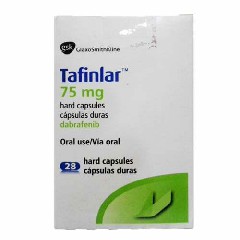
Dabrafenib (Dabrafenib) and trametinib (Trametinib) are a pair of targeted drug combinations against BRAF V600E mutated tumors. Dabrafenib is a BRAF kinase inhibitor that specifically acts on BRAF V600E mutated cancer cells. It can block abnormal MAPK signaling pathways and inhibit tumor cell proliferation. Trametinib is a MEK inhibitor that acts on the MEK protein downstream of the MAPK pathway, thereby further enhancing the signal inhibition effect. The combined use of these two drugs can double block the MAPK pathway, improve anti-tumor efficiency, and delay the emergence of drug resistance.
This combination was originallyFDAapproved forBRAF Patients with advanced or metastatic V600Emutated **non-small cell lung cancer (NSCLC)**. In addition, it also shows potential efficacy in BRAF mutated melanoma and other solid tumors, and is one of the important options for BRAF targeted therapy in current clinical settings.
2. Usage and dosage of combined treatment plan
The standard treatment regimen is usually oral dabrafenib 150 mg twice daily and trametinib 2 mg once daily. The drug can be taken with food or on an empty stomach, but the dosage time needs to be kept relatively consistent every day to maintain stable blood concentration. Dabrafenib tablets should be swallowed whole, and trametinib tablets should not be chewed or crushed.
During the combined treatment, doctors will make individual adjustments based on the patient's constitution, age, liver and kidney function, and tolerance. If the patient experiences severe side effects, such as fever, rash or abnormal liver function, the dose can be appropriately reduced or the drug temporarily discontinued, and the original dose can be restored after the symptoms are relieved. During the treatment process, patients must strictly follow the doctor's instructions and cannot stop taking the medicine on their own to prevent tumor recurrence or drug resistance.
3. Clinical efficacy and research support
Multiple clinical trials have shown that dabrafenib combined with trametinib has significant efficacy in patients with BRAF V600E mutation. For example, when targeting late stageBRAF V600E In clinical studies on patients with NSCLC, the objective response rate (ORR) of the combination treatment group reached 64% , the median progression-free survival (PFS) was approximately 10.9 months, which was significantly better than the single-agent treatment or chemotherapy group. In addition, the combination regimen also showed high disease control rate and sustained response time, and also gained clinical approval in patients with BRAF mutated melanoma.
The advantage of the combination regimen is to delay the emergence of drug resistance. Treatment with dabrafenib alone is prone to developing drug resistance within a few months. However, after adding trametinib, the downstream signals of the MAPK pathway are effectively inhibited, reducing the incidence of tumor cell escape mechanisms, thereby prolonging the duration of the therapeutic effect.
4. Safety and common adverse reactions
Common adverse reactions of dabrafenib combined with trametinib include fever, fatigue, nausea, vomiting, diarrhea, rash, joint pain, and headache. Most of them are grade 1 or grade 2 and are tolerated by patients. A small number of patients may experience serious reactions, such as decreased cardiac function, abnormal liver function, retinopathy, or interstitial lung disease.
In clinical practice, about2%-5% of patients temporarily discontinue medication or adjust their dose due to treatment-related adverse events. In order to reduce the risk, doctors will conduct blood routine, liver and kidney function, electrocardiogram and fundus examination before and during treatment. With early identification and intervention, patients can often continue treatment safely and maintain results.
5. Patient Management and Quality of Life
Patients should maintain good living habits and regular schedule while receiving treatment with dabrafenib combined with trametinib. It is recommended to take the medicine at a fixed time every day and go to the doctor for regular check-ups. If side effects such as fever or rash occur, you should inform your doctor in time to avoid discontinuing the medication on your own.
The advantage of combination therapy is not only to improve survival rates, but also to improve patients' quality of life. Compared with traditional chemotherapy, this regimen has controllable side effects and less impact on daily activities, allowing patients to maintain a relatively normal life during treatment. Clinical studies have shown that patients' quality of life and functional status were maintained during combined treatment, and progression-free survival was significantly prolonged.
6. Clinical prospects and application expansion
As more studies are conducted, the scope of application of dabrafenib combined with trametinib continues to expand. In addition to NSCLCand melanoma, the combination also shows potential efficacy for BRAF V600Emutated solid tumors such as thyroid cancer, colorectal cancer, and cholangiocarcinoma. In the future, with the combination of targeted therapy and immunotherapy, combination regimens may be used in a variety of treatmentsBRAF has become a standard treatment modality in tumors with mutated tumors.
7. Summary
Dabrafenib combined with trametinib provides an efficient and controllable treatment option for patients with BRAF V600E mutations. Through dual-target inhibition of the MAPK signaling pathway, this regimen significantly improved the response rate and progression-free survival while being well tolerated. In clinical applications, patients need to strictly follow the doctor's instructions and take medications, and regularly review monitoring indicators to ensure safety and efficacy. As research continues to deepen, this combination treatment is expected to play an important role in more tumor types, bringing new hope to patients with BRAF mutations.
Reference materials:https://www.drugs.com/
[ 免责声明 ] 本页面内容来自公开渠道(如FDA官网、Drugs官网、原研药厂官网等),仅供持有医疗专业资质的人员用于医学药学研究参考,不构成任何治疗建议或药品推荐。所涉药品可能未在中国大陆获批上市,不适用于中国境内销售和使用。如需治疗,请咨询正规医疗机构。本站不提供药品销售或代购服务。


