
.jpeg)
Indications of Entrectinib/Luo Shengquan
Entrectinib (Entrectinib) is an oral small molecule targeted drug that has received widespread attention in the field of oncology medicine in recent years. Its biggest highlight is its multi-target inhibition mechanism, which mainly targets ROS1 and NTRK gene fusion, thus providing a new treatment approach for some patients with non-small cell lung cancer and a variety of rare solid tumors.
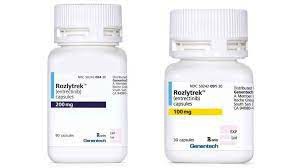
In the field of non-small cell lung cancer, entrectinib is mainly used for ROS1-positive metastatic patients. Unlike traditional chemotherapy, entrectinib achieves targeted inhibition of cancer cells by blocking the abnormal signaling pathways that drive tumors. These patients tend to be younger, have less history of smoking, and have obvious gene driver mutations. Therefore, the emergence of entrectinib provides them with a more targeted treatment. At the same time, entrectinib can penetrate the blood-brain barrier and also shows potential advantages in the management of brain metastases, which is particularly important for patients with lung cancer.
Among the indications for solid tumors, entrectinib is mainly targeted at patients with positive NTRK gene fusions Although the proportion of NTRK fusions in the overall tumor population is not high, it can appear in almost all cancer types, including children and adult patients. The approval of entrectinib enables these patients to no longer rely solely on chemotherapy or radiotherapy, but can instead discover new targeted treatment opportunities through genetic testing. Entrectinib offers the possibility of systemic treatment, whether in metastatic cases or in patients who may be at serious risk for surgical resection. This cross-cancer indication model that is “guided by genetic mutations rather than relying solely on tumor origin” is considered an important direction for future cancer treatment.
For pediatric patients, the indications of entrectinib cover those aged 1 month and above, which is relatively rare among targeted drugs. Due to the special nature of childhood solid tumors, effective treatment options are often lacking. When NTRK gene fusion is positive, the use of entrectinib provides an important therapeutic breakthrough for this population.
Reference materials:https://www.roche.com/products/rozlytrek
[ 免责声明 ] 本页面内容来自公开渠道(如FDA官网、Drugs官网、原研药厂官网等),仅供持有医疗专业资质的人员用于医学药学研究参考,不构成任何治疗建议或药品推荐。所涉药品可能未在中国大陆获批上市,不适用于中国境内销售和使用。如需治疗,请咨询正规医疗机构。本站不提供药品销售或代购服务。


