
.jpeg)
What are the detailed instructions for Etrasimod-Velsipity?
1. Basic information
Velsipity is the trade name of Etrasimod, a new generation of oral small molecule drugs. Its core feature is to exert an immune regulatory effect by regulating the activity of sphingosine 1-phosphate (S1P) receptors. It is currently mainly used in the treatment of Ulcerative Colitis (UC) and is regarded as an important member of S1P receptor modulator drugs.
2. Indications
Itramod is mainly suitable for adult patients with moderately to severely active ulcerative colitis. Such patients usually only consider entering the treatment path of itrimod when traditional treatments (such as glucocorticoids, immunosuppressants, or biological agents) have poor efficacy or insufficient tolerance. Its launch provides UC patients with a new oral option that is convenient and innovative.
3. Usage and dosage
1. Pre-treatment evaluation: Before using Velsipity, patients need to undergo basic examinations such as complete blood count (CBC), electrocardiogram (ECG), liver function test (transaminase and bilirubin) to ensure the safety of medication. This requirement stems from the possible effects of the drug on the heart, liver and immune system.
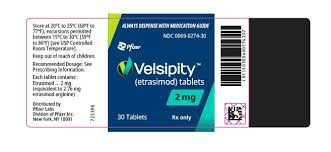
2. Recommended dosage:The usual dosage of Velsipity is 2 mg once a day, and it is recommended to take it orally at a fixed time.
3. Dosage adjustment: Some patients may need to adjust the dose due to concomitant medication, underlying diseases or changes in laboratory indicators. However, it is not recommended to change the medication regimen without authorization and must follow the doctor's advice.
4. Adverse reactions
Adverse effects of istrimod involve multiple systems. The most common symptoms include mild symptoms such as headache, dizziness, nausea, and joint discomfort; some patients may experience elevated liver function indicators or abnormal blood lipids; and a few may experience bradycardia or elevated blood pressure. In addition, because the drug affects the migration and distribution of lymphocytes, individual patients may be at increased risk of infection, such as herpes simplex virus infection or urinary tract infection. Most adverse reactions are mild to moderate and can improve after discontinuation or adjustment, but continuous clinical monitoring is required.
5. Storage requirements
Medicines should be storedat a room temperature of 20°C to 25°C, away from moisture and high temperatures, and away from children and pets to prevent accidental ingestion.
6. Contraindications
Itramod is contraindicated in certain populations, particularly patients at high risk for cardiovascular disease, including those with a recent history of myocardial infarction, unstable angina, stroke, or heart failure requiring hospitalization. In addition, use should be avoided in patients with severe arrhythmias that have not been corrected by a pacemaker. Such contraindications are closely related to the drug's potential to induce bradycardia and conduction abnormalities.
7. Mechanism of action
As an S1P receptor modulatoritramod mainly binds to S1P1, S1P4 and S1P5 receptors, but has no activity on S1P2 and has a very low effect on S1P3. This selective binding can partially and reversibly inhibit the migration of lymphocytes from lymph nodes, resulting in a decrease in the number of lymphocytes in peripheral blood. Although its mechanism of action in treating ulcerative colitis is not completely clear, it is generally believed to be closely related to reducing the accumulation of inflammatory lymphocytes in the intestinal mucosa, thereby reducing the inflammatory response and improving symptoms.
Reference materials:https://www.drugs.com/mtm/etrasimod.html
[ 免责声明 ] 本页面内容来自公开渠道(如FDA官网、Drugs官网、原研药厂官网等),仅供持有医疗专业资质的人员用于医学药学研究参考,不构成任何治疗建议或药品推荐。所涉药品可能未在中国大陆获批上市,不适用于中国境内销售和使用。如需治疗,请咨询正规医疗机构。本站不提供药品销售或代购服务。


