
.jpeg)
Clinical trial progress and efficacy data analysis of canafenib/encofenib (bitavir)
Canafenib/Encorafenib (Encorafenib) is an oral BRAF inhibitor, mainly used to treat patients with BRAF Patients with V600mutated melanoma and certain non-small cell lung cancer (NSCLC). BRAFgene mutation is one of the important driving factors of various tumors, especially accounting for about 50% of patients with melanoma. Encorafenibby selectively inhibiting the kinase activity of BRAF V600 mutant protein and blocking the MAPK signaling pathway, thereby inhibiting tumor cell proliferation and inducing apoptosis, providing a new treatment option for high-risk BRAF mutant patients.
In terms of clinical trials, Encorafenib’s efficacy and safety have been verified in multiple studies. COLUMBUS The Phase III clinical trial is one of its key studies, which evaluates Encorafenib as a single agent and Encorafenib< /span>CombinedMEKInhibitorBinimetinib versusBRAF Outcomes in patients with V600mutated advanced melanoma. The study results showed that the median progression-free survival (PFS) of the Encorafenib single-drug group was 6.9 months, while the median PFS of the combination group was significantly extended to < /span>14.9 months, and the median overall survival (OS) was also extended from 16.6 months in the single-drug group to 33.6 months, showing that the combination regimen has obvious advantages in prolonging patient survival.
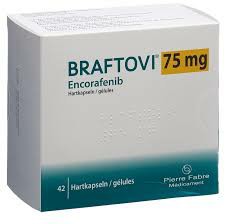
In terms of safety,EncorafenibIt is well tolerated, but some adverse reactions may still occur, including rash, joint pain, fatigue, nausea, and hematological abnormalities. In the combined medication regimen, although the incidence of adverse events has increased, it is generally controllable. Through dose adjustment and symptomatic treatment, most patients can continue to complete treatment. In addition, clinical data show that Encorafenib has low skin toxicity and cardiotoxicity, and has certain advantages compared with other BRAF inhibitors.
In addition to melanoma, Encorafenibhas also shown potential efficacy in BRAF V600 mutation-positive non-small cell lung cancer (NSCLC). EarlyII clinical trials show that Encorafenib combined with MEK inhibitors is effective in NSCLCNSCLC The overall response rate among pan>patients reaches about 50%, and the median progression-free survival period is about 6 to 8 months. Some patients can obtain long-term remission. Based on these data, the application prospects of Encorafenib in various BRAF V600 mutated tumors have gradually become clear, and it also provides a reliable basis for personalized precision treatment.
Overall, Encorafenib has shown significant efficacy in advanced BRAF V600 mutated tumors, especially when combined with MEK inhibitors, which can significantly extend progression-free survival and overall survival. Through standardized efficacy evaluation and adverse reaction management, Encorafenib provides a feasible and safe targeted treatment option for melanoma and some NSCLC patients. In the future, with the accumulation of more clinical trial data and in-depth analysis of different patient subgroups, the application scope and optimal treatment strategy of Encorafenib are expected to be further optimized, bringing better prognosis and quality of life to high-risk patients.
Reference materials:https://www.drugs.com/
[ 免责声明 ] 本页面内容来自公开渠道(如FDA官网、Drugs官网、原研药厂官网等),仅供持有医疗专业资质的人员用于医学药学研究参考,不构成任何治疗建议或药品推荐。所涉药品可能未在中国大陆获批上市,不适用于中国境内销售和使用。如需治疗,请咨询正规医疗机构。本站不提供药品销售或代购服务。


