
.jpeg)
What is the efficacy of Tremelimumab?
Tremelimumab is an anti-CTLA-4 monoclonal antibody developed by AstraZeneca and is one of the important representatives of the new generation of immune checkpoint inhibitors. It blocks the CTLA-4 pathway and relieves the suppressed state of T cells, thereby activating the body's own immune system to attack tumor cells. This mechanism of action is different from PD-1 or PD-L1 inhibitors, and the combination of the two is believed to further enhance the immune anti-cancer effect. In recent years, the combination of temsitumumab and durvalumab has shown positive efficacy in a variety of solid tumors, especially in the fields of hepatocellular carcinoma (HCC) and non-small cell lung cancer (NSCLC), which has attracted widespread attention from the global oncology community.
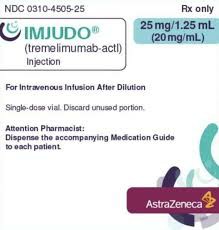
In the field of advanced hepatocellular carcinoma, the clinical significance of temsitumumab is particularly prominent. Traditionally, patients with liver cancer have limited immunotherapy options, but the temsitumumab combined with durvalumab regimen (also known as the STRIDE regimen) has shown significant survival benefits in overseas studies. In patients with unresectable advanced hepatocellular carcinoma, this regimen significantly prolonged overall survival compared with targeted drugs such as sorafenib, and some patients even experienced sustained tumor shrinkage or complete remission. This indicates that the immune remodeling mechanism of temsitumumab can help the body establish a more durable anti-tumor immune memory, thereby delaying disease progression. Since patients with liver cancer are often accompanied by liver function damage and chronic inflammation, temsitumumab's milder immune activation properties give it certain advantages in terms of safety and tolerability. This treatment idea not only changes the pattern of traditional HCC treatment relying on targeted drugs, but also promotes the immune combination regimen to become one of the new international guideline recommendations.
In the field of non-small cell lung cancer (NSCLC), the research on temsilimumab has also made important progress. The "triple regimen" combined with durvalumab and chemotherapy has shown the potential to extend survival in some patients with metastatic NSCLC. Overseas research results show that this immune combination model can enhance immune activity in the tumor microenvironment, allowing T cells to continue to recognize and attack cancer cells, thereby achieving longer disease control. Compared with chemotherapy alone, the addition of temtumumab significantly improved the depth and durability of the immune response, which is particularly clinically significant for patients with low sensitivity to chemotherapy. Although immune-related adverse reactions may occur during the early stages of treatment, through monitoring and individualized management, most patients can safely complete the treatment cycle.
From a mechanistic perspective, the uniqueness of temsilimumab lies in its ability to activate the immune system"Upstream node". Inhibition of CTLA-4 signaling can fully activate initial T cells and lay the foundation for subsequent anti-tumor responses. Used in conjunction with the PD-L1 inhibitor durvalumab, it forms a dual immune regulatory system of "front-end activation and back-end maintenance". This complementary effect not only enhances the anti-cancer effect, but also reduces the possibility of immune evasion. A review analysis of multiple international journals pointed out that the combination of temsitumumab and immune regimen also showed considerable efficacy in PD-L1 negative patients, expanding the scope of the applicable population of immunotherapy.
Reference: https://www.drugs.com/mtm/tremelimumab.html
[ 免责声明 ] 本页面内容来自公开渠道(如FDA官网、Drugs官网、原研药厂官网等),仅供持有医疗专业资质的人员用于医学药学研究参考,不构成任何治疗建议或药品推荐。所涉药品可能未在中国大陆获批上市,不适用于中国境内销售和使用。如需治疗,请咨询正规医疗机构。本站不提供药品销售或代购服务。


