
.jpeg)
How does fezolinetant work?
Fezolinetant is an innovative non-hormonal drug that has attracted much attention in recent years. Its core mechanism of action is different from traditional hormone replacement therapy (HRT) and it is a neuroendocrine regulating drug. The drug is mainly used to relieve moderate to severe vasomotor symptoms in menopausal women, such as hot flashes and night sweats. These symptoms are often caused by temperature regulation dysfunction caused by falling estrogen levels. Fezonatant regulates the body temperature control system in a non-hormonal manner by precisely acting on specific receptors in the central nervous system, thereby improving the quality of life of menopausal women.
From a pharmacological perspective, fizonitant is a selective neurokinin3 receptor (Neurokinin-3 receptor, NK3R) antagonist. NK3R is a key receptor distributed on KNDy neurons in the hypothalamus. KNDy neuron groups play an important role in regulating body temperature, endocrine hormones, and reproductive functions. After women undergo menopause, estrogen levels in the body decrease significantly, causing the activity of KNDy neurons to increase excessively, resulting in a lowering of the thermoregulatory threshold. As a result, slight temperature fluctuations can be misjudged as "overheating" by the central nervous system, causing vasomotor reactions such as hot flashes and night sweats. By blocking the NK3R signaling pathway, Fezonatant directly inhibits the over-excitability of KNDy neurons, returns body temperature control to normal, and thereby relieves the symptoms of hot flashes and night sweats.
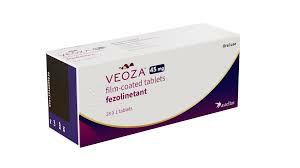
Compared with traditional hormone replacement therapy, the biggest innovation of fezonastat is its "non-hormonal mechanism". Traditional HRT restores hormonal balance by supplementing estrogen or a combination of estrogen and progesterone. Although the effect is significant, long-term use may increase the risk of breast cancer, endometrial cancer, and venous thrombosis. Zonatant, on the other hand, does not rely on exogenous hormones at all. Its regulatory effect occurs at the neurotransmitter level, so it can not only improve symptoms but also avoid hormone-related complications. It is especially suitable for female patients who are not suitable for hormone therapy or are worried about hormone risks.
In terms of pharmacokinetics, fezonatant is an oral small molecule compound with good absorption and bioavailability. It is mainly metabolized by the liver and decomposed through CYP1A2, CYP2C9 and other pathways. The drug has a long half-life in the body and can be taken orally once a day to maintain the therapeutic effect. Most studies show that it can significantly reduce the frequency of hot flashes within 2 to 4 weeks, and the efficacy gradually increases with continued treatment. Since it does not affect serum estrogen levels, it is safer for long-term use and will not have a stimulating effect on breast or uterine tissue.
In addition, the mechanism of fezonatant also suggests new directions for menopausal treatment——Shift from simple hormone supplementation to neuroendocrine target intervention. Menopausal symptoms are not only a problem of hormone deficiency, but also involve an imbalance in the neuroregulatory system. Fezolinetant rebalances the body temperature control center by precisely inhibiting the NK3R pathway. This concept of "central target therapy" represents the future trend of non-hormonal menopausal drug development.
Generally speaking, the principle of action of fezonatant is to antagonizeNK3R receptors, inhibit over-excited KNDy neurons, and stabilize the hypothalamic temperature regulation system, thereby alleviating symptoms such as hot flashes and night sweats. It does not rely on estrogen and does not affect hormone levels in the reproductive system. It is a major breakthrough in modern menopausal management.
Reference materials:https://www.veozah.com/
[ 免责声明 ] 本页面内容来自公开渠道(如FDA官网、Drugs官网、原研药厂官网等),仅供持有医疗专业资质的人员用于医学药学研究参考,不构成任何治疗建议或药品推荐。所涉药品可能未在中国大陆获批上市,不适用于中国境内销售和使用。如需治疗,请咨询正规医疗机构。本站不提供药品销售或代购服务。


