
.jpeg)
Baricitinib/Alemin helps patients with alopecia areata regenerate eyebrows and eyelashes
Nearly three-quarters of patients with alopecia areata who took baricitinib experienced hair regrowth on the back of their scalp and, by week 52, eyebrows and eyelashes, according to a recent study. The discovery offers new hope for treating patients with alopecia areata (AA), especially those with missing eyebrows and eyelashes. We evaluated the extent of eyebrow and eyelash (EB/EL) involvement in patients with alopecia areata and explored the efficacy of baricitinib in these hair sites.
This study was conducted by researchers from the hospital's dermatology department and combined the results of two multi-center, randomized, double-blind, placebo-controlled trials-BRAVE-AA1 and BRAVE-AA2. The trials were conducted at 169 centers in 10 countries and included 1192 patients with 50% or more scalp hair loss and an AA episode lasting more than 6 months but less than 8 years. The study design adopted a randomization method, with patients receiving placebo, baricitinib 2 mg, or baricitinib 4 mg once daily in a 2:2:3 ratio.
The researchers assessed the involvement of EB and EL using the ClinRO scale, with scores ranging from 0 (no loss) to 3 (complete loss), while the extent of scalp hair loss was measured using the SALT score. At baseline, the severity of EB/EL was closely related to the extent of scalp involvement: patients with no EB/EL loss (ClinRO score of 0) had an average SALT score of 70.6, while patients with complete EB/EL loss (ClinRO score of 3) had an average SALT score as high as 96. This shows that the degree of eyebrow and eyelash loss is directly related to the severity of scalp hair loss.
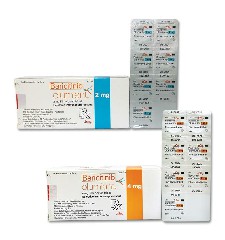
Research results show that the therapeutic effect of baricitinib is significant. At week 36, the EB response rates (ClinRO score 0 or 1, at least 1 point improvement) in the baricitinib 2 mg and 4 mg groups were 28.2% and 44.3%, respectively, compared with only 12.6% in the placebo group. The EL response rate also showed a similar trend: 25.1% in the 2 mg group, 46.4% in the 4 mg group, and 12.4% in the placebo group. These data clearly demonstrate the effectiveness of baricitinib in promoting eyebrow and eyelash regeneration.
With the deepening of the research, to the At week 52, the EB and EL response rates in the baricitinib 4 mg group were further improved: the EB response rate was 56% and the EL response rate was 55.8%. More importantly, among scalp responders (SALT score up to 20 points), 71.1% (86/121 patients) achieved both EB and EL responses. This result shows the correlation between different types of hair regeneration, and the consistency is about 80%. Even among patients who were scalp nonresponders (SALT more than 20), 35.4% (69/195 patients) achieved EB and EL responses. This phenomenon shows that baricitinib can not only improve scalp hair loss, but also effectively promote the regeneration of eyebrows and eyelashes.
The loss of eyebrows and eyelashes has a profound impact on patients' quality of life. They not only play an important role in facial recognition, but also have an eye protection function. This means that patients with missing eyebrows and eyelashes may face additional psychological and physical burdens. The researchers pointed out: "Many patients with severe AA report that eyebrows are as important as scalp hair." Therefore, the regeneration of eyebrows and eyelashes is not only a goal of treatment, but also an important guarantee for patients' mental health and quality of life.
Interestingly, brow and eyelash regeneration sometimes precedes scalp responses, suggesting that changes in brows and eyelashes may be indicative of treatment progress and support an overall definition of treatment success. By observing the regeneration of eyebrows and eyelashes, doctors can better evaluate the patient's treatment response and adjust treatment strategies in a timely manner to achieve better results.
Reference materials:https://conexiant.com/dermatology/articles/baricitinib-aids-eyebrow-eyelash-regrowth-in-alopecia-areata/
[ 免责声明 ] 本页面内容来自公开渠道(如FDA官网、Drugs官网、原研药厂官网等),仅供持有医疗专业资质的人员用于医学药学研究参考,不构成任何治疗建议或药品推荐。所涉药品可能未在中国大陆获批上市,不适用于中国境内销售和使用。如需治疗,请咨询正规医疗机构。本站不提供药品销售或代购服务。


