
.jpeg)
Will giritinib (segatan) produce drug resistance and how to deal with it
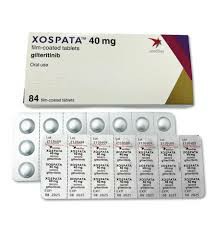
Gilteritinib (Gilteritinib) is an oral small molecule targeted drug, mainly used to treat relapsed or refractory acute myeloid leukemia (AML) with FLT3 mutations. As one of the more commonly used FLT3 inhibitors in clinical practice, it has made important progress in improving patient response rates and prolonging overall survival. However, like most targeted drugs, gilitinib will inevitably face resistance problems during its use. This article will conduct a detailed analysis of drug resistance mechanisms, drug resistance manifestations, detection and evaluation methods, and post-drug resistance treatment strategies.
1. The mechanism of resistance to giritinib
The development of drug resistance is the result of the continuous evolution of tumor cells under drug pressure. The resistance mechanism of giritinib mainly includes the following aspects:
1.FLT3 Gene secondary mutation: After some patients receive giritinib treatment, the FLT3 kinase domain may re-mute Secondary mutations, such as D835 or F691L mutations, lead to a decrease in the binding ability of the drug to the receptor and reduce the inhibitory effect of the drug.
2. Alternative signaling pathway activation: Even if FLT3 is inhibited, tumor cells may still maintain proliferation and survival by activating RAS/MAPK, PI3K/AKT and other alternative pathways, weakening the efficacy of giritinib.
3.Selection of resistant clones:AML itself is highly heterogeneous. Giritinib may eliminate some sensitive clones, while resistant clones gradually become the main surviving population, leading to disease recurrence.
4. Changes in drug metabolism and transport: For example, overexpression of drug efflux pumps may reduce the effective concentration of giritinib in cells and also affect the efficacy.
2. Clinical manifestations of resistance to giritinib
In clinical practice, resistance to giritinib often manifests itself in the following situations:
Hematological relapse: The proportion of blast cells in the patient's peripheral blood or bone marrow increases again, indicating relapse of leukemia.
Decreased efficacy: Patients achieve complete remission or partial remission in the early stage, but over time, the disease control effect weakens.
Abnormal molecular testing: Gene sequencing revealed that the FLT3 mutation reappeared, or other driver mutations appeared.
Aggravation of clinical symptoms: such as anemia, bleeding tendency, frequent infections, etc.AMLSymptoms reappear.
3. Detection and evaluation of drug resistance
To determine whether resistance to giritinib has occurred, clinical practice usually requires a combination of the following methods:
Bone marrow morphological examination: observe whether the proportion of blast cells in the bone marrow increases.
Molecular testing: Monitor the FLT3 mutation status through next-generation sequencing (NGS) to determine whether there are secondary mutations or new mutations.
Minimal residual disease (MRD) monitoring: Use flow cytometry or quantitative PCR to assess the level of residual leukemia cells.
Clinical efficacy evaluation: Comprehensive judgment of whether the drug efficacy has declined through blood routine, liver and kidney function, and systemic symptoms.
4. Treatment methods after resistance to giritinib
The management of drug resistance varies depending on the specific situation of the patient. Common strategies include:
1.Switch to otherFLT3inhibitors
If a patient develops a specific secondary mutation of FLT3, a new generation of FLT3 inhibitors that are sensitive to this mutation may be considered. For example, Crenolanib (Crenolanib) and Quizartinib (Quizartinib) have shown certain efficacy in some mutation types.
2.Combined treatment strategy
Combined with chemotherapy: Giritinib can be combined with low-dose cytarabine and hypomethylating drugs (such as decitabine, azacitidine) for drug resistance or relapseAML.
Combined with other targeted drugs: For example, combined with the BCL-2 inhibitor Venetoclax (Venetoclax), it has shown good efficacy in some studies.
Combined with immunotherapy: including PD-1/PD-L1 inhibitors or CAR-T cell therapy. Although it is still in the research stage, it is a direction to explore after drug resistance.
3.Hematopoietic stem cell transplantation (HSCT)
For patients who meet the conditions, allogeneic hematopoietic stem cell transplantation is still an important means to achieve long-term survival. Giritinib treatment can be used as a "bridging therapy" before transplantation. If remission can be induced again after drug resistance or relapse, the patient can enter the transplantation procedure.
4.Clinical trial opportunities
For patients who have exhausted standard treatment options, participating in clinical trials (such as novelFLT3 inhibitors, combination regimens, or immunotherapy studies) is also a viable approach.
5. Daily management and drug resistance risk reduction
In addition to medical treatment options, patients should also pay attention to the following in daily management:
Regular follow-up: Strictly follow the doctor's instructions to review blood, bone marrow and molecular indicators to detect signs of drug resistance as early as possible.
Standardize medication: Avoid missing doses, reducing dosage, or stopping medication on your own to avoid increasing the risk of drug resistance.
Maintaining good living habits: eating properly, ensuring sleep, and avoiding infections have a positive effect on overall treatment tolerance and drug effects.
Fully communicate with your doctor: If new symptoms occur or efficacy decreases, you should inform your doctor promptly and do not change medications on your own or seek unproven alternatives.
Gilteritinib (Gilteritinib) has brought significant efficacy in FLT3mutatedAML, but the problem of drug resistance is inevitable. The resistance mechanism mainly involves FLT3 secondary mutations, activation of bypass pathways and selection of resistant clones. After drug resistance, you can consider changing to other FLT3 inhibitors, using combination therapy, performing hematopoietic stem cell transplantation, or entering clinical trials. Through standardized medication use, regular monitoring and active management, the occurrence of drug resistance can be delayed and more treatment opportunities can be obtained for patients.
Reference materials:https://www.drugs.com/
[ 免责声明 ] 本页面内容来自公开渠道(如FDA官网、Drugs官网、原研药厂官网等),仅供持有医疗专业资质的人员用于医学药学研究参考,不构成任何治疗建议或药品推荐。所涉药品可能未在中国大陆获批上市,不适用于中国境内销售和使用。如需治疗,请咨询正规医疗机构。本站不提供药品销售或代购服务。


